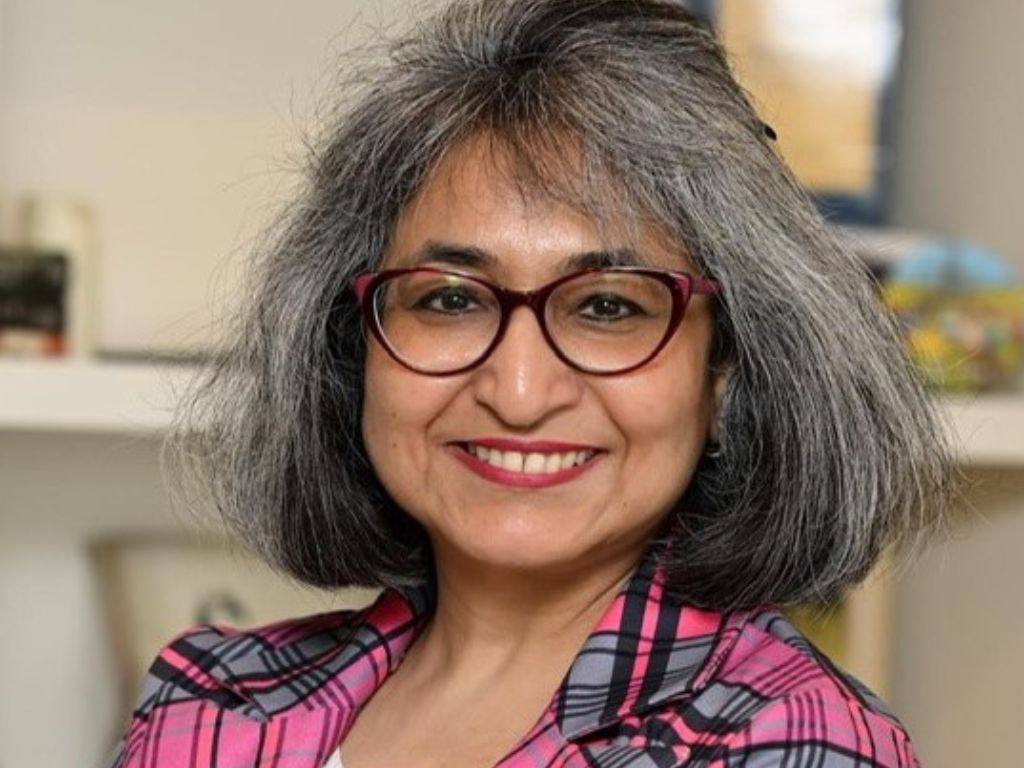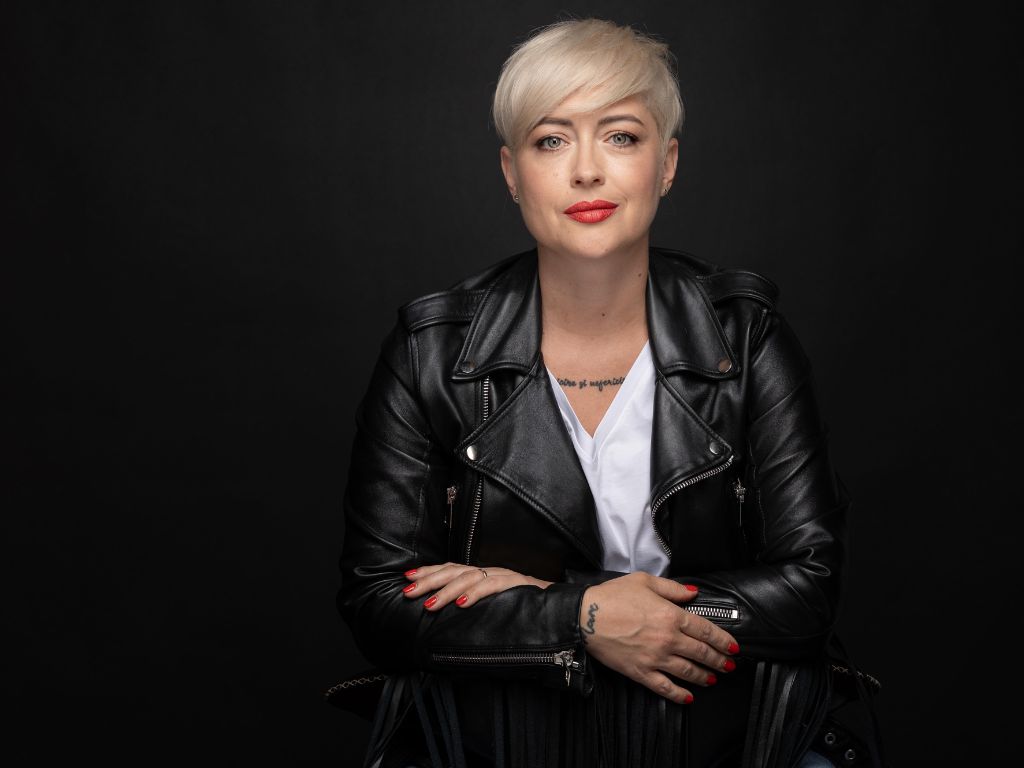
Roxana Hurducaș, Brand Strategy Advisor with 20 years of experience, shares her transition from a full-time executive role to fractional leadership, discussing impact, strategic clarity, and how she builds sustainable marketing departments.
Roxana Hurducaș is a Brand Strategy Advisor with 20 years of experience in the marketing and communication industry.
After more than 10 years serving as Marketing and Communication Director at FAN Courier, the largest courier company in Romania, Roxana made the move into entrepreneurship and consulting in 2020. In this role, she helps companies define their brand identity, build and implement communication strategies, and develop projects that highlight their uniqueness in the perception of consumers and the markets in which they operate.
In addition, she works closely with marketing departments to understand how their communication is perceived, to formulate coherent strategic recommendations, and to build and manage strong, well-assumed brand identities.
She has experience in coordinating marketing departments, brand and communication campaign management, crisis communication, media and Key Opinion Leader relations, as well as internal communication.
In 2025, she co-founded DRIVION, a strategic marketing agency specialized in the transport and logistics industry. Together with Claudia Barbu, she naturally returned to this sector with the objective of contributing to the consolidation of marketing in an industry with enormous potential, yet one that deserves greater visibility. Within DRIVION, Roxana brings a perspective built over time through strategic roles across diverse industries, now applied in a specialized, competitive, and continuously evolving context.
Fractional Insider: How was your transition from a traditional career to fractional leadership/consulting?
Roxana: Although my decision in January 2020 to resign from a management role in a market-leading company seemed to many like a “leap into the void,” it was, in fact, a conscious detachment. After 10 years in a full-time executive role as Marketing & PR Manager, I felt I could bring more value by expanding my area of impact. I chose to step out of the logic of a single system and contribute, through strategy, clarity, and direction, regardless of the industry in which I applied them.
The past almost six years have been a period of professional and personal recalibration. I had to learn to trust that my experience was enough, that I no longer needed a well-known logo or a title on a business card to be relevant, and that I could function very well in a more flexible, yet far more responsible and accountable model.
Fractional Insider: What attracted you most to this model and what challenges did it bring?
Roxana: The first thing that attracted me was the freedom to choose. Later, I discovered and appreciated the opportunity to continuously explore and learn, layer by layer, from each industry. Fractional leadership allows you to enter different organizations at different stages of maturity and contribute exactly where needed, for exactly as long as needed, with objectivity, clarity, structure, and direction.
The main challenge is explaining that “fractional” does not mean “less involved,” but rather applied expertise, focus, efficiency, and accountability. It is not a comfortable model, but a very honest one that cannot function unless it is fully understood and embraced by the client.
Fractional Insider: How do you choose the projects and clients you work with?
Roxana: I look at people before I look at the business. I have worked and can work across very different industries, but I cannot work with leaders who are unwilling to honestly examine what is not working.
I accept projects where there is openness, courage, and respect for the strategic role. I am not the right person for leaders who seek a consultant only to validate their own beliefs and who, when presented with a different point of view, look for someone else willing to confirm their ideas. Instead, I work with organizations that seek clarity, accountability, and long-term construction.
I primarily work on the identity and brand strategy pillar and choose medium- to long-term projects of at least one year. My involvement covers the entire process: from perception audit to the development or revision of brand identity, the definition of brand and marketing and communication strategies, and support in implementation. In certain cases, I take it a step further and actively engage in implementation in the role of consultant and Fractional Leader.
Fractional Insider: Tell us about a moment when you had a major impact as a fractional leader.
Roxana: In 2025, I consolidated and developed a marketing department for one of the projects I have been involved in for nearly four years. After three years alongside the team in the role of strategic consultant, contributing to brand growth from the position of “co-pilot,” I took on the role of “pilot,” with everything that entails.
It was not easy: I brought a different approach from what the team was used to, we work remotely, there is a language barrier, the company is growing, the industry is going through a difficult period, and my objectives related to brand identity and strategy are far from simple.
There were many sleepless nights, but today I am very proud of my team — a team that, in just a few months, regained confidence in its own role. I see them growing, evolving, and beginning to think strategically rather than reactively.
For a fractional leader, this is the greatest achievement: to build and leave behind a department that can function independently of you and a company moving in a clear and appropriate direction. And you can move forward with the satisfaction that your expertise was applied exactly where it was needed.
That, for me, is the essence of the fractional role.
Fractional Insider: What are the main differences between being a full-time executive and a fractional one?
Roxana: As a full-time executive, you are part of the system. As a fractional, you see the system from the outside — and that is precisely what makes you valuable.
A fractional is not caught in internal politics, does not need to “look good,” and does not defend a position. They can call things by their name, respectfully but without detours. That is why they are brought into this role.
Fractional Insider: How do you explain the value of a fractional to a skeptical CEO?
Roxana: Fortunately, I have not yet had to explain this, but I would tell a skeptical CEO that they are not paying for time, but for expertise and clarity.
A fractional does not occupy a seat in the organizational chart, but brings a perspective built over time, sees patterns, applies experience tested across multiple companies and industries, and helps unlock decisions. For this very reason, it is not a role that functions through the type of control specific to a full-time employee, but through trust and autonomy. It comes with condensed experience and the ability to quickly distinguish what truly matters.
If a CEO is looking for validation, this is not the right model. If they are looking for progress, it is.
Fractional Insider: What are the most common mistakes companies make when working with fractionals?
Roxana: The first mistake is not granting them real access to decision-making. The second is treating them either as employees or as vendors, rather than as partners. A fractional is neither: they do not function through control or tasks, nor through strictly transactional relationships, but as a strategic partner with real responsibility and autonomy.
Essentially, a fractional is a temporary leader, sometimes with even greater responsibility than a full-time employee, because they are expected to solve more in a shorter time. Without real authority, the value of this model is lost.
Fractional Insider: How do you see the evolution of this career model in the coming years?
Roxana: I believe it will become increasingly relevant, especially in contexts of uncertainty. Companies need flexibility and leaders who can step in, build, stabilize, and exit gracefully, without burdening the organization with rigid structures. It is a far more efficient approach for periods of transition and growth.
At the same time, senior professionals want impact and relevance, not just stability. The fractional model offers exactly this combination: freedom, responsibility, and meaningful results.
Fractional Insider: What advice would you give to a senior professional considering becoming fractional?
Roxana: I chose to leave several perspectives below so that each reader may find the one that resonates with them.
Do not become fractional for flexibility, but for impact. It is essential to be very clear about what you do well, what problem you solve, and in what contexts you bring real value. Fractional leadership is not about doing everything, but about doing exactly what is needed.
Have the courage to say “I don’t know.” A fractional does not need to have all the answers, but must know how to ask the right questions and build accountable decisions. That requires a great deal of professional maturity and honesty.
Choose your clients as carefully as they choose you. The fractional model works only where there is trust, real access to decision-making, and respect for the strategic role. Without these conditions, it becomes diluted.
Understand that fractional leadership is not an “easier” version of an executive role. On the contrary, it is an intense role, with high pressure and high expectations within a short timeframe.
Be comfortable with the idea that you will no longer be “the person in the organizational chart.” Your role is to build, clarify, and, at the right moment, make yourself unnecessary — either by solving the problem you were brought in for or by growing a team or leader who can move forward independently.
And perhaps most importantly, assume that the role of a fractional is closer to that of a mentor than an executor — you build, provide direction, and, at the right moment, take a step back.
Roxana Hurducaș’s journey demonstrates that fractional leadership is not an easier alternative, but a mature and accountable way to generate real impact. Through clarity, autonomy, and strategic responsibility, she shows that a leader’s value does not lie in a title on an organizational chart, but in the ability to build solid structures and sustainable direction.