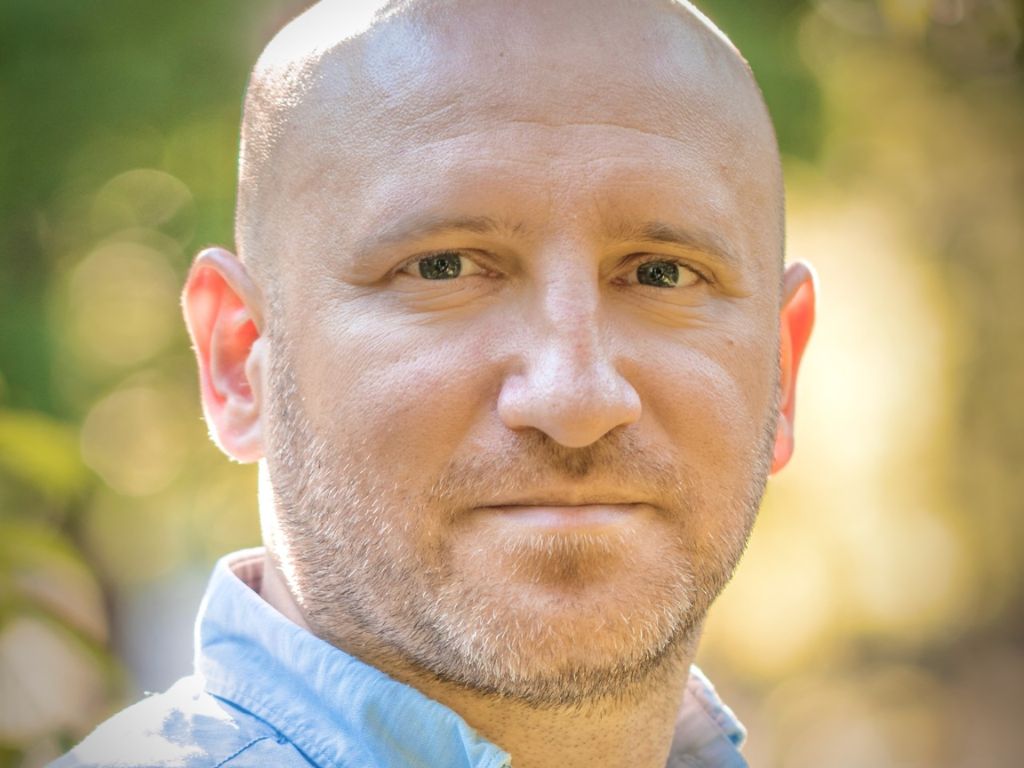
Explore Mihai Brătășanu’s journey as a Senior Product Manager and Fractional CPO, his transition to fractional leadership, strategic impact, Product-Market-Fit, and AI-driven product execution.
Mihai Brătășanu is a Senior Product Manager and Fractional CPO with over 10 years of experience in software product development. He provides consulting services and fractional leadership in the Product area, across industries such as Finance, Healthcare, AI, and others. Combining expertise in business, technology, and the start-up environment, Mihai helps define, build, and scale products at every stage — from Market research and vision to MVP and sustainable growth.
Fractional Insider: How was your transition from a traditional career to fractional leadership/consulting?
Mihai: The transition started gradually, back when I was working full-time for a single company, yet I was active in multiple internal projects, some mature, but also many early-stage initiatives that attracted me greatly. Then personal projects appeared, which I was interested in working on as a passion in my free time — software product ideas I am very attached to, some of which went live. The next step was joining a dedicated freelancing platform for highly skilled professionals (Toptal) who work fractionally with various clients. That’s when I realized this could be a much more challenging and interesting way of working, as an alternative to a full-time job. The final step was diversifying the client pipeline and formalizing the fractional service. It all came with a mindset shift as well: from being an employee for a single company to becoming a strategic partner for multiple companies, focused on results rather than presence.
Interestingly, all these steps were not planned; I discovered them naturally, one after another, as an adaptation driven by the desire to move to the next level.
Fractional Insider: What attracted you most to this model and what challenges did it bring?
Mihai: Continuous learning: exposure to different business models, cultures, and industries keeps the learning curve steep. I frequently step outside my “comfort zone,” and that’s where I feel at my best. It can be compared to an adrenaline addiction. This has helped me evolve significantly and rapidly develop certain skills — a process that, in a traditional job, can take many years and involves moving across several companies.
The freedom to work with diverse organizations, to quickly apply accumulated experience, and to see results in shorter timeframes are other reasons that attract me.
However, this model also comes with challenges: frequent context-switching, the lack of a shared organizational culture — the need to integrate into the company, culture, and product, and to gain trust quickly.
Fractional Insider: How do you choose the projects and clients you collaborate with?
Mihai: The impact I can bring is a determining factor. This comes from multiple directions, for example the maturity of the project — the earlier the stage, the greater the impact I can have. Leadership that is open to collaboration and real change is another factor that determines the impact you can have in a project.
In general, I prefer medium-term projects, between 4 months and 2 years, where the goal is to build a product from 0 to MVP, achieve Product-Market-Fit, and enter the Growth phase.
I am also attracted to projects where I can have an impact on the organization: developing a product culture, growing the product team, defining processes / best practices on this vertical, or coaching senior management.
Point challenges, those consulting projects, generally short-term, where the goal is a strategic business decision, are equally attractive.
Fractional Insider: Tell us about a moment when you had a major impact as a fractional leader.
Mihai: One example is building an MVP for a fintech platform. Through a prioritization and focus process, I reduced the time to launch from 12 months to just 4.
The result: a live product that quickly entered the optimization and fine-tuning phase to achieve market validation at scale, in a much shorter time and implicitly at lower costs.
In another project, I led a globally distributed team of Product Managers as CPO & Product Coach for a company generating approx. €50 Mn. from mobile applications. There, I reorganized the product team and set internal processes, including templates and playbooks, in order to double the speed, quality, and impact of deliverables. The team’s seniority increased significantly, and after a few months the team was functioning 100% autonomously, with minimal involvement from the CEO, the main driver until that moment on the Product vertical. This helped the company enter an accelerated scaling phase.
Fractional Insider: What are the main differences between being a full-time executive and a fractional one?
Mihai: A fractional works short- or mid-term, with very precise objectives, without being caught in daily routine.
The role is more of a catalyst — you don’t execute everything yourself; instead, you accelerate decisions and help the existing team move faster.
You are much more autonomous and must deliver quickly, with limited resources. It’s all about results and medium- or long-term impact, achieved based on an optimized and refined process that you apply throughout an engagement.
Fractional Insider: How do you explain the value of a fractional to a skeptical CEO?
Mihai: A fractional brings C-level expertise without the costs of a permanent employee — no benefits, bonuses, or equity, no HR-related complexity, and no long-term commitment in the relationship with that employee.
Then comes speed. In three months, you can gain clarity and direction where an internal team might need a year.
And perhaps the most valuable aspect: external perspective. Coming from outside the organization, you see things clearly, without internal filters, and you can bring experience from other industries that completely change the way decisions are made. Having gone through many companies and different cultures, you can immediately observe what works and what doesn’t within an organization and quickly focus on improvements.
Fractional Insider: What are the most common mistakes companies make when working with fractionals?
Mihai: The most common mistake is underutilizing the expertise. A fractional is not an executor or a “project manager with more experience.” Their role is to bring direction, structure, vision, and accelerate strategic decisions. If they are involved only in tactical tasks, or their strategic suggestions are ignored, the company loses precisely the advantage it brought them in for.
Another mistake is the lack of real integration into the team. Some companies treat the fractional as an “outsider” — without full access to information, to the team, or to the decision-making context. In reality, in order to deliver value, you need to understand the business from the inside and work side by side with key leaders.
Fractional Insider: How do you see the evolution of this career model in the coming years?
Mihai: The fractional model experienced accelerated growth in the post-pandemic period, when start-ups had easy access to funding and large companies were investing heavily in digitalization. In that context, fractional leaders were the ideal solution: experienced professionals, quickly available, capable of providing strategic direction and immediate execution, at a time when full-time recruitment could take over six months.
Over the past two years, however, the market has fundamentally changed. AI has started to take over part of research, prototyping, and strategic decision support activities, while the availability of full-time specialists has increased. For this reason, the fractional model is at an inflection point. Large companies once again prefer stable teams, with clear processes and predictability. Start-ups, however, risk losing speed and agility if they return to traditional hiring models.
I believe, however, that the adoption of AI by fractionals in the product-building process will significantly accelerate execution speed and quality. This will further widen the gap between full-time and fractional engagements, especially in the start-up segment. Highly skilled Fractionals positioned at the level of vision, strategy, decision, and coordination, who know how to efficiently use AI agents for execution, represent a setup with tremendous potential.
In the medium term, I expect a maturation of this model — fewer operational roles and more high-impact collaborations focused on strategy, product, go-to-market, and the intelligent integration of AI into business processes.
Fractional Insider: What advice would you give to a senior professional considering becoming fractional?
Mihai: Your network, speed and quality of delivery, and professionalism will determine success in this model.
Be prepared for the unknown. You will face challenges you have not encountered before and you will need to execute them at an impeccable level of quality. You will often find yourself outside your comfort zone, learning on the go, and the intensity will always be high. This will help you evolve quickly. It is important to get used to this rhythm. Stay up to date with new tools and technologies. They will help you increase speed and / or quality, which will keep you alive in this market.
Think like an entrepreneur: you will manage clients, contracts, deliverables, cash flow — you need a business mindset, not just expertise. Build and launch a product, no matter how small, go through all the stages. This will help you understand what “Founder Mode” means, as Brian Chesky — Airbnb founder — says, and thus the gap between consultant and founder will diminish considerably.
Mihai Brătășanu’s journey illustrates the evolution of a new leadership model — one centered on fast impact, strategic clarity, and measurable results.