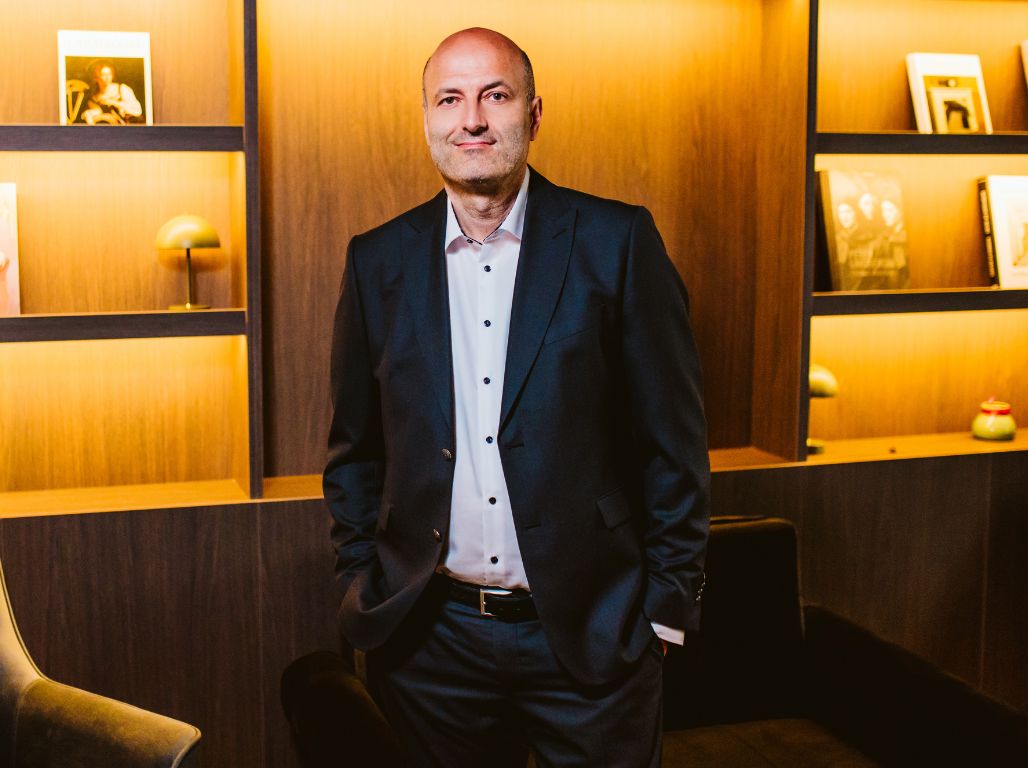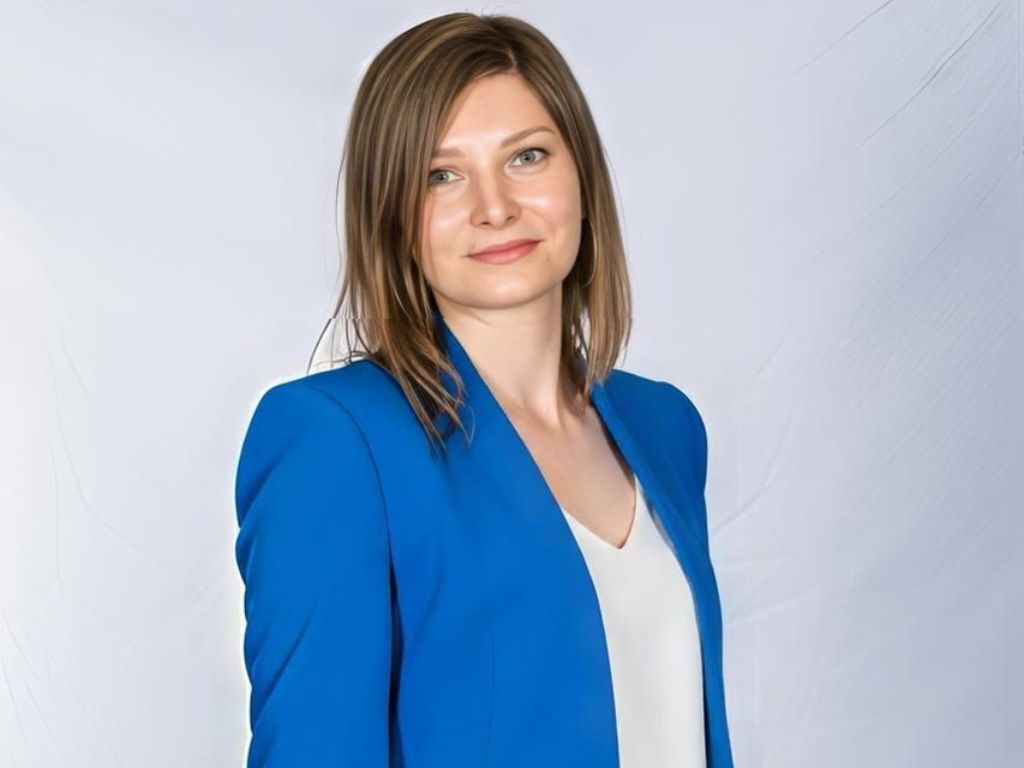
Ioana Stroica, Founder of MiniCFO, explains how the fractional CFO model helps entrepreneurs understand their numbers, make data-driven decisions, and turn financial management into a strategic advantage.
Ioana Stroica, founder of MiniCFO, is a financial expert who embraced the fractional work model long before it became a global trend. With more than 15 years of experience, she helps entrepreneurs understand their numbers and make strategic decisions based on data rather than intuition. She provides companies with flexible access to top-level expertise, replacing financial chaos with clear structures and efficient processes. For Ioana, success means transforming the role of an external consultant into that of an essential partner within the management team.
Fractional Insider: How was your transition from a classic career to fractional leadership/consulting?
Ioana Stroica: Looking back, I realize my transition wasn’t a leap into the unknown, but rather an organic evolution spanning 15 years. Practically, I was acting as a “fractional CFO” long before the term became a trend. In the first 10 years of my career, I worked as a dedicated consultant for my firm’s clients. That period was my training ground: I would enter various companies, understand their financial mechanisms, offer solutions, and then move on to the next challenge.
Later, I continued to offer external consulting in parallel with a full-time finance job. It was an intense but necessary period, during which I validated that I could bring real value from outside the classic organizational chart. Founding MiniCFO came as the crystallization of this experience. I didn’t feel an abrupt break from being an employee; rather, it felt like a liberation and an acceptance of the fact that my role is to build financial structures for multiple entrepreneurs simultaneously, not just for one.
Fractional Insider: What attracted you most to this model and what challenges did it bring?
Ioana Stroica: I was irremediably attracted by the diversity and the speed of reaction. In a classic role, you risk falling into a routine, plateauing while solving the same cyclical problems. As a Fractional CFO, every day is a different puzzle. I work with entrepreneurs from various industries, and that keeps my mind extremely sharp. I love the feeling that my expertise has an immediate impact: today we implement a cash-flow procedure, and tomorrow we see the results.
The major challenge, however, was—and sometimes still is—context switching. Changing “hats” from one client to another, being 100% present for each, and managing expectations requires iron mental discipline. Also, in the beginning, it was challenging to educate the market, to explain to entrepreneurs that they don’t need a CFO for 40 hours a week to have clarity, but rather strategic expertise delivered efficiently.
Fractional Insider: How do you choose the projects and clients you collaborate with?
Ioana Stroica: For me, chemistry with the founder is essential. I enter into a trusted partnership; I don’t just sell financial services. I look for entrepreneurs who are open to transparency and who truly want to grow, not just “tick boxes” on some reports.
I choose projects where I see I can make an impact. If a company is just looking for someone to do data entry, MiniCFO isn’t the right fit. But if an entrepreneur tells me: “Ioana, I have sales, but I don’t know where the money is going” or “I want to scale, but I’m afraid of losing control,” then I know that’s where I belong. Shared values and the desire to build on healthy foundations are my main filters.
Fractional Insider: Tell us about a moment when you had a major impact as a fractional CFO.
Ioana Stroica: I remember a collaboration with a service company that, despite having a high turnover, was facing recurring liquidity crises. The founder was extremely stressed, convinced that the business wasn’t profitable.
I dove deep, rebuilt the cost structure, and implemented a 13-week cash flow forecast system. The “aha” moment came when I showed him that the business was operationally profitable, but the way he managed collections and payments was suffocating him. By renegotiating terms with a few key suppliers and disciplining the invoicing process, we transformed a company that was living day-to-day into one that started generating cash reserves in just three months. The peace of mind I saw on that entrepreneur’s face was priceless.
Fractional Insider: What are the main differences between being a full-time executive and a fractional one?
Ioana Stroica: As a full-time executive, you are often caught up in internal politics, endless meetings, and managing operational details that aren’t necessarily strategic. You are part of the “family,” for better or worse, but sometimes you lose your objectivity.
As a Fractional CFO, I walk into the room with clarity and objectivity. I’m not there to play politics, but to deliver results. My time is limited and valuable, so every hour has to count. I am a strategic partner, a “sparring partner” for the CEO, who has the courage to speak the hard truth precisely because I don’t depend on a single salary. This freedom gives you a fantastic power to remain objective.
Fractional Insider: How do you explain the value of a fractional leader to a skeptical CEO?
Ioana Stroica: I usually use simple analogies to explain the value: “Why buy the whole plane if you only need a ticket to your destination?” Many companies, especially SMEs, need the expertise of a senior CFO—someone who has seen dozens of business scenarios—but they don’t have the complexity to justify a full-time salary of thousands of euros a month, plus bonuses and benefits.
Through the fractional model and MiniCFO, they access that 15 years of experience at a fraction of the cost. They get strategy, direction, and financial security, paying exactly for what they consume. When I put the cost of financial errors versus the cost of my services on paper, the skepticism disappears quickly.
Fractional Insider: What are the most common mistakes companies make when working with fractionals?
Ioana Stroica: The biggest mistake, in my view, is treating the fractional leader as a distant external vendor from whom you expect magic without giving them access to the “inner workings” of the company. To work effectively, I need to be integrated into the management team, have access to real data, and participate in strategic decisions.
Another mistake is the lack of communication regarding expectations. A fractional leader is not an employee you can micromanage. If you try to control every minute of the consultant’s time, you lose exactly the value added they bring: autonomy and the big-picture vision.
Fractional Insider: How do you see the evolution of this career model in the coming years?
Ioana Stroica: I am convinced that we are just at the beginning. Flexibility is no longer a whim, but an economic necessity. Companies are becoming increasingly agile and understand that they cannot hold all resources in-house.
Senior professionals will increasingly seek the freedom that this model offers, and companies will learn to work based on objectives, not hours spent at the office. It is the future of work for top experts.
Fractional Insider: What advice would you give to a senior professional thinking about becoming fractional?
Ioana Stroica: Don’t wait for the “perfect” moment. If you have solid expertise, the market needs you. However, my advice is not to underestimate the need for personal branding and networking. As a fractional leader, you are an entrepreneur, not just a specialist. You need to know how to sell your value.
Also, I recommend they define their niche very clearly. You can’t be “good at everything” for everyone. I chose to help entrepreneurs see beyond the numbers. Find your superpower and build your offer around it. And, last but not least, have patience—trust is built over time, but the satisfaction of building your own professional destiny is unmatched.
Through her experience and the flexible working model she promotes, Ioana Stroica shows that the financial role in a modern company goes far beyond accounting. A fractional CFO can become a strategic partner who brings clarity, financial discipline, and direction to entrepreneurs’ business decisions.