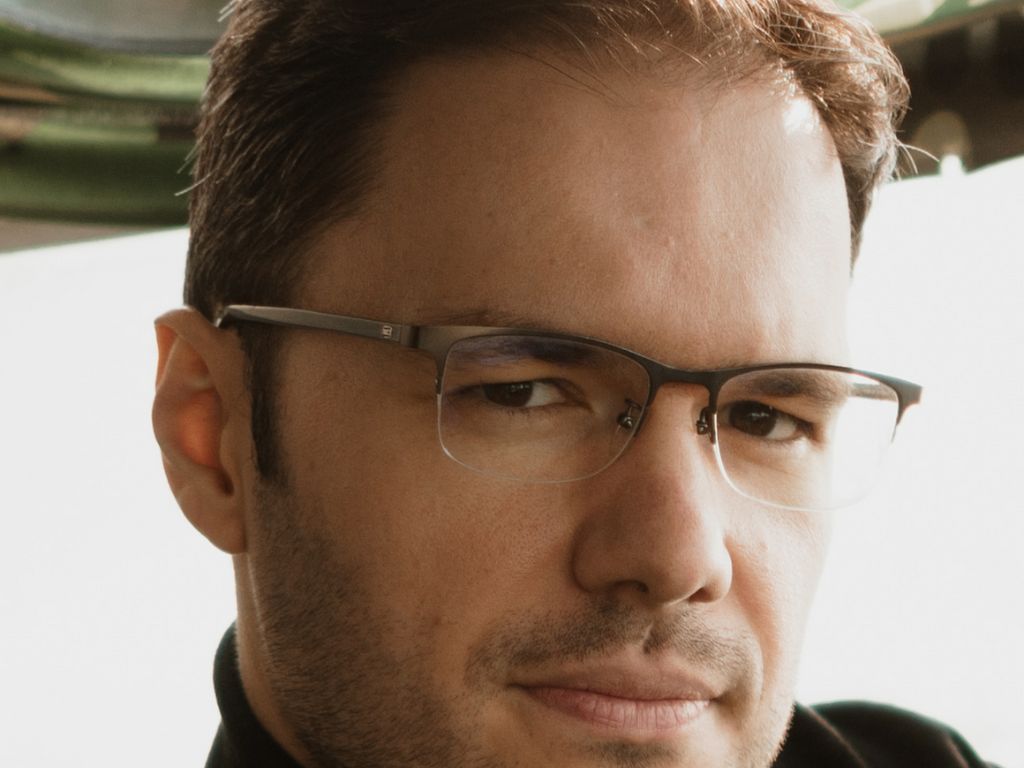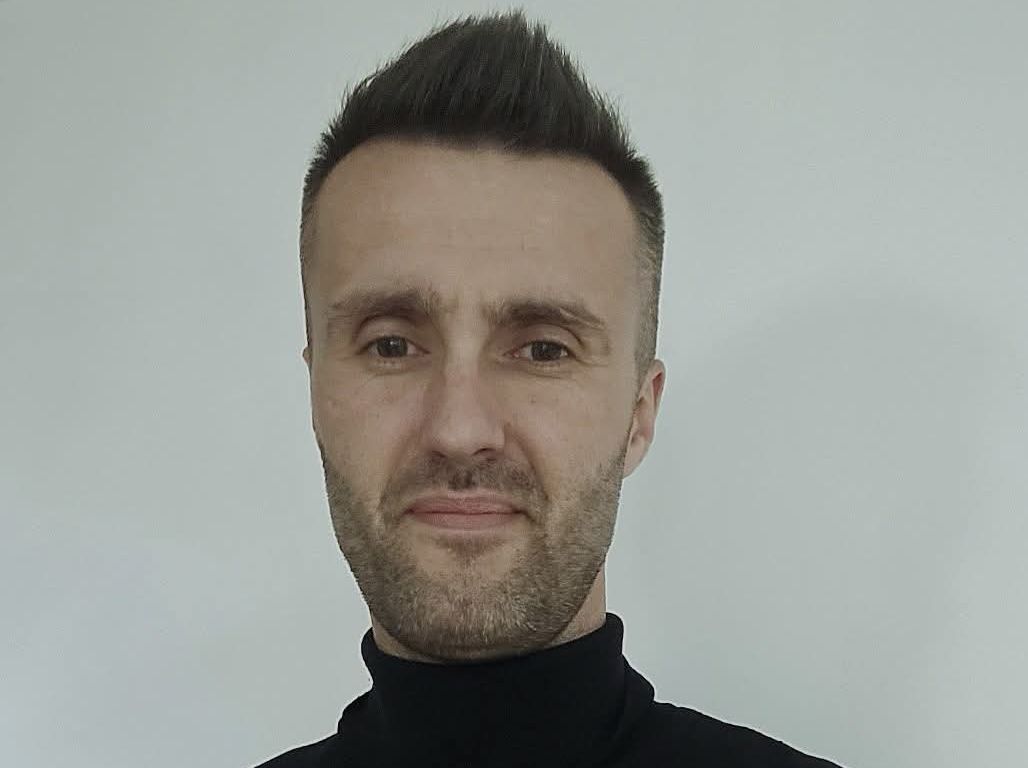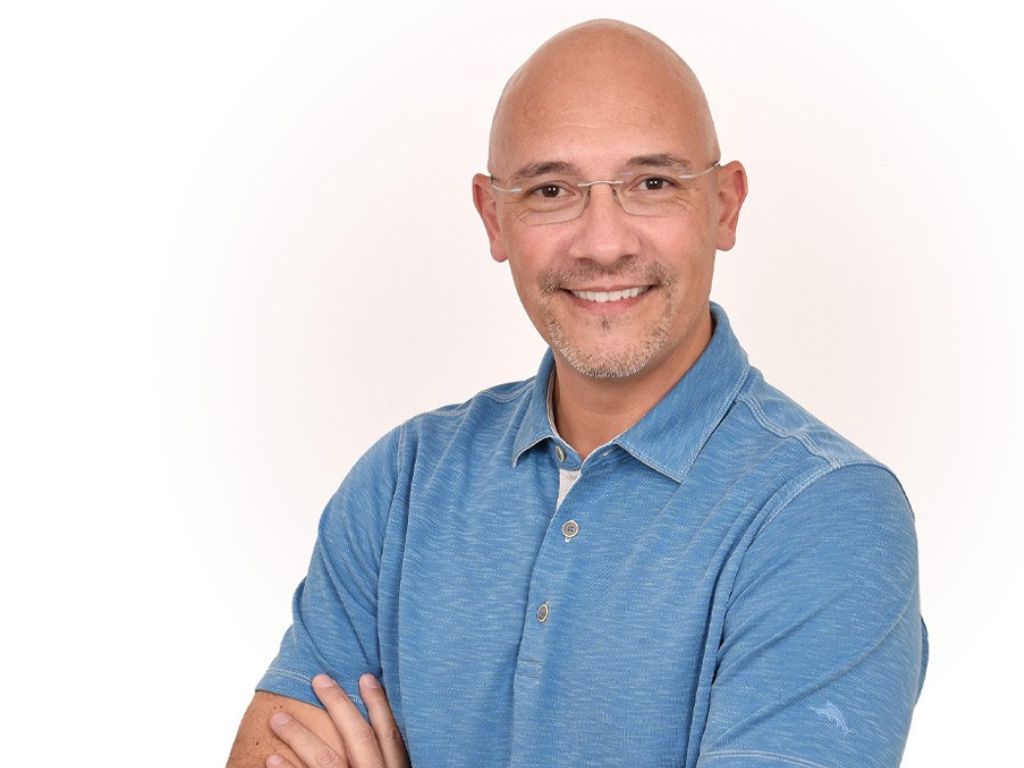
Daniel Ionescu shares insights on fractional leadership, strategic marketing, and how clarity, structure, and strategy drive sustainable growth for Romanian companies expanding globally.
With over two decades of experience in strategic marketing, organizational development, and transformation, Daniel Ionescu has coordinated complex growth processes for Romanian companies such as Bitdefender, TotalSoft, FintechOS, and Druid, which have gone on to gain global recognition and make a significant impact on the software, cybersecurity, and enterprise solutions markets. With a strong interest in digital techniques for building online communities, Daniel covers the full spectrum of corporate development—from launching and scaling startups to the strategic repositioning of mature companies and attracting funding rounds to accelerate business growth.
Currently, Daniel leads the group-level marketing strategy at PartnerVet, contributing to increased visibility for partner clinics, the generation of commercial opportunities, and the consolidation of the PartnerVet brand.
Fractional Insider: How was your transition from a traditional career to fractional leadership/consulting?
Daniel Ionescu: My transition to consulting and fractional marketing came when I began reflecting on what my personal mission could be, after having had the opportunity to build a global business with operations in over 100 countries. Such a construction requires strong organizational structure, financial planning, development and testing processes, culturally adapted marketing and sales programs, competitive analysis, and a great deal of differentiation. At that point, I realized that most Romanian entrepreneurs confuse marketing with promotion, rather than seeing it as the company’s market strategy. As a personal mission, I aim to increase the competitiveness of Romanian companies. I help by bringing greater clarity to objectives and performance indicators, by setting up the right organizational structure in terms of roles, competencies, and size, by adopting essential software tools for properly calibrating efforts, and by professionally preparing commercial teams—for companies that aim either to expand into international markets or to attract funding for accelerated growth.
Fractional Insider: What attracted you most to this model, and what challenges did it bring?
Daniel Ionescu: In the fractional model, what attracts me most is the diversity of projects you can access. Compared to a traditional job, which usually involves vertical evolution and professional development within an organization in a specific industry, the fractional model allows me to connect insights from very diverse industries and to work with people who have different understandings of operational processes. Although my background is in IT, over the past 10 years I have worked in industries such as banking, insurance, investments, healthcare, renewables, sports, and tourism in the local market. Of course, such a wide diversity of projects comes with specific challenges—from learning industry-specific terminology and acronyms and understanding the competitive landscape in which my clients operate, to the challenge of earning the trust of internal teams. Sometimes, internal teams do not see fractionals as pillars they can rely on for accelerated growth, but rather as “competitors” who might eventually take their positions. For this reason, I believe it is essential that the role and mandate of a fractional leader are very clearly defined and internally communicated by the project “sponsor.”
Fractional Insider: How do you choose the projects and clients you work with?
Daniel Ionescu: I don’t enter into just any project. I have said “no” to unrealistic projects, because I have encountered companies that wanted to expand into other countries with the budget of printing a brochure. The speed of business development depends on operational capacity. There is a set of prerequisites without which accelerating growth has a boomerang effect. Exposure in a mature market with an unfinished product, defects, or unprepared commercial teams can create a perception of low quality that damages the brand in the long term. We are talking about a certain level of team competence, the existence of internal processes that should be reasonably established rather than tested directly on clients, the speed of building connections in the target market, the presence of referrals and case studies—in short, the fuel needed for an endurance race. If these prerequisites do not exist, my proposal is to get directly involved in building them. The first step I impose in all projects is an audit. I focus mainly on the commercial team, marketing and sales functions, but also on processes, solutions, competition, and supporting functions. The audit concludes with a set of recommendations that I prioritize together with the company’s stakeholders in an action plan. That is when a mutual click happens—a foundation of trust and respect essential for a strategic fractional marketing project.
Fractional Insider: Tell us about a moment when you had a major impact as a fractional leader.
Daniel Ionescu: During the pandemic, a major moment of impact for the entire economy was the shift to remote work and the inability of some departments to access their systems remotely. At that time, I was working for a company specialized in Conversational AI, a technology that enabled remote interaction with work systems. Together with the product team, we generated a series of applications for the banking system. One of them addressed the legislative context of loan payment deferrals, where tens of thousands of deferral requests overwhelmed bank call centers. We partnered with electronic signature providers, integrated and developed end-to-end use cases, coordinated the marketing campaign, and approached the banking system both directly and through technology providers or Big4 consulting firms, creating co-branded case studies. The impact was significant—not only through the immediate adoption of the solution by four major Romanian banks, but especially through positioning the company as a technology provider for the banking industry. I remember that in a short period of three months, over 60 technology use scenarios were produced, with impact and benefit analyses across 18 segments and industries. Since then, that company has experienced exponential growth and is now probably among the top five Romanian IT brands in terms of global exposure, and I am glad that banking remains one of its top industries.
Fractional Insider: What are the main differences between being a full-time executive and a fractional one?
Daniel Ionescu: As a full-time executive, you are more anchored in internal procedures, the organization’s way of working and thinking—you are more “inside the box.” As a fractional, you benefit from cross-industry connections, greater detachment, and less pressure from daily operational tasks. On the other hand, a fragmented activity brings much greater challenges in project management and more careful time allocation. Many times, as a fractional, you end up saying that “a day has 24 hours, and if that’s not enough, you also have the night.”
Fractional Insider: How do you explain the value of a fractional leader to a skeptical CEO?
Daniel Ionescu: I would use the comparison of a university graduate wondering whether an MBA is worth it for career advancement. A fractional offers validated, out-of-the-box perspectives, brings clarity, sets priorities, and has a holistic view without being constrained by operational limitations. A fractional is usually immune to a company’s internal culture, growth desires, egos, or complacency (yes, I have encountered people who could not conceive that things could be done differently than their way). Collaboration with a fractional is straightforward—there are performance indicators and a 100% focus on achieving them. Working with fractionals also has operational advantages—it can be interrupted more easily, multiple fractionals can rotate in the same role to bring different perspectives, the financial effort can be capitalized as an investment, and, moreover, through programs such as EBRD, costs can be subsidized through competitiveness growth initiatives.
Fractional Insider: What are the most common mistakes companies make when working with fractionals?
Daniel Ionescu: It is crucial for the fractional’s mandate, performance indicators, and objectives to be clearly understood internally. Personally, I have never accepted more than four projects in parallel, because in strategic marketing the massive volume of dynamic information—about the company, clients, partners, and competition—changes in real time and makes proper business development difficult to manage. My best results have come when managing two projects in parallel. Probably the first question a CEO should ask when engaging a fractional is “how many projects are you involved in?” and, if more than four, when those projects will be completed to take on a new one. Again, we are talking about complex projects involving market strategy, exits, or attracting investment—not marketing tasks like “I need a campaign, an event, or a product launch.”
Fractional Insider: How do you see this career model evolving in the coming years?
Daniel Ionescu: It is clear that the fractional and consulting model is gaining momentum. It is hard to say whether the trend is driven by market demand or by waves of layoffs in multinationals, which generate an inflation of consulting firms across all fields. There is certainly demand in the area of marketing strategy. The market has been forming for over 10 years, and we already have an ecosystem of valuable professionals who are well known in the industries where they were trained.
Fractional Insider: What advice would you give to a senior professional considering becoming fractional?
Daniel Ionescu: They should start making time for themselves and become visible. I know professionals who are superficially evaluated under the principle “the shoemaker has no shoes.” It is a habit among Romanian entrepreneurs to put themselves obsessively in the spotlight without talking about the “engines” of the company. Because of this, many professionals are not exposed, and the market does not know about their existence and competencies. Now we have social channels, podcasts, blog posts, and dedicated events. They should make time to step onto a stage, to build a website. The beginning is the hardest, because they need to reinvent themselves and work a bit for themselves. Once they reach a critical threshold of recommendations and collaboration requests, once they build a sufficiently broad network, word of mouth works even without public exposure.
Daniel Ionescu’s journey highlights that fractional leadership is far more than a flexible career model, it is a powerful engine for sustainable business transformation.