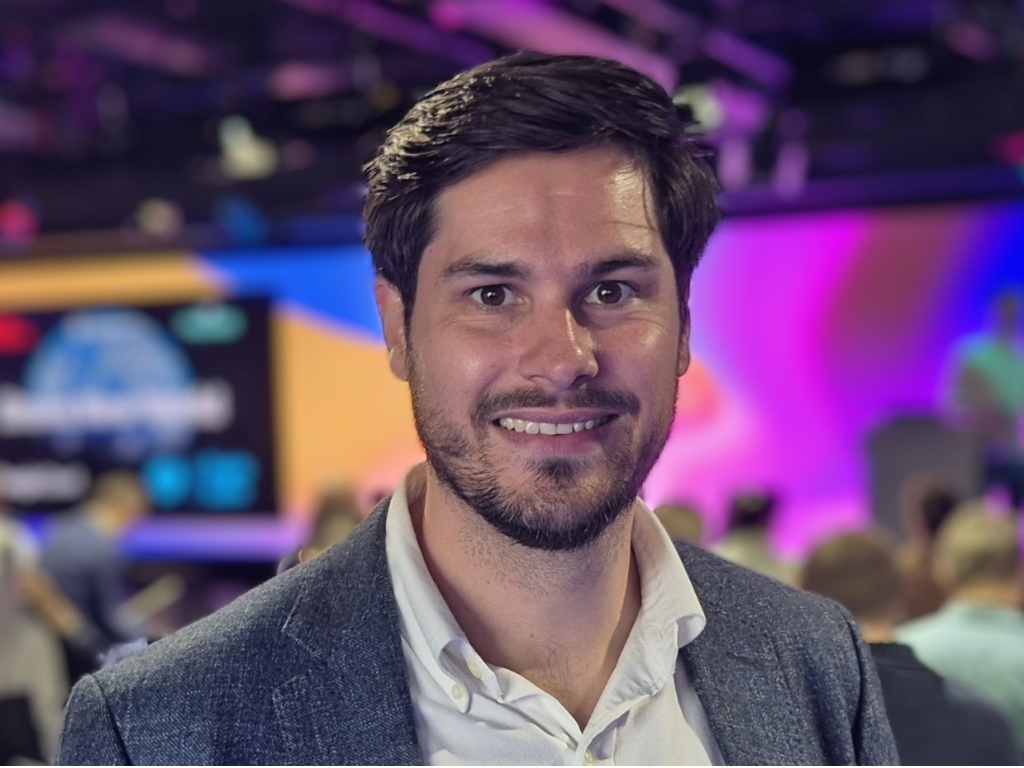
Discover how Catherine Mak, a Fractional CMO with over 20 years of global experience, helps businesses avoid costly growth mistakes, improve profitability, and build marketing strategies that deliver measurable commercial results.
Catherine Mak is a UK-based Fractional CMO, an ex-Citibanker and founder of Zilu Consultancy, with 20+ years’ global marketing leadership across fintech, SaaS, financial services and B2B sectors across APAC, UK and Europe.
Fractional insider: What is the most common mistake that silently erodes profit in companies?
Catherine: I would say the biggest silent mistake is not adapting fast enough when the market has already changed.
It sounds broad, but it shows up in very practical ways: an old pricing model, an outdated team structure, a channel that used to work but has hit a ceiling, or a founder still making decisions in the same way as when the company was much smaller.
The danger is that nothing looks obviously broken at first. The team is still busy. Campaigns are still running. Revenue may still be coming in. But underneath, the business is losing visibility, efficiency, market position, or future demand.
Search is a good example. A few years ago, everyone focused heavily on SEO and SEM. That still matters, but the way people discover information is changing with AI search, AEO, GEO and zero-click behaviour. If your growth model still depends entirely on people clicking through from Google in the same way as before, you may not notice the risk until leads start declining.
HubSpot says nearly 30% of marketers reported decreased search traffic as consumers turn to AI tools, while Ahrefs found AI Overviews reduced clicks to top-ranking content by 34.5% in its 2025 study. So companies cannot just spend their way out of the problem. They need to keep reviewing what still works, what has stopped working, and what is quietly becoming inefficient.
But I also do not believe the answer is to jump on every shiny new tool. That creates another kind of waste. The real discipline is knowing when the market has shifted, and responding with a clear objective.
Fractional insider: What is an uncomfortable truth founders tend to ignore, even when it limits growth?
Catherine: For many founder-led businesses, the founder starts by doing everything: sales, marketing, product, hiring, partnerships, decisions. They are the engine of the company.
That works until it doesn’t.
At some point, the founder’s capacity or capability becomes the ceiling, but it is very hard to admit because the business was built on their judgement. They know the company better than anyone. They care the most. But when every decision still goes through them, the company cannot scale.
The uncomfortable truth is that the founder can become the bottleneck.
It normally shows up when they start hiring senior people but do not fully let go. They bring in experts, but second-guess every decision. They say they want scale, but still operate like everything needs founder approval.
That creates frustration on both sides. The team cannot lead properly, and the founder does not get the result they hoped for.
At that stage, the founder’s role needs to change. They should spend more time on direction, vision and future opportunities, and less time getting into every detail.
Fractional insider: If you enter a new company today as a Fractional, what do you change in the first 30 days?
Catherine: I would not rush in and start changing things just to look busy.
Usually when a company brings in a Fractional CMO, they know something is not working, but they may not know exactly what the real problem is. They may call it a lead generation issue, a brand issue, a sales issue, or a team issue. But often those are symptoms.
So in the first 30 days, I would focus on diagnosis and alignment.
I would want to understand the business, the commercial objectives, what has worked before, what has stopped working, and where the internal misalignment sits. I would look at the customer journey, the current channels, the sales and marketing handoff, the positioning, and whether the KPIs actually reflect commercial impact.
The first change I bring is usually clarity: what is actually broken, what is just noise, what can be stopped, and what should be prioritised.
Of course, if there is an obvious quick fix, I would act on it. For example, if a campaign is clearly wasting budget, stop it. If the website journey is creating unnecessary friction, fix it. If the messaging is confusing, simplify it.
But the most important result in the first 30 days is not a big campaign. It is getting the leadership team aligned on the real problem, the objective, and how we will measure progress.
Fractional insider: What KPI do most companies ignore, even though it clearly shows if the business is healthy or not?
Catherine: I think companies often look at revenue, but not the quality of revenue.
Revenue can grow while the business becomes less healthy underneath. If you are acquiring customers who churn quickly, need heavy discounting, take too long to convert, or cost too much to serve, the top-line number can be misleading.
When I was the Head of portfolio management in segment marketing, what I would look at is customer quality, product cross selling and upselling. I tracked and analysed KPIs like margin, retention, lifetime value, and basically is assessing whether which segments of customers worth having.
Harvard Business Review, found that increasing customer retention by just 5% can increase profits by 25% to 95%. That is a powerful reminder that marketing is not only about acquiring more people. Acquisition cost is high and growth could also come from maximising the revenue of your existing customers.
For marketing, often teams are judged by traffic, leads or campaign performance. But if those leads do not convert, do not stay, or do not become profitable customers, marketing has not really helped the business grow.
Fractional insider: When should a company not hire full-time and choose a Fractional instead?
Catherine: A company should choose a Fractional when it needs senior leadership, judgement and experience, but not necessarily a full-time senior hire yet.
This often happens when a founder-led business or scale-up reaches a pivotal stage: they have ambition, some marketing activity, maybe even a small team, but they need someone senior to bring structure, sharper positioning, commercial priorities and a clear go-to-market direction.
The value of a Fractional CMO is not just giving advice. They can lead the thinking, manage the internal team, bring in the right external specialists where needed, and make sure the strategy turns into actual campaigns and outcomes.
The flexibility is also important. Different stages need different skillsets. The person who helps you reposition, launch, scale or transform the marketing function may not be the same person you need later to run the day-to-day team permanently.
So fractional leadership works well as a flexible bridge: senior leadership at the point of transformation, without forcing the company into a full-time hire before the business is ready. Later, once the structure is built and the direction is clear, the company can appoint a full-time leader to run and optimise the function.
Fractional insider: What is the biggest illusion founders have about growth?
Catherine: The biggest illusion is thinking that if one channel is converting, you can just put more money into it and growth will scale in proportion.
That may work for a while, but it rarely works forever.
A lot of companies invest heavily in demand capture, not demand generation. They focus on the channels closest to conversion because those are easier to measure. Paid search, retargeting, bottom-funnel campaigns — they all look effective because they capture people who are already interested.
But that does not mean they created the demand.
LinkedIn B2B Institute talks about the 95-5 rule: in B2B, around 95% of potential buyers are not ready to buy today. So if you only focus on the 5% who are already in-market, you are ignoring most of your future pipeline.
This is why balancing short-term and long-term marketing matters. If you only optimise the bottom of the funnel, you may protect today’s conversion but starve tomorrow’s growth.
Fractional insider: What is something you consistently see “broken” across multiple companies?
Catherine: The most common thing I see is that the company’s ambition has outgrown its structure.
A business reaches a plateau or starts declining, but it still operates in the same way that made it successful before. The founder mindset, the team structure, the reporting, the marketing model — everything is built for the previous stage, not the next one.
I saw this in an events business that had done very well for many years. As the business expanded across markets, they simply multiplied the same model: one marketer doing everything for each event or market.
So you ended up with marketers expected to do website updates, email, copy, content, social, SEO, digital, reporting and stakeholder management — all at once, across different regions.
On paper, it looked like a bigger marketing team. In reality, it was the same stretched model copied many times.
The problem was that the structure had expired. The market had become more saturated, the customer base was not growing in the same way, and the company needed more specialist capability and a different marketing approach.
Fractional insider: What is one decision that can quickly improve profitability, but most companies avoid?
Catherine: Many companies under pressure for growth immediately look for new customers. More campaigns, more promotion, more publicity, more traffic.
But often the fastest profitability lever sits inside the business already.
Look at the existing customers. Look at churn, conversion, pricing. proposition. Look at where people drop off before buying. Look at why customers leave.
If the offer is confusing, if the buying journey is too hard, if pricing does not reflect value, or if existing customers churn too quickly, then more marketing just pours more demand into a leaking bucket.
Growth is an aftermath when the fundamentals are fixed.
So before spending more to acquire new customers, I would ask: are we converting and keeping the customers we already worked so hard to attract?
Fractional insider: How does a Fractional leader think differently compared to an internal executive?
Catherine: Ideally, they should not think completely different. A good internal executive and a good Fractional leader should both think commercially and strategically.
But the reality is that a Fractional leader is often brought in when there is already a gap, a problem, or pressure to change. The company may need impact quickly, and the fractional leader needs to prove value in very tight timeline, budget and resources.
So I think a Fractional leader has to bring clarity fast. They need to diagnose the real problem, identify the low-hanging fruit, and at the same time create enough trust to work on the deeper root cause.
That is not always easy. The visible problem is often not the real problem. But you may need to earn the right to solve the deeper issue by first helping the business see progress.
That is probably the biggest difference from a permanent hire. A Fractional leader has less time to build trust, but often a more urgent problem to solve.
Fractional insider: What does a good company look like from the inside, operationally?
Catherine: A good company is not just one with good branding or a nice culture statement.
From the inside, a good company has clarity and alignment.
People understand the commercial objective, the customer, the product proposition, and the company’s position in the market. Different teams may tell the story from different angles, but what they do is complementing each other.
That sounds simple, but many companies do not have this.
Sales is working toward one version of success. Marketing is measured by another. Product has a different view of the customer. Finance sees cost before value. Then everyone is busy, but the organisation is not moving in one direction.
For me, a healthy company has honesty, clarity and mutual understanding. People are supportive of each other’s priorities, but also honest enough to say no when something does not make sense.
Tools, reporting and process matter, but they cannot fix conflicting objectives.
Fractional insider: What type of companies benefit the most from working with a Fractional?
Catherine: I would say… when the company ambition has out grown its marketing structure. That’s where fCMO model works best.
The strongest fit is often founder-led businesses, SMEs and scale-ups that are at a pivotal moment of growth. Like post funding stage, that they need to deliver quickly, expand, enter a new market or launch a new product but they do not have inhouse senior marketing leadership to support that stage of growth. That’s when they need fCMO to come in to help.
In enterprise environments, fractional leadership can also work for specific high impact & transformation projects, where their in house team members or leaders do not have the capacity to take the lead. That’s also a common fCMO engagement.
Fractional insider: What is a mistake companies make when hiring a Fractional?
Catherine: The biggest mistake is misunderstanding what a Fractional executive is. A Fractional CMO is not a one-person marketing department. They are not an agency, and they are not just a consultant who gives advice and disappears. They are a senior leader working with the business on a flexible basis. For the model to work, they need access to the real business context: commercial information, leadership discussions, customer insight, sales performance, marketing data, budget reality, decision-makers and the team they are expected to influence. Some companies hire a Fractional leader, but then treat them like an outsider. They do not onboard them properly, they do not share enough information, and they do not involve them in the commercial conversations. Then they wonder why the impact is limited. The other mistake is expecting fast transformation without giving the person trust, resources or authority. My analogy is this: it is like hiring a Michelin-star chef and asking them to work in a fast-food kitchen, only preparing the old menu faster. You are paying for expertise, but not allowing the conditions for that expertise to create value. A Fractional leader needs clear scope, trust, access and alignment. Without that, the model becomes underused.
Fractional insider: What results should a company realistically expect in the first 3–6 months?
Catherine: It depends on the size, stage and complexity of the business, but I think companies should expect clarity first, then structure, then measurable progress.
The first month is usually about understanding the business properly: the people, the systems, the commercial limitations, the internal dynamics and the real problem. It is also about aligning the key stakeholders on what the business is trying to achieve, what marketing’s role should be, what needs to stop, and what success should look like.
By the second month, there should be a clearer strategy tied to a business objective, with a practical plan, timeline and KPIs. I would also expect work to start on the obvious low-hanging fruit — the things that can remove friction, reduce waste or create momentum quickly.
By the third month, there should be some early wins or at least positive indicators, while the bigger mid- to long-term work is already moving.
By six months, I would expect the foundations to be in place: the infrastructure is built or being built, the team is more aligned, the strategy is in implementation, and the business should start seeing either a clear positive trend or an immediate commercial outcome.
In one B2B SaaS and professional services business, I started by building the marketing infrastructure almost from zero and turning the CEO’s vision into a clearer product proposition. Within four months, we were developing the brand story, website, product narrative and go-to-market strategy. By month six, we had secured the first £1M enterprise pipeline opportunity and were ready to launch their proprietary product across APAC and the UK.
That was a stretch, but it was possible. Of course, speed should not become the objective on its own.
Fractional insider: What separates a strong Fractional from an average one?
Catherine: A strong Fractional is not just someone with years of experience or a senior title.
For me, the real difference is whether they have been able to deliver consistently across different sectors, stages of growth, business models and levels of resource.
That matters because every company comes with a different constraint. One business may have funding but no structure. Another may have a strong product but weak positioning. Another may have a team, but no senior direction. Another may need transformation, but has very limited budget or internal buy-in.
So I do not really trust the idea that one playbook can be lifted and applied everywhere. A strong Fractional leader needs enough maturity to read the situation properly, adapt to the business reality, and still move things forward.
They need sound judgement, but also execution capability. It is not enough to advise. They need to influence stakeholders, defend the strategy, make trade-offs, and deliver impact within the time, resources and limitations they are given.
That level of maturity and agility is rare. It comes from having seen different kinds of businesses and still proving you can create value, even when the conditions are not perfect.
Fractional insider: What is something you believe about business or leadership that most people would disagree with?
Catherine: Think the best Fractional CMOs are generalists. They should know enough about everything to see how the whole system works: brand, demand generation, sales, product, customer experience, data, content, digital, AI, pricing, positioning and commercial strategy.
They do not need to personally execute every single task. But they need to understand enough to know which lever matters, which specialist to bring in, which channel to prioritise, and which trend is worth paying attention to. The value is in having the breadth and maturity to connect those pieces and make sound judgement for the business.
That is why I always say a good fCMO should be able to do anything, but not everything.
If every decision is made only from historic data and past experience, you often end up with the safest answer — not the boldest or most differentiated one. ( Just like AI)
Real growth often comes from judgement before proof. It comes from spotting what is changing, trusting your instinct, and being brave enough to move before the market has fully caught up. Even data didn’t back it.
That is where strong leadership comes in. The best marketers are not just trend followers. They are confident enough to test something new, create a point of view, and sometimes lead the market rather than wait for permission.
A good fCMO should be able to do anything, but not everything. Their value is knowing which lever to pull, which specialist to trust, and when the business needs judgement beyond the data.