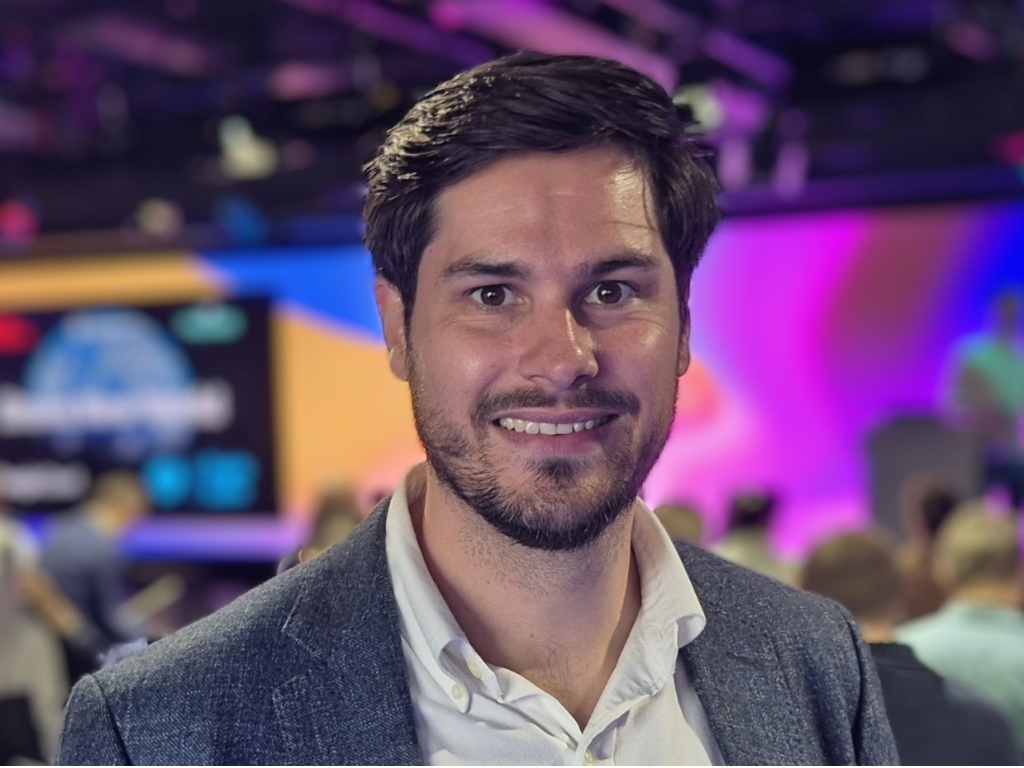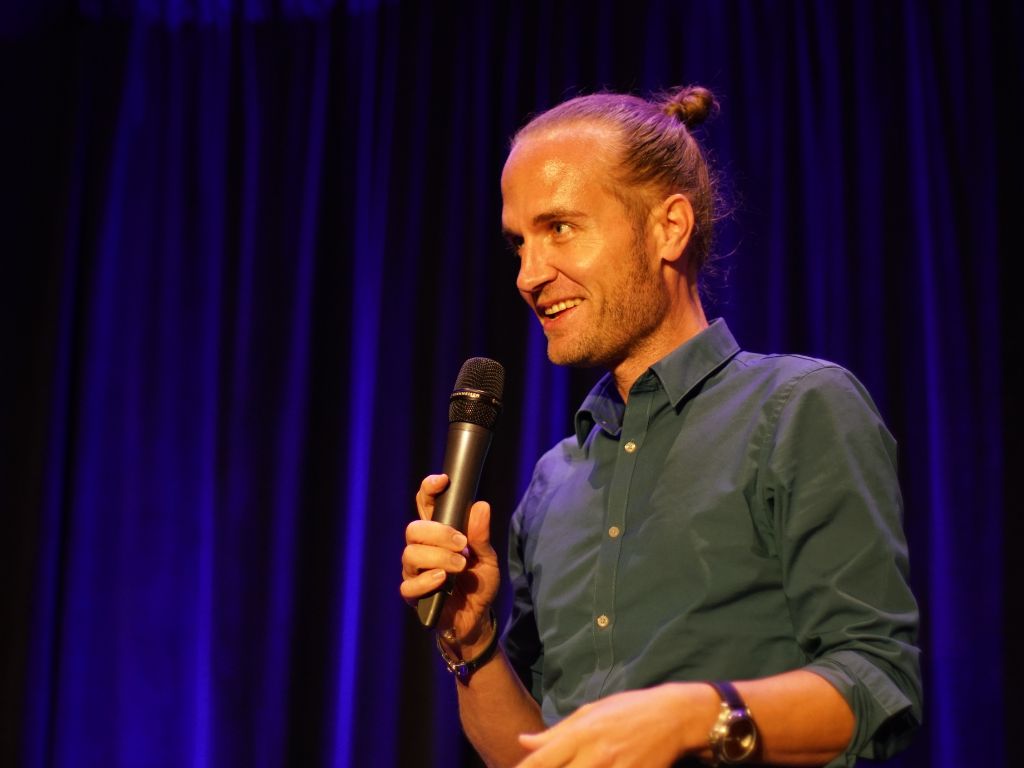
Discover how Joeri Billast views fractional leadership, AI visibility, marketing strategy, and building trust in a world where AI is reshaping brand discovery.
Joeri Billast is a Fractional CMO, AI Visibility Strategist, and author of The Future CMO, endorsed by Philip Kotler. He hosts Web3 CMO Stories, a top 5% global podcast with nearly 300 episodes featuring guests including Gary Vaynerchuk and Chris Do, and advises B2B, AI, and Web3 companies on building authority in markets where AI systems increasingly control discovery. In March 2026, he delivered a TEDx talk at TEDx Chiado on why trust is the only thing AI cannot scale. He is based in Sintra, Portugal, where he also organizes Sintra Synergies, a curated retreat for forward-thinking founders and marketing leaders.
Fractional Insider: How was your transition from a traditional career to fractional leadership/consulting?
Joeri: The transition was less of a jump and more of a realization.
I started noticing that many companies did not need a full-time CMO. What they needed was clarity, direction, and someone who could connect strategy with execution, fast. In many cases, hiring a full-time executive too early actually slowed them down.
At the same time, I wanted more proximity to different industries, different growth stages, and different challenges. Fractional work gave me that. Instead of being locked into one company’s context, I could operate across multiple environments and spot patterns much faster.
In a way, it felt like moving from being inside the system to seeing the system from above.
Fractional Insider: What attracted you most to this model, and what challenges did it bring?
Joeri: What attracted me most was leverage.
As a fractional CMO, you are not just executing tasks. You are shaping direction, making decisions that compound, and working on the parts of the business that actually move the needle.
It also forces you to stay sharp. You cannot hide behind internal politics or slow timelines. You need to deliver clarity and results relatively quickly.
The main challenge is expectation management. Some companies think a fractional leader is a cheaper full-time CMO. That is not the model. The value comes from focus, experience, and speed, not from replacing a full-time role at a discount.
The other challenge is context switching. You need strong systems to move between clients without losing depth or momentum.
Fractional Insider: How do you choose the projects and clients you work with?
Joeri: I look at three things.
First, clarity of intent. Does the company genuinely want to grow, or are they looking for someone to validate decisions they have already made?
Second, access. If I cannot speak to decision-makers or actually influence strategy, I cannot create real impact. I have learned to walk away from situations where I would be executing someone else’s assumptions.
Third, signal vs noise. Some companies are already doing interesting things but are almost invisible. Others are still searching for their core narrative. I prefer working where there is already some signal, because that is where strategic work compounds fastest.
I also ask myself whether the founder or leadership team is genuinely open to being challenged. Without that, the collaboration stays tactical. And tactical is not where I add the most value.
Fractional Insider: Tell us about a moment when you had a major impact as a fractional leader.
Joeri: One pattern I keep seeing is companies with strong products that are essentially invisible in their market.
In several cases, the issue was not performance marketing or lack of effort. It was positioning. They were saying the same things as everyone else, which made them indistinguishable. And increasingly, they were also invisible to AI systems. When someone asked ChatGPT or Perplexity for a recommendation in their category, competitors were named. They were not.
By redefining their narrative, strengthening their trust signals, and building what I call AI Share of Voice, the consistency and authority that causes AI tools to reference you, we shifted how both the market and the algorithms perceived them.
The impact was not just more leads. It was better conversations, shorter sales cycles, and stronger inbound interest. From both humans and machines.
It is like tuning a radio. The signal is already there. Until you remove the noise, no one hears it clearly.
Fractional Insider: What are the main differences between being a full-time executive and a fractional one?
Joeri: A full-time executive operates within the system. A fractional leader operates across systems.
When you are full-time, you are often absorbed by internal alignment, team management, and long-term execution. As a fractional, your role is sharper: clarity, prioritization, momentum.
You are brought in to accelerate decision-making and help companies avoid costly mistakes.
The other major difference is pattern recognition. Because you work across multiple companies and sectors simultaneously, you see things earlier. What feels like a completely unique problem inside one company is often something you have already solved, or seen fail, elsewhere. That external perspective has real monetary value.
Fractional Insider: How do you explain the value of a fractional leader to a skeptical CEO?
Joeri: I reframe the conversation.
The question is never ‘Do you need a fractional CMO?’ The real question is: ‘What is the cost of unclear strategy, slow decisions, and missed opportunities?’
I recently gave a TEDx talk where I argued that trust is the only thing AI cannot scale. The same logic applies here. A fractional leader compresses time, but what they are really doing is building strategic trust inside the organization, fast. Instead of spending 12 months figuring things out internally, you can move forward with clarity in weeks. That alone often pays for the investment many times over.
It is similar to hiring a specialist instead of asking a generalist to figure it out step by step.
Fractional Insider: What are the most common mistakes companies make when working with fractionals?
Joeri: A few recurring ones.
Treating the fractional as an executor rather than a strategic partner. If you are using a fractional CMO to write LinkedIn posts, you are misallocating the resource.
Not giving access to data, teams, or decision-makers, which makes it impossible to create systemic change.
Expecting immediate results before aligning on strategy. Speed comes after clarity, not before it.
And finally, trying to do too many things at once. A fractional model works best with sharp focus. One clear priority will always outperform ten parallel initiatives.
Fractional Insider: How do you see this career model evolving in the coming years?
Joeri: Fractional leadership will become mainstream at the senior level. I am certain of that.
Two forces are driving it. First, companies are building more flexible, modular teams. Second, and this is the one most people underestimate, the pace of change driven by AI makes it nearly impossible to rely solely on internal knowledge. You need external perspective more frequently, not less.
But here is what will separate the real fractionals from the noise: results. There will be more people calling themselves fractional leaders. Only those who can demonstrate measurable impact will stand out.
It will shift from a trend to a performance-driven category. And that is a good thing.
Fractional Insider: What advice would you give to a senior professional considering becoming fractional?
Joeri: Do not start with the model. Start with the value you bring.
If you cannot clearly articulate the problems you solve and the outcomes you create, the fractional model will feel unstable, because it is, without that foundation.
Build proof before scaling. Case studies, results, and credibility matter more than any positioning statement.
And understand that you are not just delivering work. You are selling clarity and trust. I say this in my book, I said it at TEDx, and I see it every week with clients: without trust, there is no leverage. That is true for brands. And it is equally true for fractional leaders.
Through his expertise in marketing, AI visibility, and fractional leadership, Joeri Billast highlights the growing importance of strategic clarity, differentiation, and trust in a digital ecosystem increasingly shaped by artificial intelligence.