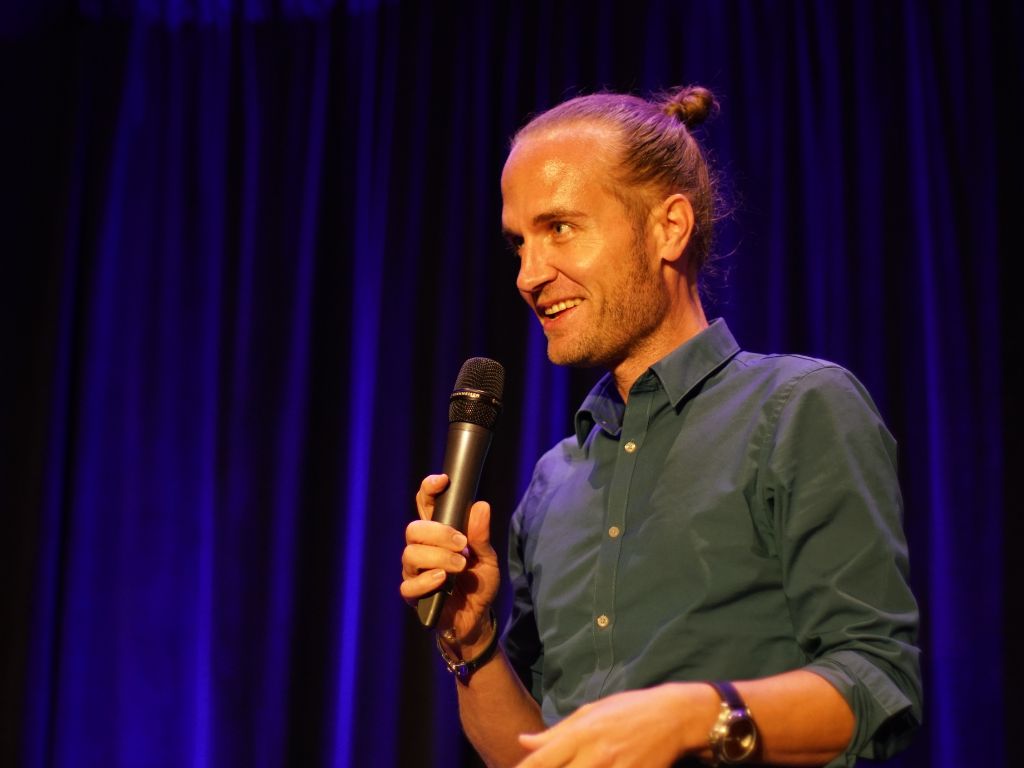
Discover how Cristiana Belodan sees the role of a Fractional CMO, the differences compared to a full-time executive, and how companies can accelerate growth through marketing strategy, fractional leadership, and effective executive decision-making.
Cristiana Belodan is an executive-level professional with over 20 years of experience in strategy, growth, and brand transformation, both in advertising agencies and in companies, working as a consultant and Fractional CMO.
Her differentiating perspective comes from having sat on both sides of the table: she understands both the agency logic and the client mindset, which allows her to build marketing structures focused on tangible results.
Today, she works independently with entrepreneurial companies and mature organizations undergoing change, all with the same shared objective: sustainable growth built from the inside out.
Fractional Insider: What was your transition from a traditional career to fractional leadership/consulting like?
Cristiana: The fractional model already existed in practice. There were companies hiring senior consultants for projects, interim executives, agencies operating in-house as an extension of the marketing team. But it wasn’t labeled as “fractional leadership.”
It was an operational reality without a name.
I had already experienced fractional responsibilities during my consulting years. So it wasn’t a sudden transition, but rather a later recognition of something I had been doing for years.
When you lead a team in an agency and act as the client’s de facto strategy partner, when you enter a business and completely rethink its marketing plan, you implicitly take on leadership, not just ownership of the situation.
So I decided to offer directly what companies actually need: executive-level decision-making and execution capacity, without the cost of a full-time commitment.
Fractional Insider: What attracted you most to this model and what challenges did it bring?
Cristiana: I was drawn to the freedom of accessing high-impact roles and leaving before becoming stagnant. In a fractional role, you get exposure to what’s at stake in a business without being caught in internal politics or organizational inertia. You work with multiple market realities simultaneously, which sharpens your strategic judgment much faster than a fixed role.
The hardest part isn’t delivering, but building trust quickly enough to be able to change something before your mandate ends. Companies hire you for your expertise, but sometimes treat you like a consultant who only validates what they already know. And the lack of continuity—the fact that you won’t stay to implement long-term—can become a regret, especially when you see the direction shift after you’ve left.
Fractional Insider: How do you choose the projects and clients you work with?
Cristiana: I don’t choose projects, I choose the people I’ll be working with. A good brief means very little if the person behind it isn’t willing to change something. I work with leaders who are aware they have a problem and are looking for a solution. With those seeking validation for a decision already made, it would be inaccurate to say that I deliver strategic consulting.
Fractional Insider: Tell us about a moment when you had a major impact as a fractional leader.
Cristiana: A positioning and rebranding project for a software company comes to mind. I started discussions with the owners convinced they knew their brand very well. They had a lot of data, regularly conducted customer satisfaction surveys, and had a clear history.
My first reaction was to propose a brand audit. Their response was hesitant: “Why do we need another research?”
I argued that the data they had answered different questions than the ones we needed to ask in that context. They agreed.
The process itself, not just the final results, completely changed their perspective. For the first time, they saw the gap between how they believed they were perceived and how they were actually perceived, and the rebranding direction fundamentally shifted.
Sometimes the biggest impact doesn’t come from the solutions you propose, but from the questions you allow yourself to ask.
Fractional Insider: What are the main differences between being a full-time executive and a fractional one?
Cristiana: As a full-time executive, you build for the long term but risk becoming part of the problem. As a fractional, you enter with the clarity of someone who has nothing to lose but everything to prove.
Fractional Insider: How do you explain the value of a fractional to a skeptical CEO?
Cristiana: I explain it through a question: how much do they estimate another six months without a clear direction will cost them? If the question makes them think, we have a conversation. If not, it’s probably not the right time yet.
Fractional Insider: What are the most common mistakes companies make when working with fractionals?
Cristiana: I avoid the notion of “mistake”; I prefer to believe that “you don’t know what you don’t know.” It’s an error born out of lack of awareness—you don’t yet understand the real potential of working with a fractional. In this case, a costly action is when companies treat a fractional as an external consultant rather than as an integrated member of the leadership team.
But by far the most common management trap: they hire you for your expertise and then limit your access to the information you need to apply it. You call a doctor but hide the symptoms.
Fractional Insider: How do you see the evolution of this career model in the coming years?
Cristiana: The only way is up. I believe that very soon the fractional model will no longer be a Plan B.
Fractional Insider: What advice would you give to a senior professional considering becoming fractional?
Cristiana: It’s difficult for me to give advice because every professional path is different. But if I were to name two essential conditions from personal experience, they would be reputation and networking. Not the LinkedIn network, but relationships built over years of consistently well-done work, authentic connections, and people who recommend you without being asked. You can know everything there is to know about the fractional model, but without people connections, doors open much harder.
The fractional leadership model is rapidly becoming one of the most effective solutions for companies seeking accelerated growth without the rigidity of a full-time role. Through her experience in marketing strategy, positioning, and brand transformation, Cristiana Belodan demonstrates that real impact doesn’t come from execution alone, but from the clarity of decisions and the ability to ask the right questions at the right time.