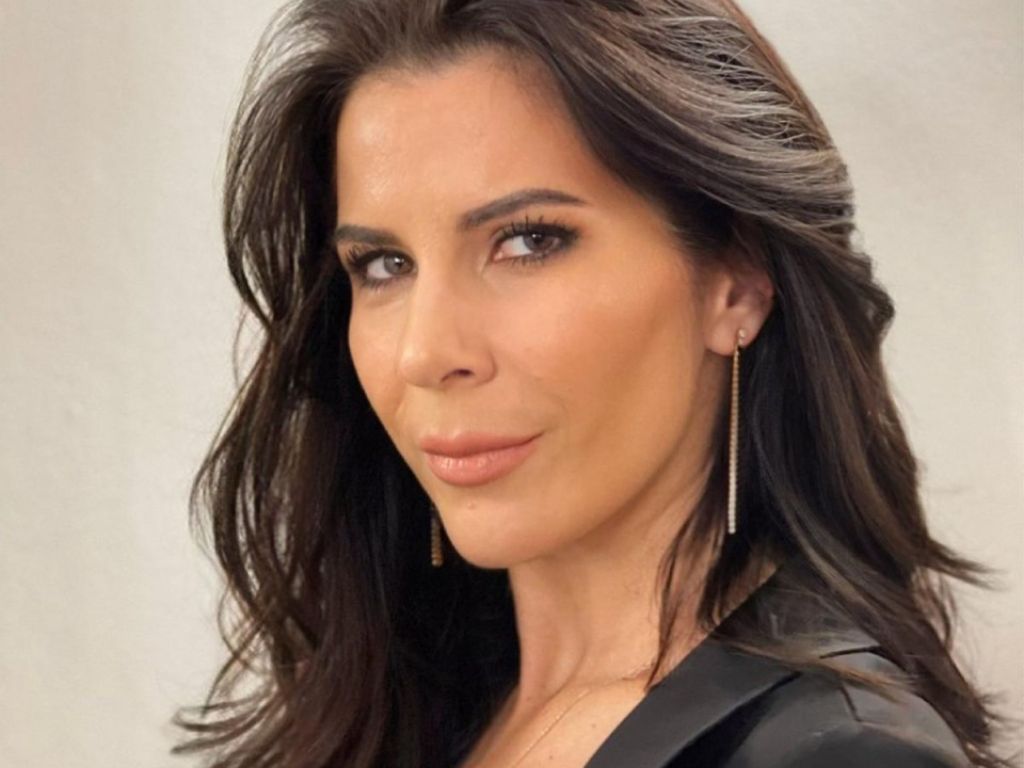
Alina Amza, Fractional HRD and founder of HRMarket, shares insights on transitioning from a stable role to fractional leadership, the challenges of the model, and how organizations can drive real impact through culture, bold decisions, and flexible expertise.
Alina Amza, Fractional HRD and founder of HRMarket, has been working for 20 years at the intersection of strategy and people, supporting leaders and teams in key moments of change.
Alina is known for her direct, warm, and empathetic approach in helping organizations align around a healthy culture. She believes real impact comes from honest conversations and the courage to challenge the status quo when it no longer serves people and the business.
Fractional Insider: How was your transition from a traditional career to fractional leadership/consulting?
Alina: It was a natural evolution, but not an easy one. After two decades in internal HR structures, I felt I could bring more value if I didn’t belong to a single organizational chart. The transition meant moving from holding a position to offering pure expertise in a competitive market. It was a process that pushed me completely out of my comfort zone. The predictability of a stable role provides security, and giving that up requires a very good understanding of the value you can bring, otherwise you risk testing your self-confidence.
Fractional Insider: What attracted you most to this model and what challenges did it bring?
Alina: I was drawn to the intellectual agility and the diversity of contexts. In the fractional model, you don’t have the chance to get bored, repeat the same proposals, or work on a single case.
The challenge? Being the one who points out the obvious issues in an organization where everyone has become used to not doing so. As a Fractional HR, you don’t have the luxury of time to be endlessly diplomatic. You need the courage to deliver uncomfortable truths and pragmatic solutions from the very first weeks.
Fractional Insider: How do you choose the projects and clients you work with?
Alina: I choose people, not companies. I deliberately look for leaders who understand the impact (whether positive or negative) that HR can have in an organization, mainly because people are, quite literally, the only competitive advantage organizations have. Yes, even in the AI era.
If I sense there is courage for honest conversations and a constructive approach, then I know my place is there, side by side with them.
Fractional Insider: Tell us about a moment when you had a major impact as a fractional leader.
Alina: Confidentiality and respect for my partners’ internal journeys are essential, which is why I avoid sharing specific case studies.
For me, major impact is seen less in reported numbers and more in shifts in internal dynamics, such as moving from a culture of silence to psychological safety through a feedback mechanism focused on learning, with no punitive role.
I would also mention rebuilding delegation mechanisms, especially in fast-growing organizations where founders tend to overcontrol, to the detriment of time allocated to strategic decisions.
A similar impact occurs when I manage to facilitate honest conversations between department leaders and align workflows to reorganize siloed teams into agile teams with clear, shared objectives.
Fractional Insider: What are the main differences between being a full-time executive and a fractional one?
Alina: The main difference is positioning. As a full-time executive, you are part of the system, you live the internal dynamics daily and deeply, and you build long-term from within. As a fractional, you remain deeply involved, but you maintain a healthy distance that allows you to be more objective. You have the advantage of asking difficult questions sooner, calling things by their name, and helping leaders make decisions without being caught in internal company politics.
The second equally important difference is pace. A full-time executive builds gradually over time. A fractional doesn’t have time to settle in and must create visible impact quickly.
Fractional Insider: How do you explain the value of a fractional to a skeptical CEO?
Alina: A skeptical CEO wants efficiency, concrete facts, and few words. So I talk less and ask more questions. Once I understand the pain point, the discussion naturally moves in that direction, which in most cases is: access to senior-level expertise exactly where it’s needed, without fixed costs, inertia, or the ramp-up time of a full-time role.
Essentially, a skeptical CEO is looking for certainty in results without the complexity of internal bureaucracy. And the skepticism disappears when they realize that a fractional is not there to agree with them at any cost, but to push for faster HR decisions that have been postponed.
Fractional Insider: What are the most common mistakes companies make when working with fractionals?
Alina: The biggest mistake is confusing a fractional with a consultant.
A consultant delivers solutions for you to implement on your own, while a fractional is an implementation partner. And for that, a second common mistake must be avoided: not involving the fractional in the day-to-day life of the team and keeping them away from the table where decisions are made. If you only bring me in to fix a specific crisis, I will do it, but you will miss the real value: my ability to identify and correct the systemic cause of that crisis.
Fractional Insider: How do you see the evolution of this career model in the coming years?
Alina: The Romanian market is still somewhat reserved toward the fractional model, especially in HR. In many organizations, there is still a reflex to associate seniority exclusively with a full-time role. At the same time, more and more scale-ups are reaching a point where they need HR leadership and decision-making, but cannot afford (or cannot justify) the cost of a full-time HR executive. And this is exactly where the fractional model becomes a pragmatic solution.
I believe that as the market matures, we will see more healthy collaborations like this: internal HR plus fractional leadership working together. This is because the fractional model is, globally, an effective response to the need for flexible expertise and rapid impact.
Fractional Insider: What advice would you give to a senior professional considering becoming fractional?
Alina: I would tell them that integrity is the only real brand. If you start saying what a CEO wants to hear just to extend a contract, you lose your essence and your value as an independent expert.
Then, they should be prepared for volatility. Moving from a stable role, backed by a brand, to a model where you are the product requires discipline, patience, networking, and resilience.
Last but not least, they should accept that they won’t be a fit for every client. Being fractional means focus, high energy, clear boundaries, and the ability to say no. It also means knowing when to step in, step out, and leave knowing you’ve built a self-sufficient team.
Alina Amza’s story shows that fractional leadership is not just a working model, but a shift in mindset. It is about embracing truth, making fast decisions, and building teams that can operate independently.