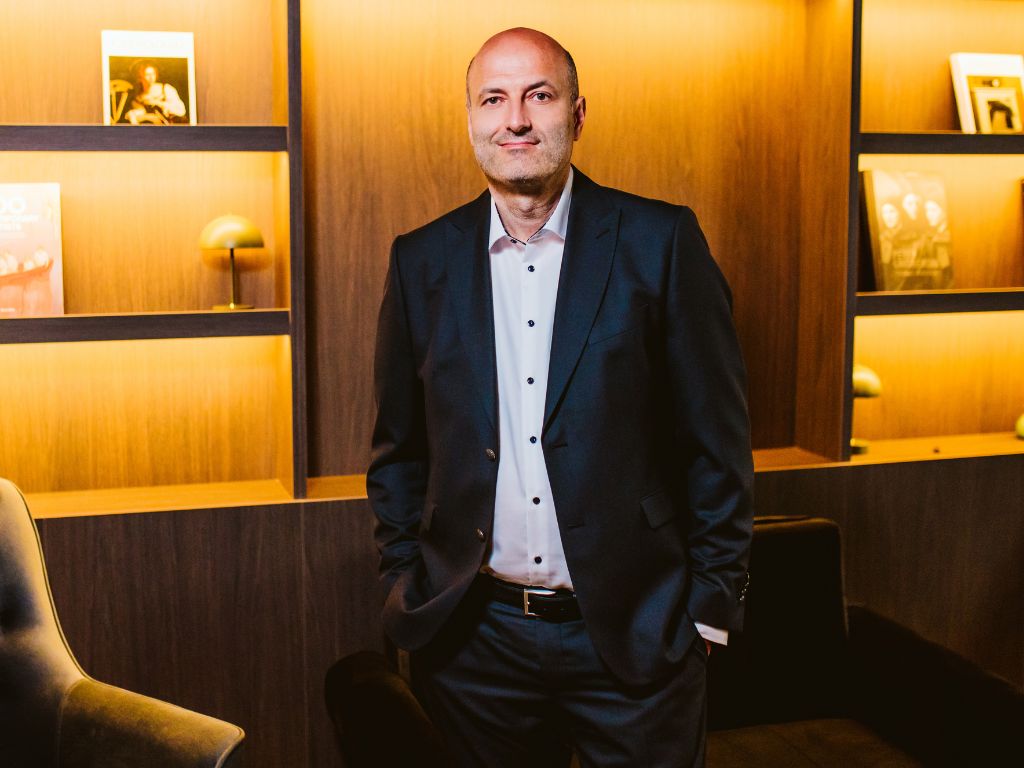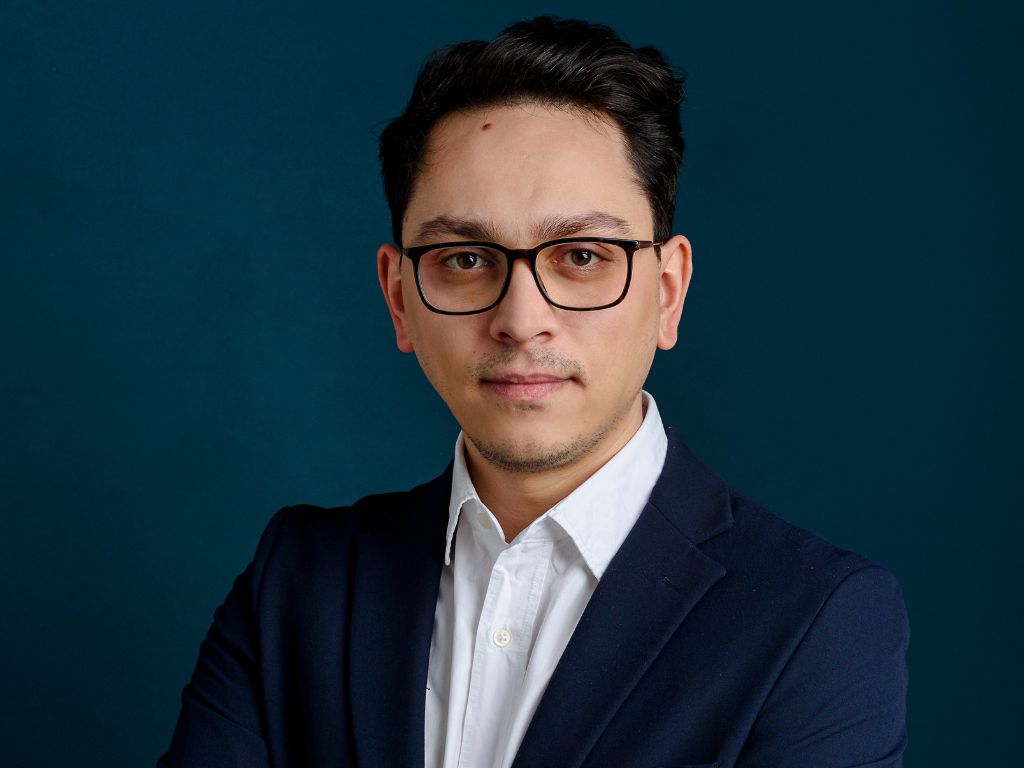
Dionis Schimbător shares his journey from consulting to fintech and fractional leadership, explaining why organization beats capital and how SMEs can scale through efficient operating systems.
Dionis Schimbător transformed his own consulting firm into the fintech ctrl.fund, realizing during the process of accessing funding that lack of organization is a bigger barrier to growth than lack of capital. With a track record in managing multi-million-euro projects, he now implements “operating systems” through ctrl.OS that turn chaos into predictability. In his role as a Fractional COO, he takes on execution mandates to provide SMEs with the discipline required for real scaling.
Fractional Insider: How was your transition from a traditional career to fractional leadership/consulting?
Dionis: My transition was organic, driven more by the market’s call than by a premeditated plan. I started in 2018 at a large consulting firm, where I conducted “X-rays” of hundreds of businesses for funding access. I went through three major metamorphoses: from employee to entrepreneur, from a boutique consulting company to a fintech startup (ctrl.fund), and from there to the role of Fractional COO through ctrl.OS. I realized that, most of the time, the entrepreneur’s need for organization and structure was far more pressing than the need for capital. In essence, I became “the shoemaker who made his own shoes” (my own tech infrastructure), and now I use the same tools to repair and optimize the “shoes” of other businesses.
Fractional Insider: What attracted you most to this model and what challenges did it bring?
Dionis: What attracts me most is the autonomy and the “outsider advantage.” As a fractional, I enter an organization without being clouded by daily operational routine or internal politics. The major challenge, however, was translating engineering concepts—such as process design, workflow, or operations audit—into a language that is tangible for entrepreneurs. You have to turn terms that sound dry into concrete actions that bring predictability.
Fractional Insider: How do you choose the projects and clients you work with?
Dionis: I focus on companies that have moved beyond the micro-enterprise stage and reached the point where the business has outpaced the founder’s ability to organize it. I work with teams of over 10 employees and revenues exceeding 1 million euros, especially in production, logistics, and distribution—environments with real complexity, where physical and digital flows must be perfectly synchronized. I avoid highly niche sectors like medical or HoReCa, where I believe added value requires native domain expertise.
Fractional Insider: Tell us about a moment when you had a major impact as a fractional leader.
Dionis: Impact in the fractional world is not a one-day shining event, but a 6–12 month process. One concrete example was transitioning a client from being a tenant to becoming the owner of their own logistics infrastructure, based on a profitability analysis that showed the investment was cheaper long-term than rent. In another project, I built from scratch the architecture of a new product: from the moment the client enters the system to delivery, everything was set up “like McDonald’s.” Everyone knows exactly what they have to do, eliminating arbitrariness and improvisation.
Fractional Insider: What are the main differences between being a full-time executive and a fractional one?
Dionis: A full-time executive risks settling into an anthropological comfort zone, where decisions are made to preserve stability rather than to innovate. A fractional comes in with a mandate of pure efficiency. I don’t occupy a spot in the org chart; I build the mechanism that makes the org chart function on its own. The difference lies in the ability to identify where the business is “bleeding” money due to inefficient processes, without being subjective or attached to “how things have always been done.”
Fractional Insider: How do you explain the value of a fractional to a skeptical CEO?
Dionis: I don’t try to convince them through definitions, but through “skin in the game.” I propose a timeframe and measurable results. There is no single “king KPI,” but we track indicators that hurt: labor productivity (how much an employee costs vs. how much they produce), inventory turnover speed, or OPEX optimization. If I can demonstrate to a CEO that we can turn chaos into a predictable system and free up their time for vision, skepticism disappears quickly. It also depends a lot on the need (or demand). Although problems are similar, each client has its own particularities.
Fractional Insider: What are the most common mistakes companies make when working with fractionals?
Dionis: The biggest mistake is lack of receptiveness and expecting the fractional to be a “mechanic” who fixes something and leaves, without management involvement. Then there are decisions made based on intuition instead of data. Intuition helps you start, but processes and numbers help you scale. Without real collaboration and full access to the “internal kitchen,” a fractional cannot perform miracles.
Fractional Insider: How do you see the evolution of this career model in the coming years?
Dionis: I see a democratization of this model, but also an acute need for regulation. In Romania, we are still in an early awareness stage. I believe the market needs to learn to distinguish between a mentor, coach, consultant, and fractional. I am a supporter of regulating the profession, similar to brokerage, to protect beneficiaries from scams or low-quality consulting. The future belongs to professionals who take responsibility for execution, not just advice.
Fractional Insider: What advice would you give to a senior professional considering becoming fractional?
Dionis: Don’t start from the assumption that your expertise is universally applicable without adaptation. Clients are looking for highly niche solutions that can be applied immediately. I recommend preparing a portfolio of potential clients before making the leap and accepting that this path involves a lot of effort, travel, and full dedication during implementation phases. And most importantly, “productize” your experience, as I did with the full launch of ctrl.fund scheduled for April 2026.
Dionis Schimbator’s story highlights that beyond funding, the real challenge for companies lies in internal organization. In an increasingly dynamic economy, fractional roles are becoming a catalyst for efficiency and sustainable growth, offering entrepreneurs not just direction, but real execution.