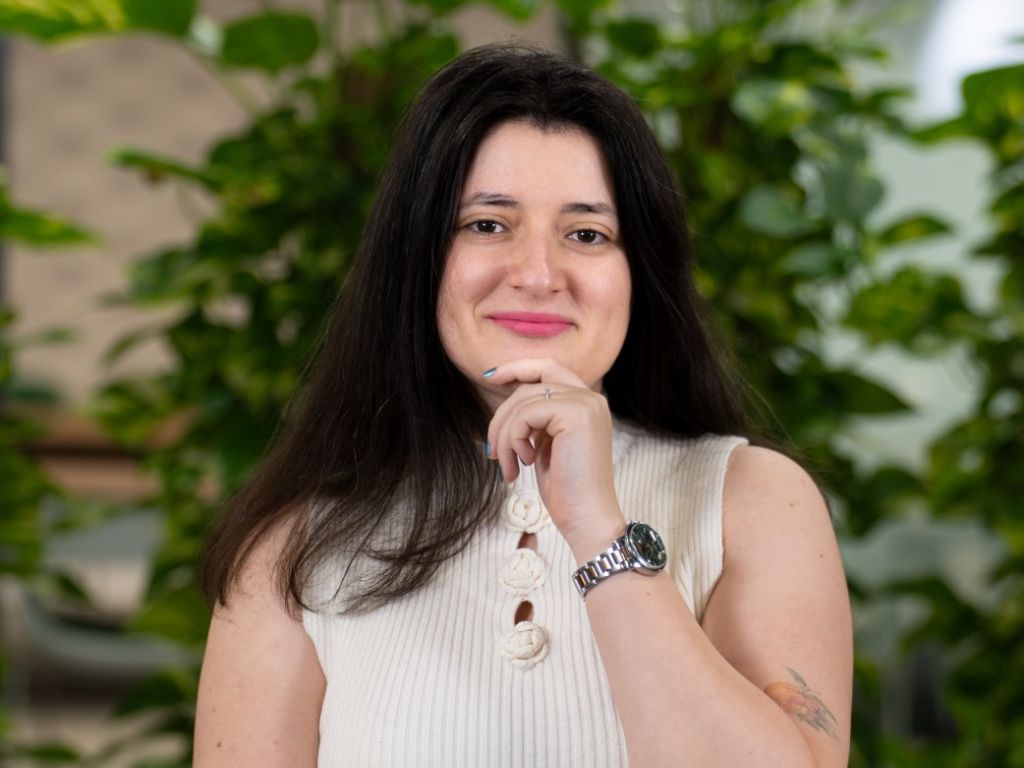
An interview with Yuliia Symenovych, a seasoned Fractional COO, exploring her transition, operational impact, and insights into the future of fractional leadership.
Yuliia Symenovych is the Chief Operating Officer at Profit Wales, bringing over a decade of leadership experience in operational management across both service-based and product-driven companies. With more than ten years in executive operations and over five years working as a Fractional COO, I specialize in optimizing processes, building scalable structures, and guiding founders through strategic operational decisions. My diverse background in digital, IT, marketing, and service organizations gives me a uniquely broad perspective on business models and team dynamics. Today, I help companies accelerate growth by integrating strong operational foundations without the overhead of a full-time executive.
Fractional Insider: How was your transition from a traditional career to fractional leadership/consulting?
Yuliia Symenovych: My transition to fractional leadership happened quite organically. After many years working as an operational director, business owners began approaching me for guidance on specific operational challenges. Most of them didn’t need — or couldn’t justify — a full-time COO, yet they lacked the competencies to improve their processes, team structure, or internal management.
I realized I could provide high-value expertise without being fully embedded in one company. By stepping in as a Fractional COO, clients gained access to my experience, operational frameworks, and strategic insights without needing to hire, onboard, or maintain a full-time executive. Over time, I saw that this model not only suited them — it suited me even more.
Fractional Insider: What attracted you most to this model, and what challenges did it bring?
Yuliia Symenovych: What attracts me most is the ability to support several businesses simultaneously while continuously expanding my own perspective. Working fractionally exposes me to different industries, team structures, business models, and leadership styles — and that significantly enriches my expertise.
The main challenge, however, is demonstrating results quickly. Fractional leaders must prove value early on so the client clearly understands the benefits of this model and trusts that the collaboration will deliver tangible outcomes.
Fractional Insider: How do you choose the projects and clients you work with?
Yuliia Symenovych: My strongest expertise is in digital, IT, service, marketing, and product-based companies — so I naturally gravitate toward these industries. I enjoy working with businesses where I understand the market dynamics and can apply up-to-date operational practices.
When selecting clients, I always start with a personal conversation. I need to understand their mindset, values, and approach to business. If we share similar views on growth, adaptability, and modern operational practices, then we move forward. But if a client is extremely conservative, resistant to change, or unwilling to adopt more effective management approaches, the collaboration is unlikely to bring meaningful results — for either side.
Fractional Insider: Tell us about a moment when you had a major impact as a fractional leader.
Yuliia Symenovych: One significant example was my work with an Amazon-focused agency. The owner was heavily involved in day-to-day operations, and the company lacked a proper structure for growth.
I rebuilt the organizational structure, hired key team members who could deliver real impact, and developed several functions that didn’t previously exist. We implemented processes that allowed the business to operate smoothly without the owner being involved in every operational task. This not only improved client delivery but also created a scalable foundation for long-term growth.
Fractional Insider: What are the main differences between being a full-time executive and a fractional one?
Yuliia Symenovych: The biggest difference is flexibility and focus. As a fractional leader, my role is centered on outcomes rather than hours. I am not tied to a strict 9-to-6 schedule; instead, we establish clear goals, weekly rituals, and expected results.
In a full-time role, I would typically execute many tasks myself. As a fractional COO, I guide the team and leadership toward the right priorities while delegating execution to internal specialists. My value lies in direction, clarity, and operational expertise — not in being the hands-on operator.
Fractional Insider: How do you explain the value of a fractional leader to a skeptical CEO?
Yuliia Symenovych: I explain that a fractional leader gives them access to top-tier expertise they otherwise may not need or be able to afford full time. Many CEOs unintentionally slow down their growth because they lack operational knowledge — not because they lack ambition.
A fractional COO doesn’t just give advice once and disappear. I integrate into the company, understand the real bottlenecks, and support the team continuously while keeping them accountable. This helps CEOs avoid classic operational mistakes, choose the right priorities, and scale faster with fewer blind spots and risks.
Fractional Insider: What are the most common mistakes companies make when working with fractionals?
Yuliia Symenovych: One common mistake is treating a fractional leader like a consultant who comes in for a few conversations. Fractional roles are deeper — they require access to the team, processes, and real business data.
Another mistake is expecting results without implementing recommendations. Fractional work relies on collaboration: I create the strategy and direction, but the internal team must execute. When companies fail to commit to these changes, they limit the value they could receive.
Fractional Insider: How do you see this career model evolving in the coming years?
Yuliia Symenovych: Fractional leadership is becoming increasingly mainstream, especially as companies seek senior expertise without expanding payroll. Remote work, global teams, and the rise of flexible business models have made it far more acceptable to bring in executives part-time.
I believe the demand for fractional roles will continue to grow — particularly in operations, finance, HR, and marketing — as companies recognize the efficiency and strategic advantage of this model.
Fractional Insider: What advice would you give to a senior professional considering becoming fractional?
Yuliia Symenovych: Start by defining your core expertise and the type of clients you want to support. Fractional work requires clarity in positioning and confidence in your value.
Also, prepare to adapt: every company has different processes, cultures, and expectations. The more flexible and open-minded you are, the more impactful you will be.
And finally — results matter. Focus on delivering quick, meaningful wins. That’s what builds trust, reputation, and long-term demand in the fractional space.
Yuliia Symenovych’s story demonstrates how fractional leaders can drive meaningful transformation by combining operational expertise with a flexible, outcome-driven approach. As more companies seek scalable and efficient growth models, the fractional role continues to prove its strategic value.