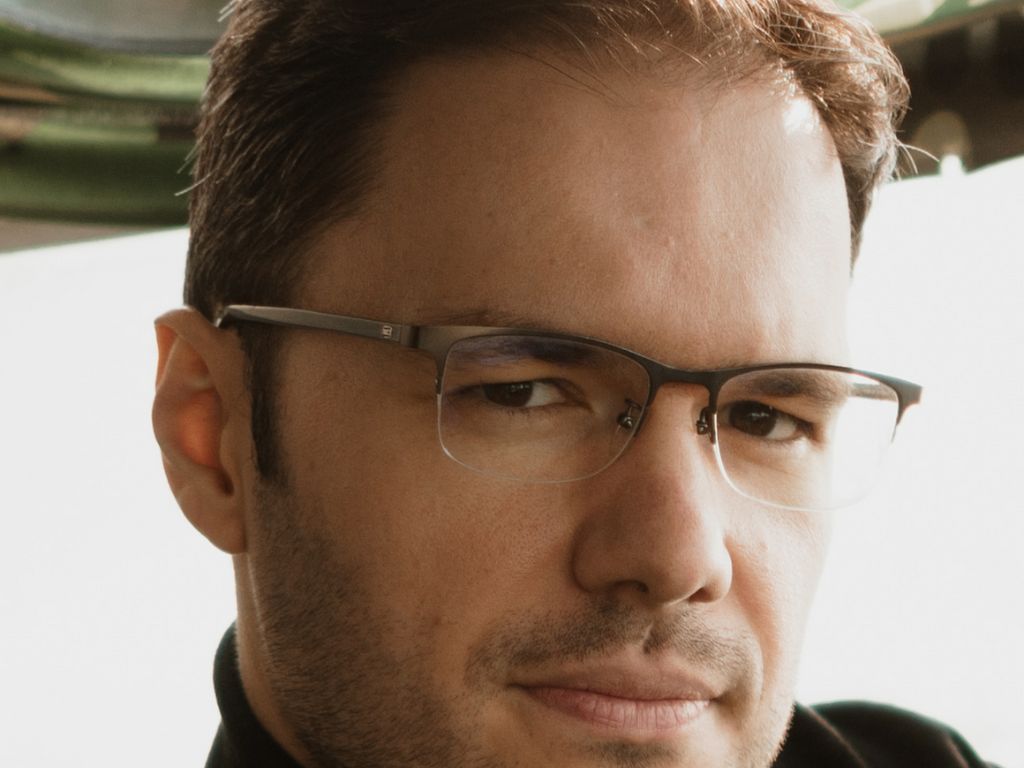
With over 15 years of experience in technology, Vladi Iancu shares insights on transitioning to fractional CTO roles, strategic decision-making, rapid validation, mindset shifts, and the differences between full-time and fractional leadership.
Vladi Iancu helps startups and companies in Romania take their digital products to the next level. With over 15 years of experience in web development and leadership, he builds strong teams and sustainable business models that can compete on the European and global markets. Having worked both in services and product companies, he understands firsthand what it really means to build things right from the ground up.
Fractional Insider: How was your transition from a traditional career to fractional leadership/consulting?
Vladi Iancu: For me, the transition happened quite naturally. In the past, I ran a services company and was constantly working with multiple projects and clients at the same time. From this perspective, the role of a fractional CTO is very similar.
The transition itself was influenced by “external” factors. I was working with a coach who introduced me to this concept and connected me with other people already working as fractional CTOs. That’s how I realized it was something familiar to me and that I could try bringing this model to the Romanian market, even though it’s not as well developed here yet. I strongly believe in Romania’s potential from a technology and product standpoint. We have the hard skills; what we need is a shift in mindset, perspective, and some funding so our ideas and products can reach a global audience.
Fractional Insider: What attracted you most to this model, and what challenges did it bring?
Vladi Iancu: Every company, team, and industry is different. This model allows me to grow on multiple levels at the same time. It’s a big challenge, but it’s something I wanted. On the other hand, maintaining a steady client pipeline can be quite difficult.
I’ve always been the kind of person who gets bored easily. This model gives me no reason to be bored and no excess free time either.
Inevitably, this role exposes me to very different people. And from many of them, I always find something to learn.
Fractional Insider: How do you choose the projects and clients you work with?
Vladi Iancu: To achieve the best results, it’s important that projects align with my strengths. I’m analytical, data-driven, and customer-oriented. Most of the time, my role is to fill a gap that companies have by using technology in a creative way. Chemistry with the rest of the management team is also essential. Just a few meetings or hands-on workshops are usually enough to identify whether that chemistry exists or not.
Another very important criterion for me is the company’s mission. It has to be something I genuinely resonate with in order to fully commit to the project.
Fractional Insider: Tell us about a moment when you had a major impact as a fractional leader.
Vladi Iancu: Most of those moments were when I said “NO.”
By doing so, I was able to stop budget allocations for initiatives with long planned timelines and no prior validation. We rethought and repositioned them as validation experiments with much shorter implementation cycles.
For example, in one of the companies I worked with, the plan was to develop a fairly complex B2C product, but there was no validation that the product was actually needed. So we changed the plan, built a quick proof of concept, launched it, and clearly observed low interest. This allowed us to reallocate resources entirely differently—resources that at the time represented about 50% of total costs—and to pivot.
Fractional Insider: What are the main differences between being a full-time executive and a fractional one?
Vladi Iancu: The difference in availability is obvious and natural. One consequence of allocating fewer hours or days is that your efforts are focused only on what truly matters. You end up working only where real value and scalability can be created.
In some companies, this means spending less time on classic one-on-one management and more time working with others on automation, direction setting, or strategy. In that sense, it’s a supportive role for other leaders.
In other companies, however, it can be a much more hands-on role—one that provides clarity, unblocks dead ends, or delivers the tools needed to reach the next level.
Fractional Insider: How do you explain the value of a fractional executive to a skeptical CEO?
Vladi Iancu: First, I’d want to understand where that skepticism comes from and what the underlying reasons are.
Then I’d see whether those concerns can be addressed or not. It’s clear to me that not every company—and not every CEO—is suited for a fractional executive role. So it’s not always necessary to push for a specific project.
That said, it’s also clear that, in general, the risks are much lower when you have someone in a fractional role on the team. A fractional executive can start faster, requires a smaller budget than a full-time hire, and if the collaboration doesn’t work, it can be ended just as quickly. On the other hand, hiring a full-time C-level executive is far more costly in every possible way.
Fractional Insider: What are the most common mistakes companies make when working with fractional leaders?
Vladi Iancu: I see two common mistakes.
They ignore the importance of asynchronous communication. For me, at least, when all communication is synchronous—long meetings that could easily be an email—a lot of time is wasted, and collaboration becomes heavy and inefficient.
They treat the role as just another form of outsourcing. Outsourcing works when you know exactly what you want, how to achieve it, and in what timeframe. Most of the time, however, that’s not the reality. We often think we know what we want, but we don’t truly understand our customers’ needs. A fractional executive role is the complete opposite of outsourcing. A fractional leader needs to be as involved as any other member of the management team. They must be included in all important discussions and decisions, be able to initiate conversations, and have the authority to make certain key decisions. Proper integration of the role is essential for success and for avoiding frustration or misunderstandings on both sides.
Fractional Insider: How do you see this career model evolving in the coming years?
Vladi Iancu: It’s hard to make predictions, especially in such a dynamic market. On one hand, I see growth potential as more companies and leaders discover and test this concept. At the same time, I don’t think it’s a universal model—it doesn’t fit every organization. As a result, the overall market share may remain relatively limited.
On the other hand, technological evolution and advances in AI could bring surprises, making fractional roles increasingly in demand in the future. This could allow the market to grow organically and much faster than we expect.
Fractional Insider: What advice would you give to a senior professional considering becoming fractional?
Vladi Iancu: Counterintuitively, I’ll start with a warning: things are not as simple or as glamorous as they may seem from the outside. If you’re not naturally organized, you’ll struggle. Constant context switching can be exhausting, and the lack of stability is not something to ignore. Before becoming fractional, it’s important to have an honest conversation with yourself.
There’s also the need to promote your services and handle the administrative side—contracts, invoices, all of it. You don’t need to be experienced in everything from the start, but you do need to be aware of and willing to take on this effort if you want to make the switch.
I think many of us underestimate the importance of stability. Fractional roles are rarely indefinite. Either the goal of the collaboration is achieved, or the company grows so fast that the need shifts from fractional to full-time.
Being without active projects and not knowing when the next one will start can be stressful for anyone. That’s when you realize that, in addition to working on client projects, you also need to constantly work on yourself—developing new skills, keeping your knowledge up to date, investing in education and networking, and building a consistent pipeline of opportunities.
Vladi Iancu’s journey highlights that fractional leadership is not about constant availability, but about clarity, intentional decisions, and measurable impact.