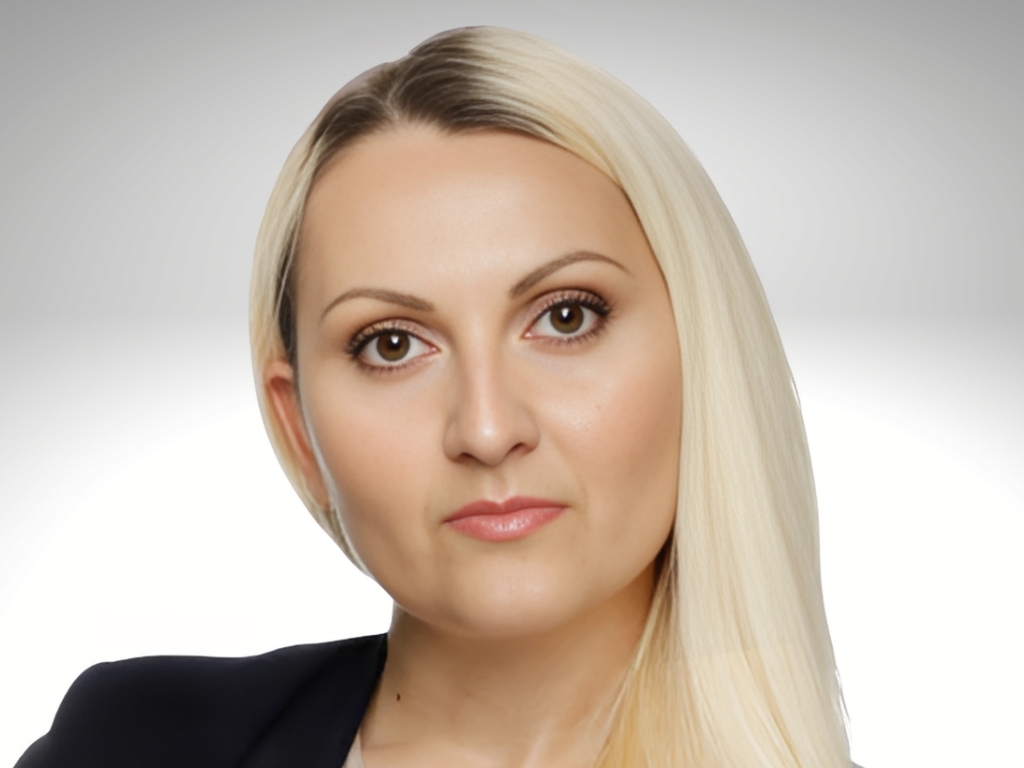
Discover the story of Victoria Kruchevska, a Fractional COO in Berlin, an expert in startups and IPOs, with a real impact on the European ecosystem.
Berlin wakes up slowly on a Monday morning. The city always carries that effortless, laid-back vibe, as if last night had been spent at an art opening or an indie concert. In a minimalist café in Mitte, at a quiet table, Victoria Kruchevska opens her laptop. She checks two KPI dashboards, replies to a few Slack messages, and schedules three meetings for the rest of the day.
“No two days are the same. That’s the beauty of my role — and sometimes the challenge,” she says with a smile.
Victoria is a Fractional COO — in short, a top executive who works part-time with several companies, usually startups and scale-ups, exactly when they need order, processes, and operational strategy. She’s not a traditional consultant, but she’s not a full-time employee either. She’s more like an invisible architect — someone who comes in, builds the foundation and the structure, then steps away, leaving the house to stand on its own.
From Banking and Corporations to Tech Startups
Victoria’s career is like a map with multiple continents. She began in the banking world, working in investment and consulting. She contributed to a $60 million IPO at Commerzbank and earned top certifications: CFA (Chartered Financial Analyst) and FRM (Financial Risk Manager).
“In consulting, you quickly learn to see the essence of an industry. You have to understand a new business in a matter of weeks and propose actionable solutions. But what I noticed was that after you deliver the report, the company is left alone to implement it. And often, implementation is harder than analysis.”
This realization pushed her toward more hands-on roles. She moved into the startup world, where the pace is fast and every day brings decisions that can change the company’s direction. In Berlin — one of Europe’s most vibrant tech hubs — she found her place.
“I love the energy of founders. They’re visionary, passionate, sometimes chaotic. My job is to bring the structure that helps them turn an idea into a scalable business.”
Why Become a Fractional COO?
What began as a transition from consulting to startups became a discovery of a new model: fractional leadership.
“I realized that my maximum value appears during transition moments: before a funding round, during a scaling phase, or when a company feels like it’s drowning in its own chaos. There was no need for me to be there full-time for years. What they needed was for me to step in for a few months, build the systems, and then let the team fly.”
Her Toptal profile sums it up clearly:
“Every entrepreneur needs a trusted advisor and sparring partner to troubleshoot ideas, develop financial intelligence, and navigate complex decisions. That’s where Victoria comes in.”
— Toptal
This combination of sparring partner and trusted advisor best defines the role. She’s not just the “head of operations” — she’s the founder’s thinking partner, the critical voice, and at the same time, the friend who’s not afraid to tell the truth.
What a Workday Looks Like
If you were to imagine a Fractional COO, you’d probably picture someone juggling three phones, five Slack windows, and a “to-do” list covering three different companies.
Victoria describes a typical day:
- Morning: She reviews financial reports and KPIs. “It takes me an hour to check for any alerts: cash flow below target, rising churn, delivery issues.”
- Midday: Meetings with founders or team managers. “Here you have to be coach, analyst, and negotiator all at once.”
- Afternoon: Execution time — reorganizing processes, implementing tools, writing procedures, and training teams.
- Evening: Networking. “In Berlin, it’s impossible to attend a startup event and not meet a founder who needs operational help.”
Real Impact: Case Studies
At a fintech company preparing for a funding round, Victoria was brought in for “three months.” The startup had a promising product but incomplete financial reporting and chaotic customer support.
“The first thing I did was build a clear cash flow system. Then I structured the customer support function, which had been entirely ad-hoc. After three months, not only did they secure €5 million in funding, but investors said they were impressed by the company’s operational maturity.”
In another project, a SaaS startup with 50 employees was struggling with scaling.
“They had a strong product team but lacked processes in sales and marketing. I introduced OKRs, restructured the sales team, and built a clear funnel. Within six months, recurring revenue increased by 40%.”
These examples show what “fractional” truly means: high impact, in a short time, without being tied to one organization for years.
Her Leadership Philosophy
Victoria often talks about clarity.
“A Fractional COO is like a surgeon. You step in, identify the problem, apply the solution, and then leave the organism to function on its own. If the company still depends on me after I leave, it means I haven’t done my job properly.”
She believes the future of leadership is hybrid:
“Not every company needs full-time executives. Expertise can be accessed modularly. That offers flexibility and access to top talent.”
The Challenges of an Unconventional Role
It’s an attractive model — but not without its challenges.
- Rapid adaptation: “You have one week to understand a company’s culture and start delivering solutions.”
- Lack of visibility: “Sometimes people see you as a temporary outsider. You have to earn their trust quickly.”
- Work-life balance: “You work with 3–4 companies simultaneously. If you don’t set boundaries, you’ll burn out.”
Berlin – A Fertile Ground for Experimentation
Why Berlin? Because the city is a laboratory.
“Founders here are open to trying new ideas. It’s an international hub — I work with teams from ten different nationalities without ever leaving the city.”
Berlin is also a place where fractional executives are becoming increasingly visible. The tech ecosystem needs people like Victoria — those who can bring order to chaos without tying up budgets with permanent salaries.
The Future of the Fractional Model
In the U.S., almost half of companies use fractional executives. In Europe, the phenomenon is still in its early stages.
“Cost pressure, the talent shortage, and the need for flexibility will push European companies toward this model. We’ll see marketplaces for fractional executives, just like we have for freelancers. And I believe that in a few years, the idea that ‘you must have a full-time COO’ will be seriously questioned.”
The Architect of the Future
As we wrap up our conversation, Victoria stands up and prepares for another meeting.
“Today I need to help an e-commerce startup fix its logistics issues. It’s fascinating how each industry has its own challenges, yet they all need the same thing: structure and clarity.”
As she walks away through the bohemian streets of Berlin, you realize her role isn’t glamorous on the surface — it’s not about fancy titles or luxurious offices. It’s about being that point of balance between a founder’s vision and the harsh reality of daily operations.
And in an increasingly fragmented and dynamic world of work, that might just be the most valuable thing anyone can offer.