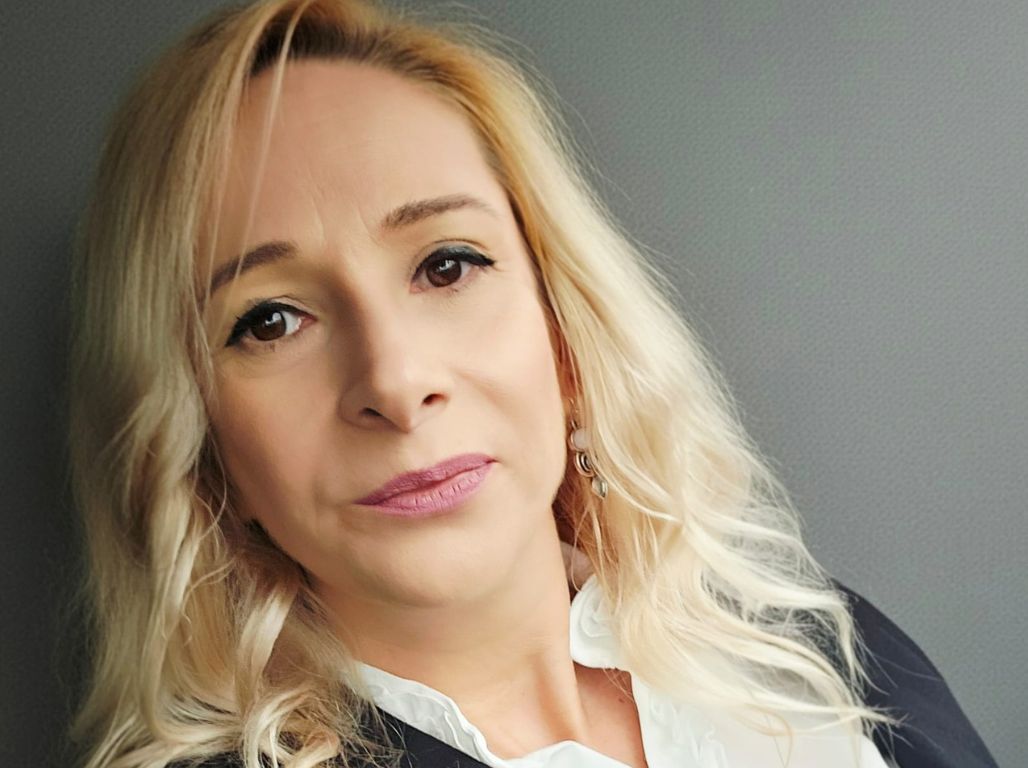
Interview with Sylvia Cebanu, a Fractional CFO with over 15 years of international experience. Explore her insights on financial strategy, startup scaling, and the rising value of fractional leadership.
Sylvia Cebanu is a Fractional CFO with over 15 years of experience in finance, working with startups and companies in industries such as fintech, AI robotics, edtech, biotech, and media. With an international career that includes collaborations in the United States, the United Kingdom, and the European Union, Sylvia provides expertise in strategy, fundraising, and financial management. In recent years, she has supported founders and leadership teams in becoming “investor-ready” and transforming financial data into strategic decisions. Her approach combines analytical thinking with a deep understanding of the growth processes specific to startups. Her mission is to bring clarity, structure, and confidence to the financial decisions of companies with scaling potential.
Fractional Insider: How was your transition from a traditional career to fractional leadership/consulting?
Sylvia Cebanu: The transition was natural and easy, because I already had the necessary experience and felt ready for this step. I wanted a change that would offer me more flexibility and diversity in projects, and the role of Fractional CFO provided exactly that. My entrepreneurial nature helped me quickly embrace this work model, adapt to various industries, and bring value where companies most need financial clarity and strategic direction.
Fractional Insider: What attracted you most to this model, and what challenges did it bring?
Sylvia Cebanu: What attracted me most was the flexibility and variety of projects. I have the opportunity to work with founders from diverse industries, each with their own vision of how they can contribute to the evolution of humanity and their respective fields. It is a dynamic environment, full of energy and new ideas—practically, there is no room for routine or boredom. The challenge comes from the constant need to adapt to very different business models and teams, but that is precisely what makes it so valuable and stimulating.
Fractional Insider: How do you choose the projects and clients you work with?
Sylvia Cebanu: Most of the time, new clients come through recommendations from those I‘ve collaborated with before, and I believe that says a lot about the trust and results we’ve achieved together. When selecting projects, what matters most to me is the working synergy with the founder or CEO, because our relationship is the closest and has a direct impact on the success of the collaboration. I look for partnerships based on trust, transparency, and a shared vision for the direction in which we want to take the company.
Fractional Insider: Tell us about a moment when you had a major impact as a fractional leader.
Sylvia Cebanu: A major-impact moment was working with a company whose CEO had a remarkable ambition for growth. He wanted to reach an ambitious revenue milestone and expand globally. After analyzing the operational structure, I realized that in its current form, to support that volume of clients, the company would have needed to hire thousands of people—a model that was neither sustainable nor lean. In addition, some revenue streams had negative unit economics, which limited scalability. Instead of reducing ambitions, we performed a reality check: we restructured the business model, optimized processes, and adjusted the product so the organization could support those growth objectives in a profitable and sustainable way.
Fractional Insider: What are the main differences between being a full-time executive and a fractional one?
Sylvia Cebanu: In terms of responsibility and involvement, there is no real difference. As a Fractional CFO, I am just as invested as a full-time executive. The main difference is flexibility: I can work with several companies in parallel, depending on their needs and growth stages. This allows me to bring a broader perspective based on experiences across industries and business models, without compromising quality or commitment to each client.
Fractional Insider: How do you explain the value of a fractional to a skeptical CEO?
Sylvia Cebanu: I would explain it through results, not concepts. A Fractional CFO brings the same strategic expertise and experience as a full-time CFO, but in a more cost-efficient way and tailored to the company’s real needs. Essentially, you get an executive-level partner who helps you structure your finances, grow sustainably, and be investment-ready—without hiring a full-time executive before the business is ready for it. The value becomes visible quickly, through financial clarity, better decisions, and accelerated results.
Fractional Insider: What are the most common mistakes companies make when working with fractionals?
Sylvia Cebanu: Honestly, I haven’t encountered many mistakes in the collaboration itself, because success depends heavily on how proactive you are as a fractional professional. However, one of the biggest mistakes is not hiring a fractional when the company cannot yet afford a full-time executive. During growth stages, a Fractional CFO can provide exactly the right balance between strategic expertise and financial efficiency, preventing costly decisions or the lack of clarity that can slow down development.
Fractional Insider: How do you see this career model evolving in the coming years?
Sylvia Cebanu: I see this model becoming increasingly widespread and essential in the business ecosystem. As the number of startups and growing companies continues to increase, the need for flexible financial expertise will grow as well. The fractional model offers exactly that balance between access to top-tier know-how and financial efficiency—a strategic advantage for founders and investors alike. I believe it will become a standard component in how future executive teams are built.
Fractional Insider: What advice would you give a senior professional considering becoming fractional?
Sylvia Cebanu: If they have the expertise and independence needed, they shouldn’t be afraid to take the leap. The fractional model offers extraordinary freedom, project diversity, and the opportunity to work with inspiring people. It is a career path that challenges you, energizes you, and, honestly, is much more interesting than a traditional full-time role.
Her experience shows that success doesn’t depend on unlimited resources, but on informed decisions, solid structures, and the ability to rethink a business from the ground up when needed.