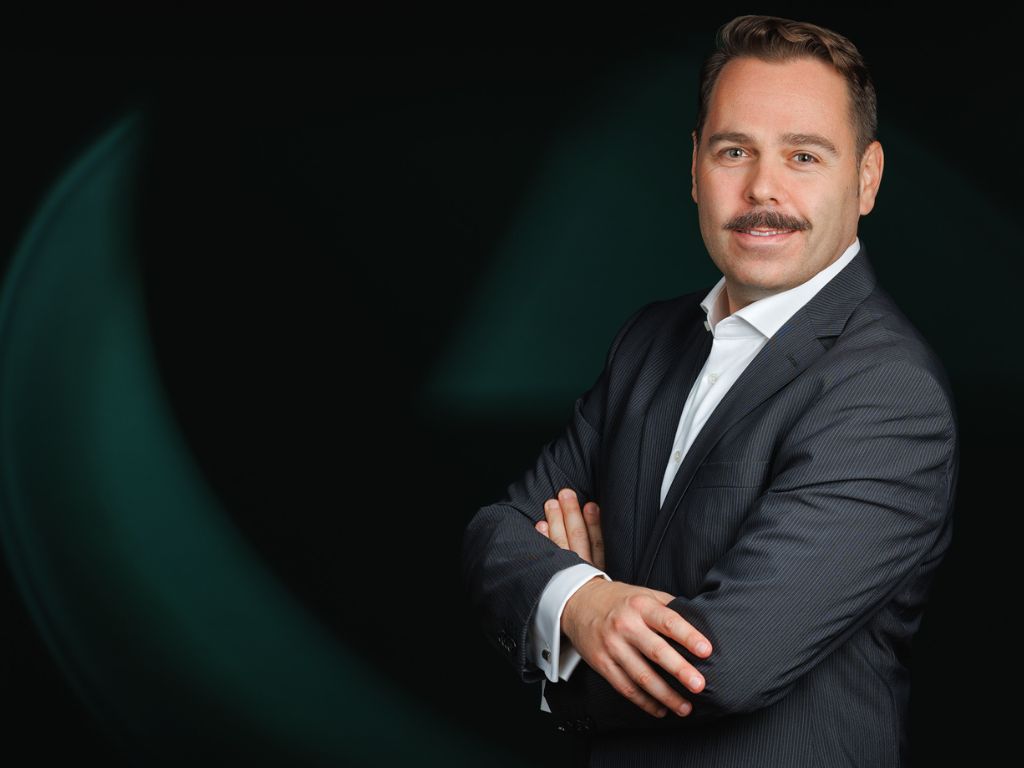
Discover how Mykhailo Zimin, a fractional COO, helps entrepreneurs and CEOs build high-performing businesses, develop efficient teams, and implement sustainable management systems.
Mykhailo Zimin is a Fractional COO and strategist for CEOs with more than 10 years of experience in business systematization and operational management. He started his career as a project manager and grew into the role of COO at the “Business Constructor” group of companies.
From 2018 to 2024, he held the position of COO in this international group, simultaneously managing six businesses and more than 120 employees. His responsibilities included scaling operations, building processes, and managing teams. Today, Mykhailo works as a fractional leader with entrepreneurs and CEOs, helping them design effective business systems, balance strategy with operations, and prepare the next generation of managers through educational products. He is also the founder of the Play Padel Camp project in Portugal and actively develops his own initiatives in education and entrepreneurship.
Fractional insider: How was your transition from a traditional career to fractional leadership/consulting?
Mykhailo Zimin: My transition was a natural step in my professional growth. I worked for more than five years as COO in a group of companies that combined EdTech, consulting, a business club, events, and recruitment. Over time, I began to feel burnout and realized it was time for change. I didn’t want to stay inside a single company full-time – I wanted to scale my expertise and influence a larger number of businesses.
CEOs and business owners began reaching out to me for advice, asking for help in building management systems. I was looking for a format that would allow me to create maximum impact while using my time efficiently, and I found that in the fractional model. It allowed me to work with multiple companies at the same time and focus on strategic impact instead of endless “firefighting.”
Fractional insider: What attracted you most to this model, and what challenges did it bring?
Mykhailo Zimin: Two things attracted me most:1. The ability to work with different companies and cases at the same time. This gives me the chance to impact more businesses, make them more profitable, and help their teams become happier and more effective.
2. Freedom. Freedom to choose the clients I work with and the format of my involvement. I can take on projects where my expertise truly creates value, rather than spending energy on routine.
The biggest challenge has been explaining this model to the market. In the US and Western Europe, fractional executives are already a well-established practice. But in Eastern Europe, I’ve had to prove its effectiveness through real cases and show why hiring a fractional COO is more cost-effective than keeping a high-paid full-time executive on the payroll.
Fractional insider: How do you choose the projects and clients you work with?
Mykhailo Zimin: I always look at three factors: 1. The owner’s willingness to change and to delegate.
2. Whether I see a point of impact where my involvement can quickly bring results.
3. My personal interest in the industry and the team.
I don’t take on projects where I feel the CEO is looking for a “magic pill” but isn’t willing to put in the work. Success is always a joint process.
Fractional insider: Tell us about a moment when you had a major impact as a fractional leader.
Mykhailo Zimin: Almost every collaboration brings meaningful results, but one recent example stands out.
I worked with an international IT company that was at a critical transition stage – moving from the “Go-Go” phase to “Adolescence” (according to Adizes’ model). This is one of the riskiest stages because it requires building a full management system and the owner must learn to delegate.
When they brought me in as Fractional COO, I was able to help the company:design a new organizational structure, implement regular management practices, establish strategic planning and execution, document and embed all key business processes, optimize hiring, onboarding, and employee training, introduce a system of management reporting and dashboards.
In addition, I coached and developed an internal operations manager, who eventually took over responsibility for key processes.
The results were significant: the company began to grow systematically without crises, gained transparency, long-term goals and planning, and built a C-level layer that took over operational management.
Fractional insider: What are the main differences between being a full-time executive and a fractional one?
Mykhailo Zimin: A full-time executive is deeply immersed in daily operations – managing staff, finances, marketing, and resolving tactical issues. This is important, but it often leaves little space for strategic thinking.
A fractional leader operates differently. They look at the business from the outside, keeping an independent and objective perspective. The advantage is a wider horizon of vision, since they usually work with multiple industries in parallel. This allows them to avoid common mistakes and accelerate growth.
Fractional executives are not “operational firefighters.” They are system architects – building structures, processes, KPIs, developing middle management, and mentoring department heads. As a result, the company doesn’t just get solutions for today’s problems, but a sustainable management system that continues to function even without the fractional’s constant presence.
Additional advantages of the fractional model:
- Cost efficiency: companies pay only for the expertise and time they actually need.
Flexibility: start with a few days a month and scale involvement when needed.
Objectivity: a fractional is not part of internal politics and can speak openly.
Acceleration: with cross-industry experience, they quickly identify opportunities for scaling and optimization.
Knowledge transfer: one of the greatest values is teaching the team to think systemically and manage at a higher level.
If a full-time executive is a “manager-leader,” then a fractional is more of a strategist and mentor who helps the business move to a new stage of maturity.
Fractional insider: How do you explain the value of a fractional leader to a skeptical CEO?
Mykhailo Zimin: I always start with a business audit: reviewing the financial model, team structure, processes, marketing, sales, and organizational culture. The outcome is not abstract advice but a clear roadmap for the CEO: what to optimize right now, where resources are leaking, and which strategic steps will enable scaling over the next 6–12 months.
I explain it like this: you get the benefit of 10+ years of top executive experience but only pay for the portion you truly need. It’s like a subscription – instead of buying the entire software suite, you only pay for the functions you actually use.
But there’s one crucial condition: fractional leadership only works if the CEO and owners are truly ready for change and willing to trust me. If there’s skepticism or a need to control every step, I simply don’t take the project. Real results only come when there is trust, open communication, and genuine readiness for transformation.
Fractional insider: What are the most common mistakes companies make when working with fractionals?
- Mykhailo Zimin: Seeing the fractional as a “savior.” A fractional doesn’t do everything alone – success requires active involvement from the CEO and the team. Bringing them in too late, when the business is already in crisis. At that stage, it’s more about rescue than building. Fear of delegation. If the owner is unwilling to give up part of the control, the collaboration remains superficial.
- Fractional insider: How do you see this career model evolving in the coming years?
Mykhailo Zimin: The role of fractional leaders will only expand. In the US and Western Europe, this model has already become standard. Surveys show that over 60% of SMEs in the US have engaged a fractional executive (COO, CFO, CMO, etc.) at least once. The reason is simple: businesses get seasoned expertise without paying for a full-time executive.
Entire platforms and communities for fractional executives have emerged in the US, and demand grows every year. On LinkedIn, thousands of professionals now list “Fractional Executive” as their title – it’s mainstream.
In Eastern Europe, including Ukraine, Romania, and Poland, this format is still emerging, but the trend is clear. More and more CEOs are realizing that keeping a full-time top executive is expensive and not always efficient, while a fractional allows them to cover key needs more precisely. This is especially relevant for companies in transition – too big to be startups, but not yet large enough to operate as corporations.
Within the next 3–5 years, I believe the fractional model will become as common in Eastern Europe as it already is in the US. Entrepreneurs increasingly see that flexibility and access to expertise “on demand” are far more effective than maintaining high fixed costs for full-time executives.
I also see it as part of my mission: to help this model take root in our region, demonstrate its value through practical cases, and prove that a fractional is not just a “temporary consultant” but a strategic partner who can elevate the business to the next level.
Mykhailo Zimin demonstrates that the fractional model is not just a trend, but a strategic solution for entrepreneurs and CEOs who want to grow their businesses efficiently, develop high-performing teams, and implement sustainable management systems.