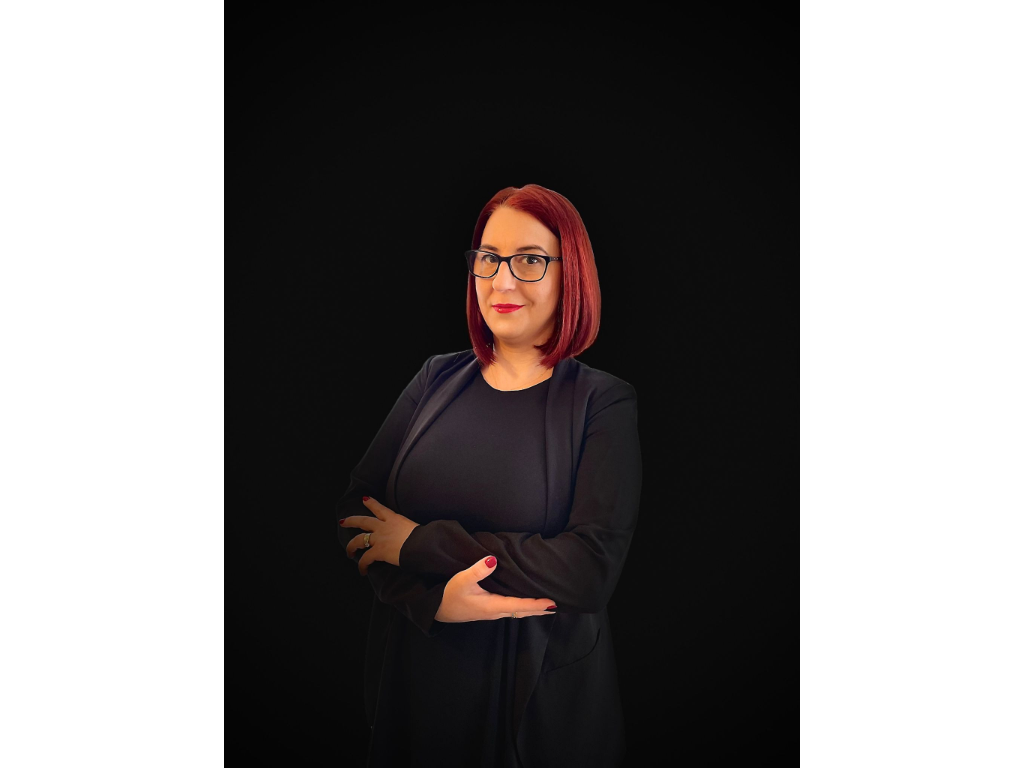
Maria Dervenco, Fractional COO and Advisor in tech, edutech, and e-commerce, talks about fractional leadership, its challenges, impact, and how she brings structure and clarity to growth-oriented companies.
Maria Dervenco is a Fractional COO and Advisor for companies in the tech, edutech, and e-commerce sectors. She comes from a COO role in a tech startup with an international presence across three continents, where she saw firsthand what pressure, limited resources, and the need for “yesterday’s expertise” really mean. From this experience, she brings an elastic type of leadership: she defines the problem, provides structure, and helps accelerate and implement decisions.
Fractional Insider: How was your transition from a traditional career to fractional leadership/consulting?
Maria Dervenco: It was less of a “jump” and more of a natural slide. I was a COO in a tech startup and often found myself in situations where I knew exactly what competencies we needed, but the budget couldn’t justify a full-time executive yet. When I decided to leave the startup, I took a short analysis period: I honestly assessed my skills and strengths and translated them into real market problems — both locally and internationally. That’s how I arrived at the Fractional COO model: I step in when needed, bring structure, accelerate decision-making, and leave behind processes that can function without me.
Fractional Insider: What attracted you most to this model, and what challenges has it brought?
Maria Dervenco: I was drawn to the flexibility and the opportunity to work on new projects frequently — I like change and fast-paced environments. I enjoy showing founders the “light at the end of the tunnel,” setting rhythm and cadence within a company, and building a system they can later replicate. I’m not a fan of presentations or reports that aren’t tied to a clear objective. The main challenge is avoiding frequent changes of direction — switching plans week to week without aligning with the team’s real capacity. That’s why I work in 90–120-day plans, with clear goals and tasks aligned with available resources.
Fractional Insider: How do you choose the projects and clients you collaborate with?
Maria Dervenco: It’s quite simple — I have three core filters: transparency, open communication, and the existence of a 1–3-year vision or strategy. I also check one more thing: do I have access to data and decision-makers? If I have all of these, we can become partners. If not, we shake hands and part ways.
Fractional Insider: Tell us about a moment when you had a major impact as a fractional leader.
Maria Dervenco: I haven’t been a Fractional COO for long, so I’ll start with the most impactful moments from my startup period. We launched a cryptocurrency and a metaverse, a gaming platform, and an AI chatbot — all within 3–4 years, roughly one new and innovative project each year. (If needed, I can also mention that I coordinated a team of about 35 people, with mixed skills in tech, product, and management.)
Do you want a very recent, concrete example? After rotating through several departments in one project, I reached a team with just one person who had been working for a long time without structure, procedures, or supervision — all in “doer mode.” I conducted two 1:1 sessions, gave her a work framework, and showed her how to use repetitive information to create templates, from which we could then write procedures. Since she was alone in the role, I encouraged efficiency and “simple over complicated.” The result: a visible change in pace, much better collaboration with the rest of the team, and a far more proactive and responsive person.
Fractional Insider: What are the main differences between being a full-time executive and a fractional one?
Maria Dervenco: First of all, full-time means exactly that — you’re there all the time: Monday to Friday, 9 to 6, very close to the team and part of the daily context. As a fractional, you still maintain closeness to the team, but you come in with clear short- or medium-term mandates (sometimes long-term), bring direction, focus on something specific, and set up processes that remain.
This type of role works very well for startups and scale-ups. We’re not talking about large corporations that already have mature structures and established processes. We’re talking about teams that need structure to move forward — toward investors, funding, or the next growth stage. Investors look at that — not just at the idea but at how the team executes and whether a system exists to support growth. It’s the same for scale-ups.
Fractional Insider: How do you explain the value of a fractional role to a skeptical CEO?
Maria Dervenco: Honestly, if someone starts off deeply skeptical, we’re probably not a match. The fractional model makes sense for startups and scale-ups that understand their need for this type of role. For me, everything starts with a conversation — getting to know the company, understanding its problems and needs, and only then coming up with a concrete solution.
My process is simple: I spend a week inside the company, talk to decision-makers, review processes and data, and deliver a preliminary report (priorities, risks, quick wins). If there’s chemistry and we see that I can help, we continue for 3–6 months based on a jointly defined plan. If not, they still get a clear diagnostic they can use internally. For me, chemistry and clarity are essential.
Fractional Insider: What are the most common mistakes companies make when working with fractional leaders?
Maria Dervenco: The biggest one is treating a fractional as a “task vendor” instead of an executive. The second is starting without a diagnostic or a clear “definition of done.” The third is expecting quick results without resources. I prevent all three with a clear mandate, a diagnostic, a prioritization framework, and a weekly rhythm.
Fractional Insider: How do you see this career model evolving in the coming years?
Maria Dervenco: I believe we’ll definitely see growth in the international market. Harvard Business Review and The Times have already mentioned that the model is becoming increasingly popular in the United States and the United Kingdom — not just for the COO role but also for CFOs, CMOs, CTOs, and others. It’s a model that greatly supports startups and scale-ups that are post-funding round, pivoting, or entering new markets.
I hope and believe that Romania and Europe will increasingly adopt this trend — and I see no reason why it wouldn’t work, as long as you bring in someone with a clear mandate for short, well-defined projects. I’m glad to be among the first pioneers introducing this model to the Romanian market; from what I see, there are a few fractional CFOs, but Fractional COO roles are still rare. That’s precisely why I want to adapt it honestly to local realities.
Fractional Insider: What advice would you give to a senior professional considering becoming fractional?
Maria Dervenco: In general, it’s not a good idea to give unsolicited advice. But for senior professionals who know they have strong experience, enjoy a dynamic rhythm, multiple projects, and get bored easily in long-term roles, I’d encourage them to honestly assess their skills and strengths. Then, why not, try this model alongside their current job to see if it fits and if they enjoy it.
Practically speaking: start with one or two small paid projects with clear goals and deadlines (60–90 days), without burning bridges. If it feels right, only then expand further.
Through her international experience and strategic approach, she supports startups and scale-ups in building strong processes, clarity, and a sustainable path to growth.