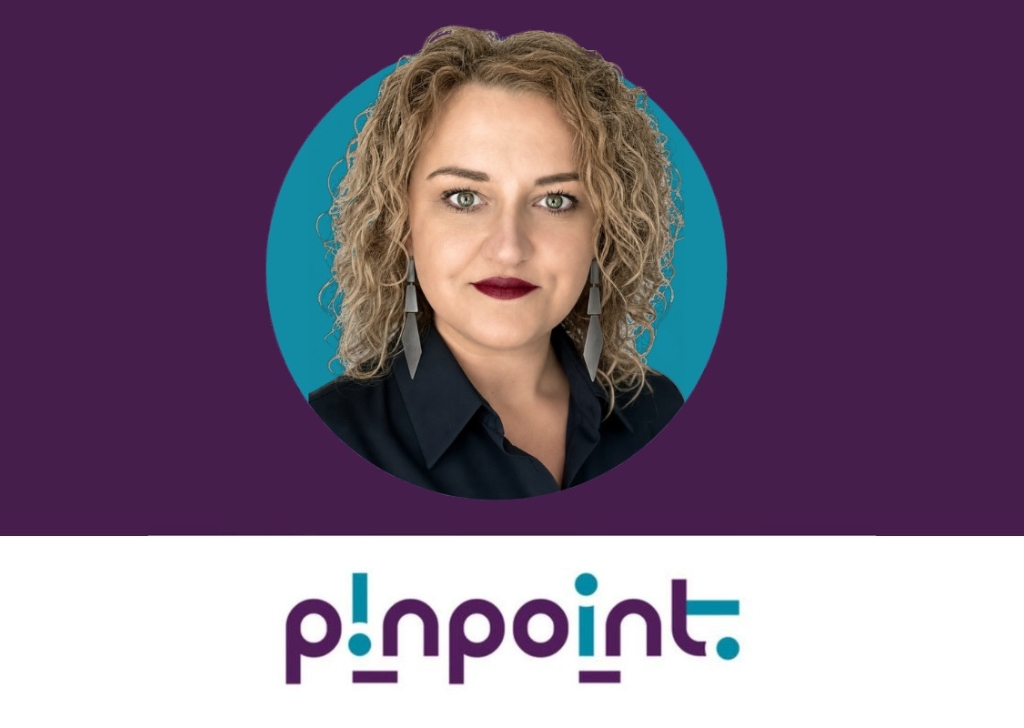
Mădălina Petrea, Fractional CMO and Head of Marketing at CyberGlobal, explains how businesses can improve profitability through marketing strategy, cost optimization and data-driven decisions.
Mădălina Petrea is Fractional CMO and Head of Marketing at CyberGlobal, the first global cybersecurity franchise. Her career has been built at the intersection of marketing, sales and operations, where most companies lose money without even realizing it. Her approach treats marketing as a business system, not merely a content department.
Fractional Insider: What is the most common mistake that eats into a company’s profits?
Mădălina: Setting prices based on gut feeling rather than data. I’ve seen companies increase their revenue year after year while their profit margins decline at the same time, simply because no one has recalculated the actual cost of delivery in two years. The result? A business that looks healthy on paper but is struggling when you take a closer look. The impact doesn’t show up in the sales report; it shows up in cash flow, and by then, it’s often too late to react effectively.
Fractional Insider: What is an “uncomfortable truth” that founders ignore, even though it affects their growth?
Mădălina: One of the most painful truths is that their product doesn’t sell itself, no matter how good it is. Many founders, most of them with technical backgrounds, confuse product quality with the clarity of the message they communicate. If a prospect doesn’t understand within the first minute what you do and why it matters to them, you’re not selling your product; you’re simply giving them homework to figure out what you do and what they stand to gain. If founders don’t change this, they grow slowly and at a high cost, relying on sales efforts instead of clear positioning.
Fractional Insider: If you were to join a new company today, what would you concretely change in the first 30 days?
Mădălina: I would audit the entire funnel and pause every campaign long enough to understand where money is being lost, at which stage and why. The first things I always look at are the same: the marketing pipeline, customer acquisition cost by channel, the actual conversion rate from lead to paying customer, and what marketing technology is being used and where data is getting lost. I would focus on one immediate outcome: a clear list of what is working and what needs to be shut down immediately.
Fractional Insider: Which KPI do most companies overlook, even though it clearly shows whether the business is performing well or not?
Mădălina: The CAC (Customer Acquisition Cost) vs. LTV (Lifetime Value) ratio, adjusted by customer segment rather than based on an overall average. In most cases, averages are misleading. A company may have an “acceptable” CAC overall while systematically losing money on an entire segment of small customers with poor retention. If you don’t eliminate that segment, you’re essentially feeding the losses with your marketing budget.
Fractional Insider: When should a company NOT hire someone full-time and choose a Fractional professional instead?
Mădălina: Companies should NOT hire a full-time marketing leader when they don’t yet have enough volume or maturity to justify a senior-level salary but need senior-level direction immediately. A real-life scenario would be a company generating several million in annual revenue that needs brand strategy, processes and a reporting system, not someone to execute social media posts. Hiring full-time at this stage means taking on an unjustified fixed cost, whereas a Fractional professional represents a variable cost with senior-level impact.
In most cases, I recommend hiring a mid-level generalist with proven operational experience who can work closely with a senior Fractional marketer. The latter can translate business objectives into marketing strategies and actions for the team, and vice versa.
Fractional Insider: What is the biggest illusion founders have about growth?
Mădălina: One of the most common illusions I encounter among founders is that a bigger budget automatically means better results and more growth. In reality, additional budget amplifies existing results; it doesn’t fix what’s broken. I’ve seen companies double their advertising budgets while using a weak message and achieve exactly twice as many poor results. Essentially, they manage to get more bad results, faster and at a higher cost. Then, inevitably, frustration sets in: “I’ve invested so much money in marketing, and I’m not seeing any results.”
Fractional Insider: What do you constantly see as “broken” across different companies?
Mădălina: Communication between departments, reflected in different figures for the same event. Marketing says it generated a certain number of quality leads, while Sales claims that only a small proportion of them were genuine. Yet no one sits down at the same table to clarify why the definition of a “quality lead” differs so significantly between the two teams. The pattern is identical in both small companies and organizations with several hundred employees; only the scale changes. The underlying problem remains the same: the lack of a shared definition and a single report that both teams interpret in the same way.
Fractional Insider: What is one decision that could quickly increase profitability but that companies tend to avoid?
Mădălina: Letting go of unprofitable clients. It sounds harsh, but a client who consumes a disproportionate amount of time and resources compared to what they pay isn’t revenue; they’re a cost disguised as revenue. Companies avoid this decision out of fear of taking a short-term hit to their turnover, rather than based on an actual financial assessment.
The irony is that once those resources are freed up, they can be redirected towards profitable clients, and the impact on margins becomes visible sooner than expected. One thing I’ve learned the hard way is that you can put just as much effort into serving a client who brings you business only once as you do into serving one who keeps coming back and generates more profit. Therefore, where you direct your efforts is essential.
Fractional Insider: How does a Fractional professional think differently from an in-house executive?
Mădălina: Someone working in a Fractional role has already seen the same pattern of failure or success at another company, perhaps six months ago or three years ago, in a different context but with identical symptoms. Most importantly, they have no internal political stakes and don’t depend on a superior’s approval for validation. That means they say what they see, not what they are expected to say. Moreover, they recognize patterns quickly, without requiring additional effort or extra working hours.
Fractional Insider: What does a healthy company actually look like from the inside?
Mădălina: A healthy company looks different depending on its size. We have different expectations for a start-up, where it’s perfectly acceptable if not all the figures are perfectly aligned, compared to a company in its growth stage, where having well-established processes is essential to prevent chaos.
In general, however, a healthy company makes decisions quickly based on data that everyone sees and interprets in the same way, through a shared report, rather than relying on different interpretations of the same figures in separate meetings. It also involves individual accountability for results, rather than using “the team decided” as a way of spreading blame when something goes wrong. It’s not an internal PR image; it’s a verifiable structure that you can see in how quickly decisions are made and how rarely they are subsequently challenged.
Fractional Insider: What types of companies benefit the most from a Fractional professional?
Mădălina: Companies going through a transition, moving from a founder who does almost everything alone to an organization with established processes and a leadership team. This is usually when the first clear warning signs appear: revenue is growing but margins are declining, important decisions are being delayed because the founder is overwhelmed, or the marketing department is executing tactics without a unified direction. It’s not necessarily about company size; it’s about reaching the point where complexity exceeds the organization’s internal capacity to manage it.
Fractional Insider: What is the most common mistake companies make when working with a Fractional professional?
Mădălina: They treat them like a freelancer handling operational tasks rather than a member of the leadership team with a voice in strategic decisions. The result is a complete underutilization of their expertise, along with frustration on both sides. The company feels that “not enough is happening”, while the Fractional professional feels restricted to lower-level execution that falls well below their capabilities. The underlying cause is almost always the same: expectations were not clearly established from the beginning, especially regarding who makes which decisions and what level of autonomy they have.
Another recurring issue is the founder’s lack of trust in the Fractional professional’s ability to understand the product or services as well as they do. This “nobody knows better than I do” bias creates unnecessary obstacles and leads to far more discussions than would otherwise be needed.
Fractional Insider: What results should realistically be expected within the first 3–6 months?
Mădălina: The first changes usually involve greater clarity around the company’s structure and processes, along with a reporting system that the entire team can read and understand in the same way, without conflicting interpretations.
The first measurable cost or conversion optimizations generally appear within this timeframe. These are not radical profitability transformations, but the direction of improvement becomes clear. Anyone expecting massive financial results within three months hasn’t understood the difference between fixing the foundations and building additional floors.
Fractional Insider: What differentiates a very good Fractional professional from a mediocre one?
Mădălina: Taking responsibility for the plans and actions they recommend. A mediocre Fractional professional delivers recommendations in a document and walks away, leaving implementation to a team that is already overwhelmed and far from being aligned. A good one stays close to execution, takes ownership of the results as if it were their own business, and is willing to say clearly, even when it hurts, when a particular direction isn’t working, including when that direction was initially proposed by them.
Fractional Insider: What is one opinion about business or leadership that many people would disagree with?
Mădălina: Most growth problems are not actually marketing problems. They are problems related to internal clarity, decision-making and organizational structure, which are later labelled as marketing problems because it’s more comfortable to blame a campaign than to acknowledge a poor decision made at the leadership level.
The interview with Mădălina Petrea, Fractional CMO and Head of Marketing at CyberGlobal, highlights the importance of a strategic approach to marketing and sustainable business growth. From optimizing customer acquisition costs and analyzing customer profitability to clarifying brand positioning, aligning teams and improving internal processes, her perspective shows why marketing should be treated as a business system rather than simply a communications department.