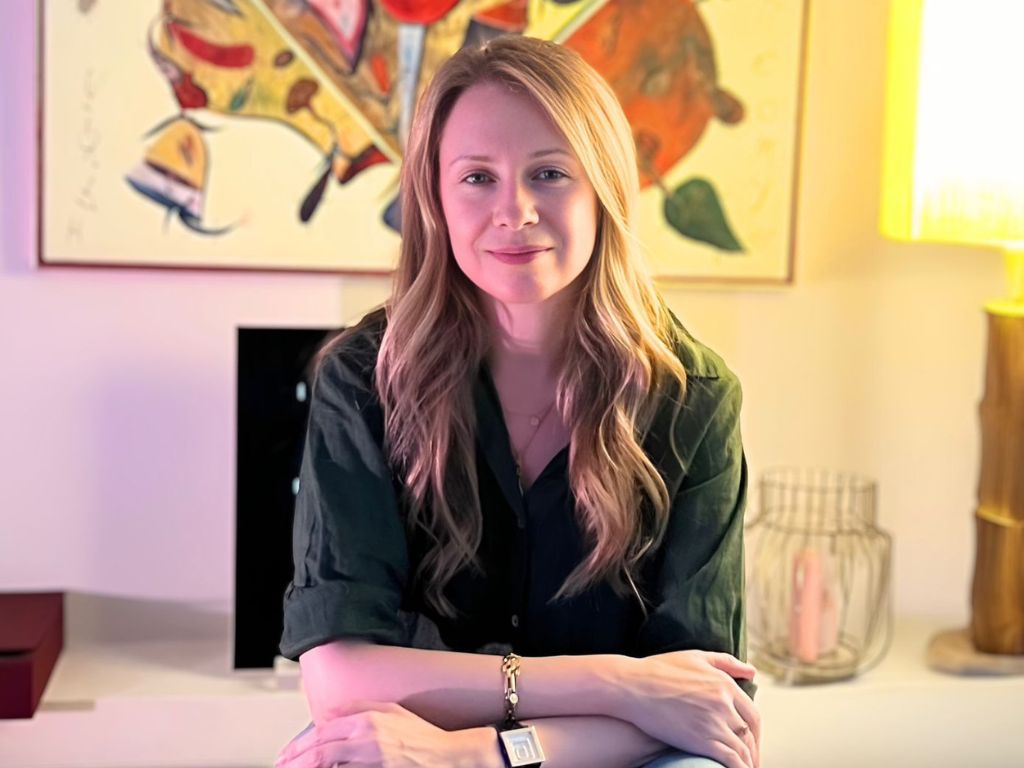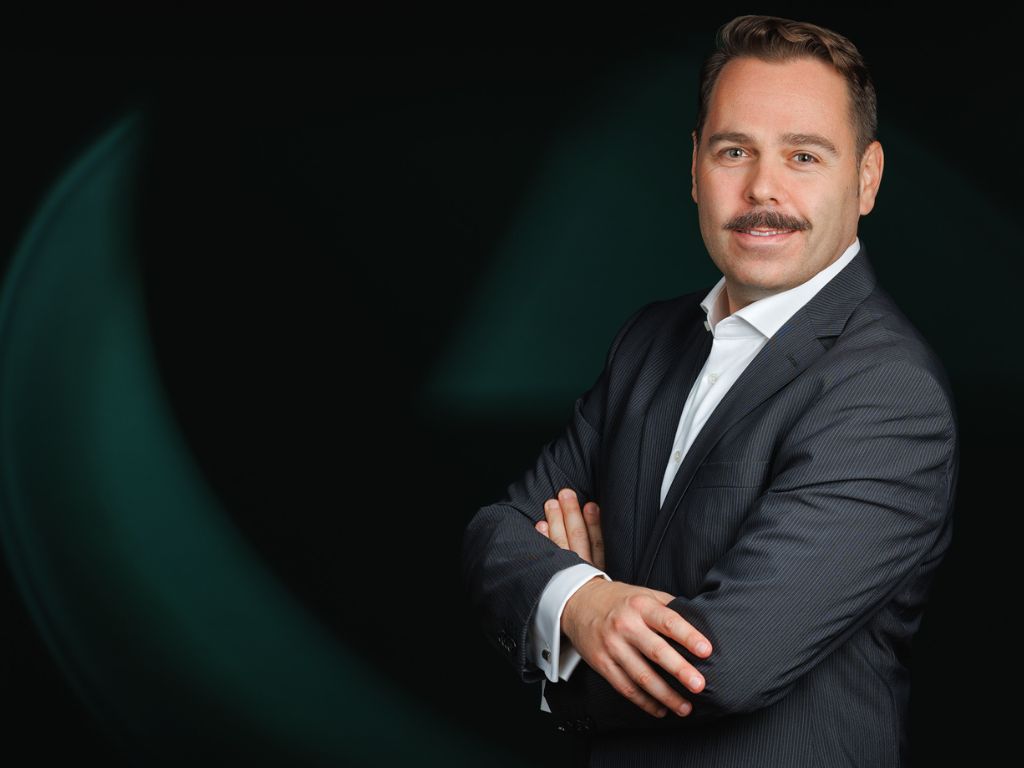
Interview with Florin Pop, fractional CFO and co-founder of Capital Decisions, about fractional leadership, financial sustainability, and the new generation of business leaders.
Florin Pop is a seasoned finance professional and fractional Chief Financial Officer (CFO) who supports businesses through critical growth stages. After a successful corporate career that span for over 20 years in top banking institutions, together with a former colleague he stepped into the entrepreneurial universe and co-founded Capital Decisions – a fractional CFO services hub.
What started as a 2-person initiative has quickly evolved into a dynamic network of 20 affiliated fractional professionals covering the entire finance spectrum, from budgeting and planning to daily management reporting and one-off projects like bank financing, company sale, acquisitions or expanding abroad.
Through this ecosystem, Florin helps entrepreneurs build sustainable structures and act with confidence when opportunities arise in the market
Fractional Insider: How was your transition from a traditional career to fractional leadership/consulting?
Florin Pop: The transition was both exciting and challenging. In my corporate career as a senior banker and then market segment head, I enjoyed stability, clearly defined responsibilities, and a structured career path. Moving into fractional leadership meant entering a far more dynamic and less predictable environment. Yet it also brought me freedom of action and the ability to offer clients a much broader range of solutions.
Previously, I was focused primarily on financial analysis and lending. Now, I cover the full spectrum: from creating financial plans and budgets, to cost optimization, managerial reporting, and specialized projects such as raising financing or selling companies to new investors.
This shift expanded my client portfolio and pushed me to design tailored solutions for every type of organization and industry. It also meant changing my perspective—from being centered on the institution I represented to being centered on the client, something companies truly value.
I was not alone in this journey, which made all the difference. Roxana Gherghelescu, the other half of Capital Decisions was there from the beginning. Together, we had a vision of creating something greater than our individual contributions. That vision became Capital Decisions, a premium platform for fractional leadership that supports small and medium-sized local companies on multiple fronts.
Fractional Insider: What attracted you most to this model, and what challenges did it bring?
Florin Pop: What drew me in is the impact an experienced finance professional can bring to a company.
Within just a few weeks of starting a collaboration, owners gain visibility into their company’s numbers and a true understanding of its financial health. We highlight red flags, propose corrective measures, and uncover opportunities that were previously hidden. Using the scenarios and forecasts we build, owners can analyze critical information before making important business decisions. With budgets and performance-tracking procedures in place, discipline is introduced into the company’s activity, management gains greater control over strategy implementation, and the leadership team as a whole feels more aligned.
In short: the owner no longer feels alone, overwhelmed by endless information and difficult decisions. Instead, they gain a partner who understands the business and stands by them through implementation.
As for challenges, the first hurdle was awareness. Many business owners did not understand the concept of “fractional.” Some expected the role to mirror that of a full-time executive at part-time costs, while others underestimated its strategic value. Setting clear roles, boundaries, and expectations right from the start was crucial, especially in a market only now discovering fractional leadership.
Fractional Insider: What other challenges did you encounter in your daily practice ?
Florin Pop: Europe’s talent shortage and the rise of remote work have reshaped expectations. Alongside this shift, several misconceptions have taken root. The top three we encounter most often are:
- “A good accountant can do what a fractional CFO does.”
- “An external or temporary CFO can’t have a real impact on the company.”
- “Fractional leadership is too expensive for small businesses.”
Fractional Insider: And what’s the reality ?
Florin Pop: Accountants vs. CFOs: Accountants focus on correctly recording past transactions and ensure the building blocks for financial compliance. CFOs focus on the future: strategy, forecasting, resource allocation, and risk management. These are two very different roles and ways of looking at a business. They are complementary but not interchangeable.
Impact speed: Many fractional CFOs have deep industry-specific experience and adapt very quickly to each business. They quickly assess financial health and implement high-impact solutions within weeks. So, while they may not be permanent, their impact is immediate and long lasting. In particular, we are proactive and we often guess the client’s needs before they even formulate requirements.
Cost: A full-time experienced CFO can cost more than EUR 10.000 per month (all costs and taxes included) and not every business needs one immediately. By comparison fractional CFOs, being project based and very result driven deliver strategic guidance at a fraction of the cost, truly making financial leadership accessible.
Fractional Insider: How do you choose the projects and clients you collaborate with?
Florin Pop: Values alignment matters most, to me personally and to Capital Decisions as a network. When choosing projects, we look for founders and leadership teams that are open, transparent, and committed to building solid foundations.
Industry is not a limitation. Our experience spans diverse sectors. Still, we have the greatest impact in three scenarios:
a) Growing companies – with commercial success but lacking a financial function. They need both tactical (short-term) and strategic (medium- to long-term) financial planning to support commercial growth. We build budgets, cash-flow forecasts (weekly, quarterly, or annual), managerial reporting tools, and bring in financing aligned with their growth strategy.
b) Mature companies in stagnation – preparing to maintain competitive advantage. Here, we focus on cost optimization, internal procedures for process automation, and cost-benefit analyses to identify business lines worth expanding or scaling back.
c) High-stakes projects – major investments, sales to investors, international expansion, or business turnaround situations. Here, financial modeling and scenarios are critical for mapping options and guiding management decisions.
Fractional Insider: How does a typical client journey looks like when a company decides to work with you?
Florin Pop: In most cases, the partnership lasts at least 12 months (with the possibility of extension) and follows four stages:
- Diagnostic: detailed analysis of past performance to understand current position, risks, and opportunities.
- Reporting system architecture: building budgets, cash-flow forecasts, and dashboards (KPIs) that provide monthly clarity and visibility.
- Day-to-day activity: once the foundations are in place, we introduce a steady rhythm of reporting and KPI monitoring. Each month, we evaluate performance versus the past and the budget, review cash-flow, liquidity, receivables, payables, stock levels, and cost-saving opportunities. We also identify financial risks and manage relationships with banks and investors.
- Specific projects: beyond recurring activities, we handle strategic initiatives such as capital investments, fundraising, due diligence for M&A, consolidation, or tax optimization.
This way, the company gains both structure and adaptability: a solid financial system for daily operations and senior expertise to manage major strategic projects.
Fractional Insider: Tell us about a moment when you had a major impact as a fractional leader.
Florin Pop: One case very dear to me is that of a food industry producer and retailer. When I joined, the company was performing well, but areas like production cost management required deeper analysis. They also had big plans for international expansion. In short, the owners had ambition but lacked the financial visibility they needed.
We began with a general analysis and within a few months managed to map the entire activity: six business segments, 30 product types, and progress in cost optimization and operational flows.
Today, we are at the stage of helping them select the right investor for global expansion. Furthermore, we connected them with international investment funds. The story is still unfolding, but for me it’s a clear example of what a fractional CFO can do: transform plans into reality.
Fractional Insider: What are the main differences between being a full-time executive and a fractional one?
Florin Pop: Time is the obvious difference, but mindset is the real one. A full-time executive is deeply immersed in one company’s culture and operations, while a fractional leader must diagnose, prioritize, and act quickly with limited time. That forces me (and our network) to be laser-focused on impact. We’re not there to get lost in politics or endless meetings; we’re there to solve problems and move things forward.
Fractional Insider: How do you deal with the in-house finance team company already has?
Florin Pop: This is a very common situation, and one where the company benefits most. Internal finance teams are often overworked, juggling daily operations, statutory reporting, and constant regulatory changes. This leaves little room for strategic projects. That’s exactly where we add value.
By acting as additional capacity and specialized expertise, we ease pressure on the internal team. We step in as immediate partners who accelerate delivery without disrupting ongoing work.
The benefit is twofold: the internal team gains support and clarity, while leadership receives senior-level input and faster execution on critical initiatives.
Fractional Insider: How do you explain the value of a fractional to a sceptical CEO?
Florin Pop: I usually put it this way: “You gain access to senior-level expertise without the costs and long-term commitment of a full-time hire.”
And through the Capital Decisions network, a fractional CFO can be complemented by other fractional leaders in marketing, HR, legal, or operations. Once they see the results, skepticism usually disappears.
Fractional Insider: What are the most common mistakes companies make when working with fractionals?
Florin Pop: The most frequent mistakes are:
- Treating a fractional leader as a consultant who only advises from the sidelines. In reality, we are hands-on and deeply involved in implementation.
- Underutilizing the role—hiring a fractional CFO, for example, but assigning only superficial tasks instead of leveraging their full strategic value.
- Skipping proper onboarding. Whether for one professional or a whole team, fractionals need fast access to the company context to deliver impact.
Fractional Insider: How do you see this career model evolving in the coming years?
Florin Pop: Fractional leadership is growing and I believe it will become mainstream. More and more companies realize they don’t need full-time executives in every role, while senior professionals seek flexibility and variety.
At Capital Decisions, we’ve already seen the strength of bringing together a community of fractional leaders. In the years ahead, I expect many more networks like ours to emerge.
Fractional Insider: What advices would you give a senior professional thinking about becoming fractional?
- Florin Pop: Clarify your unique value—why companies would need you tomorrow.
- Build your network—opportunities often come through recommendations.
- Be prepared for a mindset shift—you’ll navigate different industries and entrepreneurial cultures, and you’ll need to adapt quickly.
The beauty of joining or building a fractional network, as we did with Capital Decisions, is that you don’t walk this path alone. You can share knowledge, collaborate on projects, and create more impact together than individually.
Yes, it is challenging—but also one of the most rewarding professional careers I know.
Florin Pop proves that fractional leadership is not just an alternative model, but a new form of strategic partnership between professionals and entrepreneurs.