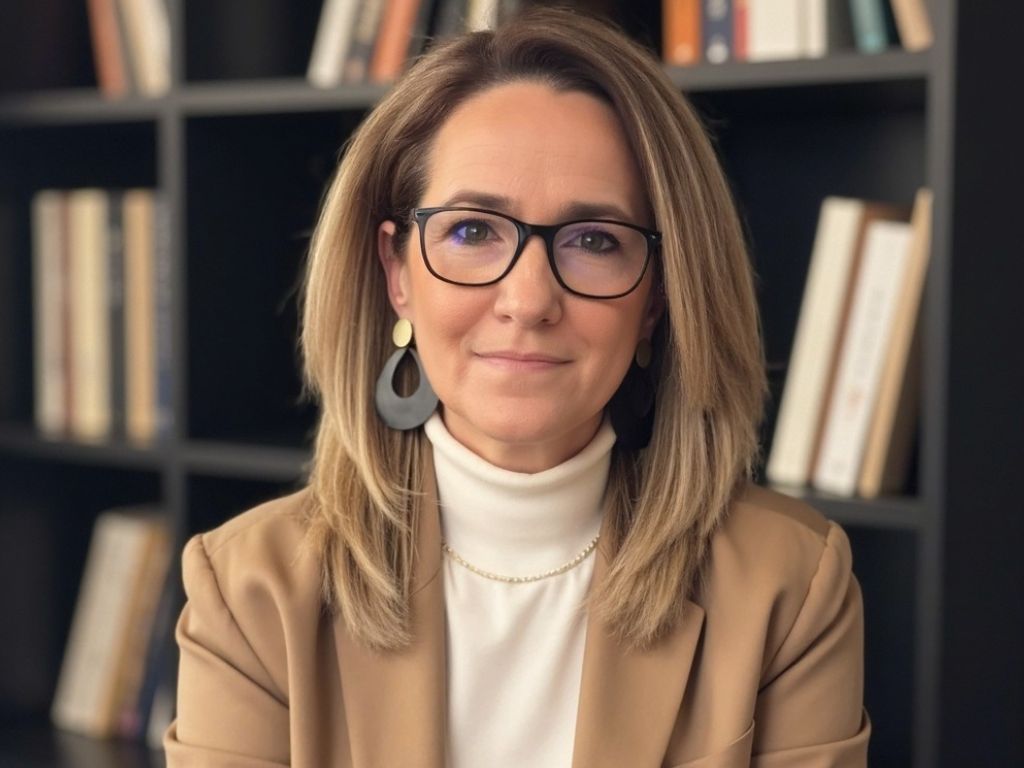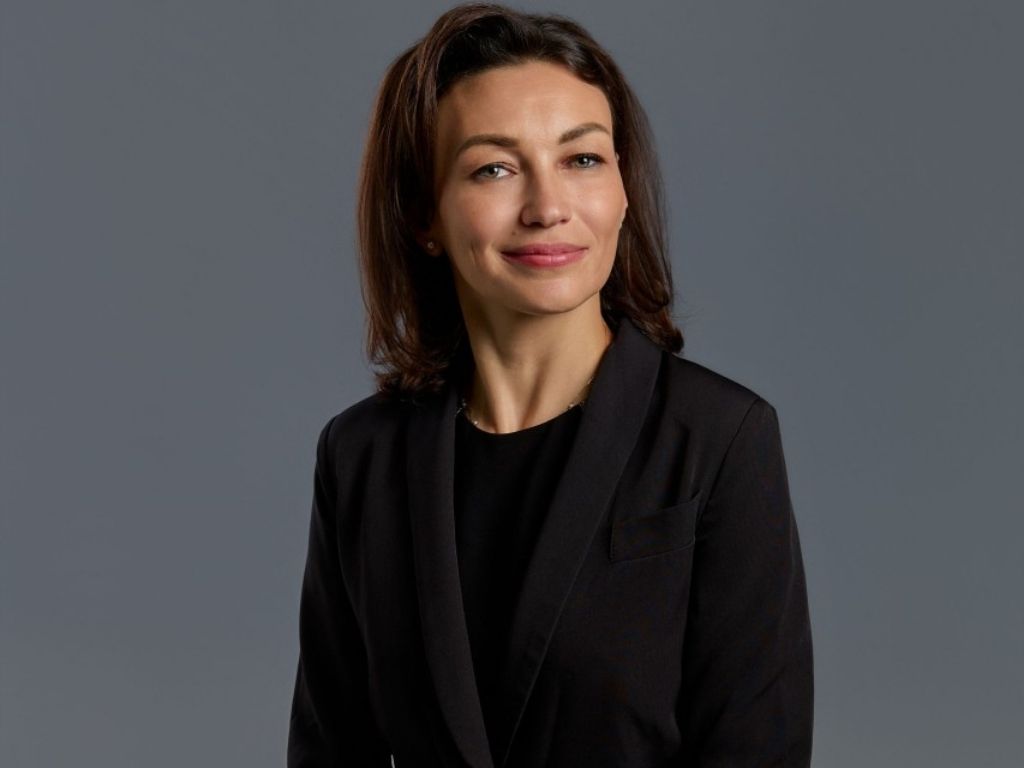
Carmen Albu, marketing strategist and Fractional CMO, talks about her transition to fractional leadership, the application of Lean principles in marketing, and how marketing can become a predictable system focused on ROI and strategic decision-making.
Carmen Albu is a marketing strategist with over 17 years of experience in marketing, communication, and management. A defining stage of her professional journey was spent in companies operating under Lean and Kaizen principles, where, for nearly five years, she worked hands-on with process optimization, operational efficiency, and performance management.
Beyond her practical experience, she has studied the Lean methodology in depth out of a passion for efficiency and well-designed systems, later applying these principles to marketing, a field often perceived as intuitive or difficult to measure. Today, she works with mid-sized and large companies to build predictable, ROI-driven marketing systems focused on strategic clarity and waste elimination, in her role as a Fractional CMO (outsourced Chief Marketing Officer) and strategic consultant.
Fractional Insider: How was your transition from a traditional career to fractional leadership/consulting?
Carmen Albu: In 2020, I accessed European funding to build a marketing and automation project, at a time when I was trying to balance a full-time job with the challenges of being a new mother. It was an honest but difficult experiment. I quickly realized that you can’t build a healthy, process-driven business “in between meetings” or while constantly pulling yourself in too many directions. Over the following years, I returned to traditional marketing management roles. From the inside, I kept seeing the same pattern repeat itself: a lot of effort, many campaigns, and plenty of tools but very little clarity. Marketing was often caught between “we need to do something” and “let’s add more budget,” without a real system for decision-making, measurement, and optimization.
My transition to entrepreneurship and the Lean model was therefore both abrupt and intentional. It wasn’t driven by a desire for freedom, but by professional frustration. I decided to build a model that treats marketing exactly as I had seen it work properly in Lean organizations: as a clear, measurable process, continuously optimized over time.
Fractional Insider: What attracted you most to this model, and what challenges did it bring?
Carmen Albu: What attracted me most was the opportunity to have a real impact on revenue growth. As a fractional leader, you work directly at the source with founders, CEOs, and boards. Conversations are short, clear, and results-driven.
The challenge comes when working with limited resources: fragmented budgets, tools used chaotically, non-integrated CRMs, and overstretched teams. Instead of asking “how can we do more?”, the key question becomes what should we stop doing what doesn’t add value, and what consumes time and money without real impact. It’s a constant intellectual exercise: simplifying without oversimplifying.
Fractional Insider: How do you choose the projects and clients you work with?
Carmen Albu: It’s simple: openness to the truth. The willingness to put real data on the table: CRM data, agency contracts, budgets and to accept that if marketing isn’t working, the issue is often the measurement system, not the people.
I choose projects where I can build or repair a marketing system: clear objectives, measurable KPIs, and simple processes. If a conversation starts with “we feel things aren’t working,” but continues with “we don’t want to change anything,” I know it’s not the right fit.
Fractional Insider: Tell us about a moment when you had a major impact as a fractional leader.
Carmen Albu: One of the most relevant moments was with a company that consistently invested large marketing budgets, both online and offline, without a clear link between costs and results. There was no tracking of leads and sales, and the focus was mainly on awareness rather than commercial objectives.
I started with a detailed audit of costs versus results, then built a strategy based on clear objectives and reallocated budgets exclusively to profitable channels. Within a few months, marketing shifted from being a cost center to a decision-making tool, and the real impact was control: knowing what you do, why you do it, and how much each decision costs.
Fractional Insider: What are the main differences between being a full-time executive and a fractional one?
Carmen Albu: As a full-time executive, you are embedded in the system. As a fractional leader, you fix the system. A fractional doesn’t have the luxury of hiding in operations: they have to deliver clarity quickly.
At the same time, being fractional means full accountability: strategy, coordination, execution, and reporting. No “that’s not my responsibility.” The key difference is the reporting line: a fractional is a partner, not a subordinate, and is evaluated on results, not presence.
Fractional Insider: How do you explain the value of a fractional leader to a skeptical CEO?
Carmen Albu: I put it simply: a fractional leader doesn’t come to consume budget, but to stop it from being wasted. It’s a controlled, senior-level leadership test without the costs and rigidity of a full-time role. Especially in marketing, the real problem is rarely lack of effort, it’s lack of prioritization.
Fractional Insider: What are the most common mistakes companies make when working with fractionals?
Carmen Albu: The first mistake is treating the fractional as a vendor. The second is the lack of clear objectives. The third is internal resistance or ego: “we could have done this ourselves.” A fractional only works if they have access to data, real autonomy, and genuine support from top management. Otherwise, the role becomes purely decorative.
Fractional Insider: How do you see this career model evolving in the coming years?
Carmen Albu: The fractional model is not a trend, but an adaptation to reality. In a world where AI automates execution, value will lie in strategic thinking, context, and decision-making. Companies will no longer buy “hours,” but clarity and efficiency—and that’s exactly what fractional leadership provides.
Fractional Insider: What advice would you give to a senior professional considering becoming fractional?
Carmen Albu: Don’t start from the idea of freedom, but from responsibility. Fractional doesn’t mean easier; it means more accountable. Be very clear about your value zone, prepare financially, and accept that long-term results are your only real CV.