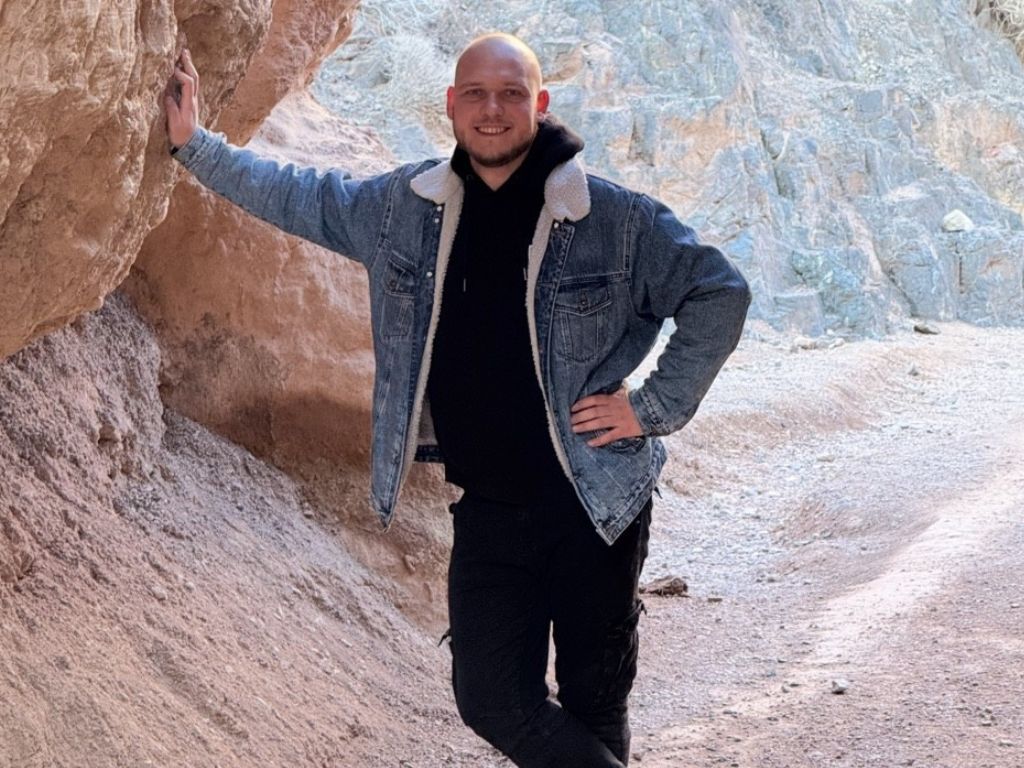
An interview with Manuela Păun, product strategy and design specialist, exploring fractional leadership, strategic impact, professional freedom, and how clarity-driven thinking transforms organizations.
Manuela Păun is a product strategy and design specialist with over 8 years of experience across diverse industries, from FinTech and AgriTech to MedTech and HR platforms. She combines psychology, research, and data-driven design to transform complex problems into intuitive solutions with measurable impact. Throughout her career, Manuela has led teams and strategic product initiatives in both national and international projects, contributing to increased adoption, improved user experiences, and the scaling of design systems.
Today, she brings her expertise to companies as a fractional leader, delivering clarity, structure, and innovation where speed, agility, and real results are needed.
Fractional Insider: How was your transition from a traditional career to fractional leadership/consulting?
Manuela Păun: The transition came from an authentic need to feel that the value I bring can reach multiple destinations and generate impact in several directions. After many years in full-time roles, I reached a point where I realized that the traditional structure can sometimes limit both your contribution and your personal growth. I wanted more space for development, for different challenges, and to apply my experience in varied contexts.
Moving into fractional leadership gave me exactly that: the ability to bring strategic clarity, product thinking, and execution discipline to multiple companies at the same time, while expanding my own perspective. It was a shift toward a more intentional, more diverse way of working, and ultimately one that is much more aligned with the impact I want to create.
Fractional Insider: What attracted you most to this model, and what challenges did it bring?
Manuela Păun: What attracted me first and foremost was the freedom this model offers—the freedom to work on diverse projects, with different levels of complexity, where I can create real impact and get involved exactly where I can add value.
Of course, the model also comes with challenges. One of them is finding the right clients—organizations that not only need expertise but are also ready to work in a flexible, results-oriented way.
Still, challenges are part of the process and come with their own opportunities—each collaboration opens up new connections, new ideas, and new directions for growth.
Fractional leadership allows you to explore varied contexts, build strategies tailored to each company, and contribute to fast, measurable transformations. For someone passionate about product strategy and problem-solving, this diversity is extremely stimulating.
Fractional Insider: How do you choose the projects and clients you collaborate with?
Manuela Păun: I choose projects I genuinely believe in and that activate my problem-solving instinct—that type of challenge that makes me want to understand the context, clarify the direction, and contribute to a concrete outcome.
For me, it’s essential that the project has meaning, a real objective, and the potential to create impact, not just to fill a role.
Equally important is compatibility with the client. I look for open organizations that understand the value of an external perspective and are willing to collaborate transparently, make quick decisions, and leave room for expertise. If there is no trust, availability, and alignment at the level of objectives, it’s difficult to achieve results—and impact is what matters most to me.
In the end, I collaborate only where I feel I can bring real value, where there is mutual respect, and where my contribution can truly make a difference.
Fractional Insider: Tell us about a moment when you had a major impact as a fractional leader.
Manuela Păun: A defining moment was when I contributed to reshaping the direction of a product in a company that was at a point of stagnation. I started by clarifying the strategy, not by offering quick fixes. I deeply analyzed the real issues that were blocking progress—from the lack of alignment between teams to the absence of a clear product vision.
Without rushing into the “fixing” phase, I focused on diagnosis: what wasn’t working, why, and what impact it had on the product and the team. That initial clarity completely changed the way the organization viewed its priorities.
After just two major features launched following the strategic redefinition, the results became evident: the team was far more motivated, in control of its own decisions, and, most importantly, oriented toward innovation. The product gained direction, and people regained the confidence and enthusiasm needed to move it forward.
It was a clear demonstration that real impact sometimes doesn’t come from quick solutions, but from the ability to ask the right questions and create the framework for the right solutions to emerge naturally from within the team.
Fractional Insider: What are the main differences between being a full-time executive and a fractional one?
Manuela Păun: The essential difference is freedom: as a fractional, you can choose the projects, the people, and the context you want to work in. You have greater flexibility, faster impact, and less bureaucracy, but also the responsibility to deliver clear results in a short time. In a full-time role, the pace is more stable and integrated, but it often comes with limitations on autonomy.
Fractional Insider: How would you explain the value of a fractional leader to a skeptical CEO?
Manuela Păun: I would explain it simply: a fractional gives you precise and controllable costs, high-level expertise exactly when you need it, and fast, solid results. You don’t pay for presence, but for impact. It’s an efficient, flexible model, 100% focused on measurable outcomes.
Fractional Insider: What are the most common mistakes companies make when working with fractionals?
Manuela Păun: The most common mistake is lack of clarity: companies don’t define expectations, objectives, and the level of autonomy clearly enough. Another mistake is treating the fractional like a traditional consultant, without giving them access to context and decision-making power—which limits impact. Some organizations also underestimate the importance of constant communication, which can slow down momentum and results.
Fractional Insider: How do you see this career model evolving in the coming years?
Manuela Păun: I believe this way of working will grow rapidly in the coming years because it offers flexibility, fast expertise, and optimized costs. Over time, it will become a standard practice, not an exception.
Fractional Insider: What advice would you give to a senior professional considering becoming fractional?
Manuela Păun: I would say that, first of all, you need a lot of self-motivation and discipline. In the fractional model, you no longer have the classic structures pushing you forward—you are the engine. At the same time, it’s important to stay open to learning and self-improvement, because your professional evolution becomes a continuous process. If you enjoy growing, reinventing yourself, and having the freedom to choose where and how you contribute, then this model can be one of the most fulfilling career paths.
Manuela Păun’s journey shows that fractional leadership is more than a flexible work model—it is a mature form of leadership focused on real, measurable impact. Through strategic clarity, product thinking, and the ability to ask the right questions, Manuela accelerates organizational transformation and creates sustainable value beyond quick fixes.