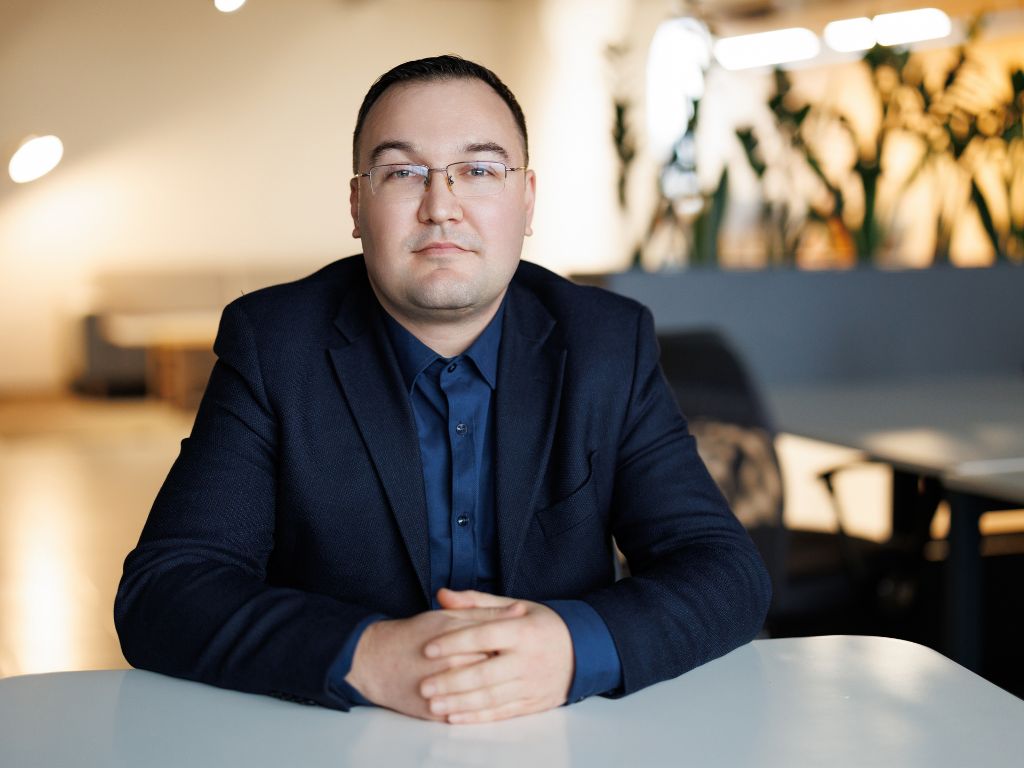
Interview with Adrian Savciuc about digital transformation, fractional leadership, data, interoperability, and preparing organizations for integrating AI into their processes.
Adrian Savciuc is the Digital Transformation & Program Manager at Meaningfy, a data- and interoperability-focused IT consulting company based in Luxembourg. He has over 20 years of experience in management, process optimization and change projects, more than a decade of which in IT and digital transformation. Throughout his career, he has worked mainly at the intersection of business and IT, and today he places an increasingly strong emphasis on a data-centric approach and on interoperability between systems, contributing to building digital ecosystems based on data hubs, semantic layers and knowledge graphs that prepare organizations for the responsible use of AI. In parallel, he works as a consultant and trainer in Digital Transformation and AI, collaborating part-time/fractionally with entrepreneurs and organizations from the Republic of Moldova, Romania and other European countries.
Fractional Insider: How was your transition from a classic career to fractional leadership/consulting?
Adrian Savciuc: My transition toward the fractional model wasn’t a sudden shift, but a natural evolution. I started in classic management and operations roles in retail, services and manufacturing, where I focused on process optimization and change projects. Gradually, I moved into the IT and digital transformation space: I began defining system requirements, doing business analysis and coordinating the implementation of digital solutions. Once I joined Meaningfy as Digital Transformation & Program Manager, I started to see digital transformation from a different angle: not just as lists of applications and processes, but as a conversation about data, data models, interoperability and how an organization defines its core concepts.
In parallel, I began receiving invitations to trainings and workshops on Digital Transformation and AI, as well as requests for ad-hoc consulting from entrepreneurs and organizations that didn’t need a full-time director, but someone who could first bring clarity: what problem are we solving, what data do we have, what is missing, what is worth automating. That’s how the fractional model took shape for me: I remain full-time at Meaningfy, and part of my time goes into projects where I step in for a few hours or days per month, with a clear role as consultant, trainer or sparring-partner for the management team.
In these collaborations, I see the same patterns across industries and maturity levels: unclear processes, data scattered across multiple applications, an “application-centric” approach and a lot of manual connections made through Excel. The business and IT sides don’t speak the same “language”, and when we get to AI it becomes obvious that the foundations are not ready. For confidentiality reasons I can’t detail the projects, but the underlying issues repeat themselves. My role as a fractional leader is exactly this: to clarify goals, identify blockers, translate between business and IT, and help organizations put data at the center so that investments in technology and AI actually make sense. Today I look at digital transformation primarily through this data-centric lens: if a company has serious plans for its digital ecosystem, I believe it is essential to start from data, not from applications, otherwise it risks blocking the very opportunities it is looking for.
Fractional Insider: What attracted you the most to this model, and what challenges did it bring?
Adrian Savciuc: What attracted me most to the fractional model is that I can use the same experience I gained in full-time roles, but with broader impact and with more clarity in my role. I remain deeply anchored in a complex context at Meaningfy, where I support data-centric, semantic- and interoperability-based projects every day, and at the same time I can step into organizations for a few hours or days per month that need a partner for discussion, not another manager in their org chart. I enjoy being a sparring-partner for entrepreneurs and executives: I ask uncomfortable but constructive questions, help structure decisions and bring lessons learned from multiple industries, not just one workplace.
But the model also comes with challenges. The first is managing time and energy: I have to be very careful about what I take on, so I don’t promise more than I can deliver in addition to my full-time role. The second relates to expectations: some organizations believe that if they have “a digital transformation expert” for a few hours a month, they can fix years of accumulated issues without changing how they work. Here I need to explain clearly that my role is not to do everything for them, but to create the framework: make process and data problems visible and show why the current application-centric approach is no longer sufficient. I often tell top managers that they need a shift in perspective when thinking about their digital ecosystems: if these are not built from the start on coherent, well-integrated data, they will block future integration of new platforms, AI agents and solutions that require high-quality, near-real-time data.
Another challenge is the diversity of contexts. Every client has a different level of digital maturity, a different culture and a different work rhythm. I need to immerse myself quickly in each reality without lowering the quality bar and without abandoning the principles I work by: clarity and a mindset where data and processes are the foundation, not the by-product of IT projects.
Fractional Insider: How do you choose the projects and clients you collaborate with?
Adrian Savciuc: First, I look at whether I can bring real value. I choose projects where the focus is on processes, data, interoperability or preparing for AI—not only “one more tool”. For me, the keyword in “digital transformation” is “transformation”: the way we think, work and collaborate, not just installing a new app on top of existing chaos. If management simply wants to add another application without accepting a minimum of change and clarity, the risk is solving something small while creating other problems. In such cases, I prefer not to get involved. I work best in projects where teams ask uncomfortable questions about how they operate today and are open to an honest diagnostic, even if it’s uncomfortable. I look for companies that see transformation as a journey and are willing to move step by step toward a more data-centric ecosystem.
The second criterion is realistic expectations and management involvement. The fractional model does not work if the expectation is that “the external person” will fix years of accumulated issues alone. From the start, we discuss what result makes sense and what that requires from them: real support from top management, inclusion in priorities, allocated resources, a project leader and an available team. If expectations are unrealistic and the organization is unwilling to allocate resources for the stated goal, I say this directly and prefer not to continue. I thrive when we can build together a transformation roadmap with clear, realistic steps, and leadership understands from the start the effort required.
I also look at the level of digital maturity and collaboration style. I don’t look for “perfect” organizations, but for organizations willing to honestly examine their data, processes and digital ecosystem. It’s important that I can be direct but constructive, not just the “provider” who says what people want to hear. And of course, the practical side matters: time and energy. Whether we’re talking about my full-time role at Meaningfy or fractional collaborations, the priority goes to the projects I’m already involved in. I start from there when evaluating new proposals, and I only accept projects I know I can handle with the right level of involvement and quality.
Fractional Insider: Tell us about a moment when you had a major impact as a fractional leader.
Adrian Savciuc: A clear example is a collaboration with a distribution company inside a larger agri-food group. Every month a large number of invoices were issued, and many of them needed to be corrected almost every time. On the surface, it seemed like “just” an issue of incorrect invoices. In reality, the effects were cascading: sales didn’t see the real situation, logistics made unnecessary deliveries and the finance team spent hundreds of hours every month correcting errors. Reporting to management was constantly delayed, and decisions were being made on data that no one fully trusted.
In my fractional role, I started with an end-to-end business analysis of the entire flow, from sales to reporting. I identified the real causes—incorrect data entered in the field, lack of controls in the ERP, lack of clear reports—and worked with sales, finance, logistics and IT to introduce new rules, dedicated reports and accountability KPIs. We didn’t replace the system; we used what already existed but restructured the information and the workflow.
The result was a roughly 2.5× reduction in incorrect invoices, over 700 hours of work saved monthly and a decrease of around 2,700 km per month in unnecessary distribution routes. Just as important, the internal conversation shifted from “who made the mistake?” to “how do we ensure the data is correct from the start,” creating a new level of discipline around data and processes.
Fractional Insider: What are the main differences between being a full-time executive and a fractional one?
Adrian Savciuc: When I talk about the difference between a full-time executive and a fractional leader, I think of two different modes of being present in the organization. In my area—digital transformation, data and AI—a full-time executive is usually in the company every day, with direct mandate over teams, results, budgets and projects. They handle both operational and strategic aspects and must find solutions within the constraints of time, money and internal resources.
By “fractional leader” I mean a role like Fractional Digital Transformation / Data & AI Lead: someone who enters the organization for a limited number of hours/days per month and works mostly at the level of direction and structure. I help the CEO and the management team clarify what they want to achieve, what key processes look like, which data matters, how systems connect and what steps make sense for the next one to two years. I don’t lead internal teams daily; instead, I work with existing leaders so they can implement the change. The impact of such a role shows only when the organization commits to its share of the work: allocating people, time and real attention to transformation.
Fractional Insider: How do you explain the value of a fractional to a skeptical CEO?
Adrian Savciuc: Honestly, if a CEO doesn’t yet feel the real need for change, there’s no point trying to convince them at all costs to work with a fractional leader. This model works well when they already feel the pressure: things can’t continue the same way, they need more clarity on processes and data, but they don’t have the budget or workload for a long-term full-time executive.
In such situations, I explain very directly: with me, you can start with a small amount of time, for example a few hours or days per month, during which we bring order to one or two critical areas, define a transformation roadmap and establish what roles need to exist inside the company. You don’t need a senior expert all the time; many monitoring, reporting and plan-tracking activities can be handled by an internal coordinator, and I step in at decision points, recalibration moments or when new steps need to be designed.
For me, a CEO choosing to work with a fractional is also a sign of maturity: they understand there’s no point blocking large budgets on a permanent C-level role, but also that postponing data, process and ecosystem cleanup forever is not an option. They accept a flexible solution suited to the company’s stage and understand that transformation doesn’t happen overnight and not just by buying a new software tool—it requires time, resources and consistency from the whole team.
Fractional Insider: What are the most common mistakes companies make when working with fractionals?
Adrian Savciuc: From what I’ve seen so far, the biggest mistakes aren’t about the fractional model itself, but about how it’s integrated inside the organization.
The first mistake is treating the fractional leader as an “execution person” or a consultant who solves problems alone. If there is no clearly designated internal owner, no team to carry out decisions and no time blocked in the agenda by the CEO and managers, the collaboration remains at discussion level, without real implementation.
The second mistake is lack of clarity from the start: objectives, expectations, indicators and the collaboration period are not defined precisely enough. Too many fronts are opened in parallel instead of choosing one or two critical areas where a concrete result can be demonstrated.
The third mistake, especially in digital and data projects, is failing to allocate real resources: access to information, key people and time for process change. Companies expect transformation results with minimal involvement from the internal team, which is unrealistic regardless of how good the fractional leader is.
When these elements are clarified from the beginning—role, objectives, resources and internal responsibilities—the fractional model can bring visible results and reduce, rather than increase, frustration on both sides.
Fractional Insider: How do you see the evolution of this career model in the coming years?
Adrian Savciuc: In the coming years, I believe the fractional model will become a normal option, especially for companies that need strong expertise but don’t yet justify a full-time C-level role. We already see cost pressures, difficulty recruiting senior talent and more openness to flexible collaborations. Instead of adding “one more manager to the org chart,” some organizations will prefer 2–3 days per month with an experienced leader who helps them make better decisions on strategy, processes and data.
In my area—digital transformation, data and AI—I expect to see more specialized fractional roles: fractional Head of Data, fractional Digital Transformation Lead, fractional AI Advisor. Organizations reaching a certain level of digital maturity will need someone to help them build data ecosystems, connect systems and use AI responsibly, but not necessarily with daily presence.
In Romania, the Republic of Moldova, and our region, I believe the evolution will be gradual. The first organizations to adopt this model will be companies focused on export, technology, and B2B services—companies already familiar with more mature markets, remote collaboration, and a mix of internal and external resources. Next will come companies that want to grow faster in the local market and reduce the gap between themselves and more advanced players in their sector, needing senior expertise at a reasonable budget. Over time, the model will likely reach more traditional organizations as they begin to feel the pressure to modernize the way they work.
Fractional Insider: What advice would you give a senior professional who is thinking about becoming fractional?
Adrian Savciuc: The first thing I would tell a senior professional thinking about becoming fractional is to clearly define their offer: what types of problems they bring the most value to, what types of companies they want to work with, and how much real time they can allocate each month without diluting their impact. “I can help in many areas” is not a positioning; you need a few clear directions, explained in business language, so that a CEO can quickly understand where they can involve you.
The second point concerns the way of working: think in terms of results and packages, not just billable hours. A healthy fractional mandate usually has a 3–6 month horizon, clear objectives, and explicit expectations from both sides, including what the internal team must do, not just the fractional leader. Otherwise, the risk is to remain at the level of advice, without real change.
Finally, I would recommend entering this model gradually: start with one or two well-defined collaborations, see what it’s like to work in different contexts, and build your reputation on concrete results, not just presentations. And very importantly, invest continuously in developing and updating your expertise so clients can clearly see how you help and what results they gain from the collaboration.
Adrian Savciuc’s experience, both in his full-time role at Meaningfy and in fractional projects across various European organizations, suggests that success is more likely when processes are understood, data is clean, and leadership truly commits to change.