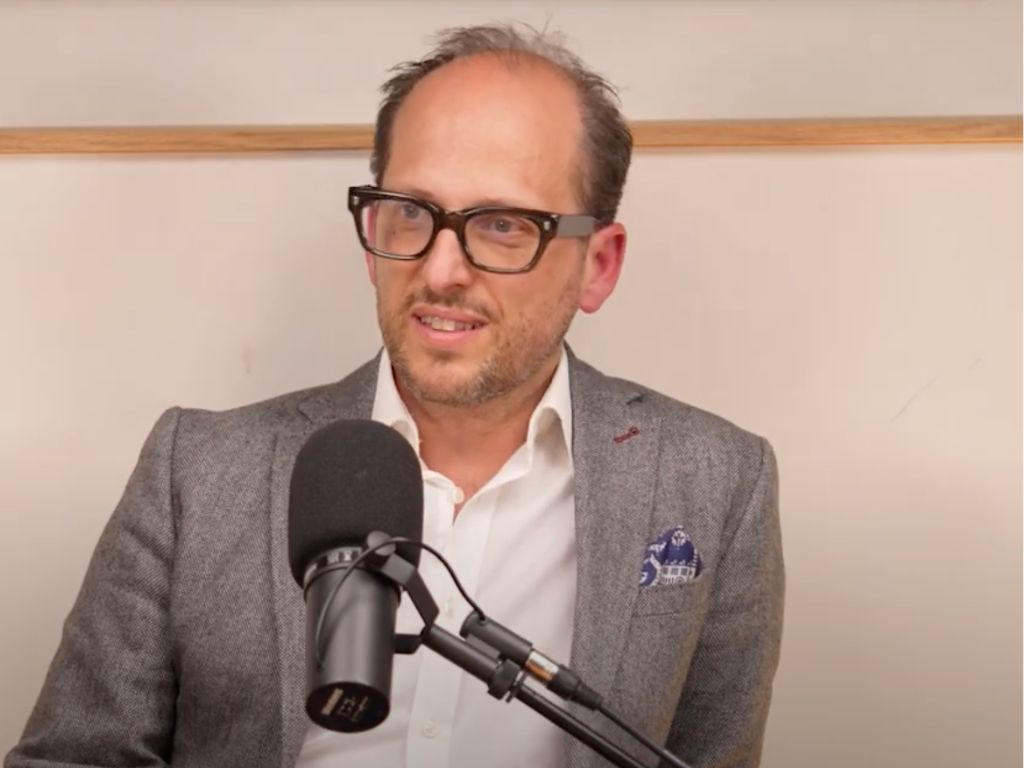
An in-depth interview with London-based fractional CMO Jeremy Laight about transitioning into fractional leadership, driving marketing impact, and the evolution of this career model. A valuable read for founders and senior professionals seeking clarity and strategic direction.
Jeremy Laight is a London-based fractional CMO and founder of RocketJam, a fractional marketing agency that helps ambitious businesses accelerate growth without the overhead of a full-time marketing team. He is also the founder of The Slice, a community of over 650 fractional marketers dedicated to helping each other connect, collaborate and build sustainable portfolio careers.
With over 20 years’ experience, he has transformed brands and built high-performance marketing capabilities across blue-chip corporations (Nationwide, NatWest), global enterprises (Bupa, Crown Worldwide) and founder-led scale-ups. Recognised among the top 2% of LinkedIn creators worldwide (Favikon), Jeremy is a regular contributor to podcasts and industry events, known for his global perspective and straight-talking approach to marketing, growth and the future of work.
Fractional Insider: How was your transition from a traditional career to fractional leadership/consulting?
Jeremy Laight: I actually came into fractional work the oblique way – through redundancy. I’d just left what felt like a dream role at a London-based fintech, and when I re-entered the market the permanent side was sluggish. My coach encouraged me to stop relying on job boards and start accessing the “hidden market”. This meant raising my profile, showing my thinking publicly, and having more intentional conversations.
What I found surprised me: a number of founder-led businesses wanted to work with me, but they were nervous about hiring their first CMO on a full-time basis. Budget, risk, and “is it the right time?” were all real concerns. As I dug deeper, I realised the fractional model solved a problem on both sides – they could access senior marketing leadership without the full-time commitment, and I could work where I add the most value, across a small portfolio of ambitious brands. That’s really how the transition happened: not as a grand plan, but as a very practical response to what the market, and founders, were actually asking for.
- Fractional Insider: What attracted you most to this model, and what challenges did it bring?
Jeremy Laight: In the early days, I didn’t set out to “become a fractional.” I more or less discovered the model by accident. In the UK it wasn’t widely talked about at the time, but I’d always wanted to run my own business and the conversations I was having with founders made something click: they wanted senior marketing leadership, but not on a full-time, permanent basis. The fractional model gave me the best of both worlds; the freedom to build a portfolio career, and the ability to work closely with ambitious teams where I could have a clear, measurable impact.
It wasn’t without its challenges though. I had to learn everything I’d never had to think about in corporate life: negotiating my own pricing, drafting contracts, setting up the business, choosing an accountant, building basic ops. I made plenty of mistakes and had to learn fast. That experience is one of the reasons I set up The Slice Network. I wanted to help connect fractional marketing leaders so they didn’t have to figure all of this out on their own.
- Fractional Insider: How do you choose the projects and clients you work with?
Jeremy Laight: Although I’m a big believer in transferable marketing skills and I’ve worked across a wide range of sectors, I’m at my best in financial services and fintech. That’s where I understand the dynamics, the regulation, the buying cycles – and where I can move fastest. So I tend to focus on businesses operating in that space.
My ideal client is a scale-up with serious growth ambition that knows it needs to strengthen its marketing muscles. Quite often I’m their first CMO, which means I’m designing the marketing strategy, the team structure, the tech stack and the core capabilities from the ground up. I like being brought in when there’s a clear inflection point and a real appetite for change.
That said, many founders and entrepreneurs have diverse portfolios, so there are always opportunities to step into adjacent sectors where the challenge is similar: turn scattered activity into a coherent, scalable marketing engine. That mix keeps the work interesting, but the common thread is always ambition and a willingness to invest in doing marketing properly.
- Fractional Insider: Tell us about a moment when you had a major impact as a fractional leader.
Jeremy Laight: One of my favourite examples comes from an early client where the founder had been leading marketing themselves. They were spending heavily, but nothing had meaningfully changed for a few years – same activity, same partners, same disappointing results. The business had stagnated.
Within my first 30 days, I uncovered 6 figure budget wastage and redirected that spend into things that I knew would help really move the needle: a critical new marketing ops hire and a long-overdue brand refresh. By 60 days, acquisition volumes were hitting record levels, confidence in marketing had returned across the business, and we saw clear improvements in both NPS and ROI.
Moments like that reinforce a belief I hold strongly: fractional marketers are some of the most capable operators in the industry. Expected to deliver impact fast, often with limited onboarding and no time for a long runway. So they develop an instinct for diagnosing, prioritising and fixing what matters most, quickly.
- Fractional Insider: What are the main differences between being a full-time executive and a fractional one?
Jeremy Laight: The most obvious difference is time. As a fractional, you don’t have 5 days a week and a big internal team to lean on, so you have to be ruthlessly clear on priorities and outcomes. You’re there to focus on the few things that really move the needle, not to be in every meeting or touch every decision.
What’s interesting, though, is how much is the same. Whether you’re full-time or fractional, the job is still about building trust with the leadership team, understanding the customer, and creating repeatable systems that outlast you. The principles don’t change – the tempo does.
The other big shift is mindset. As a full-time executive you have formal authority and more time to shape the culture. As a fractional, you rely much more on influence, clarity and quick wins. You’re often dropped in at an inflection point, expected to diagnose fast and create momentum quickly. Done well, that pressure forces you to be a better operator and a more disciplined leader.
- Fractional Insider: How do you explain the value of a fractional leader to a skeptical CEO?
Jeremy Laight: I don’t actually encounter a huge amount of scepticism. Most of the founders and CEOs I speak with openly acknowledge the gap: they want top-tier marketing leadership, but they don’t need, or can’t justify, a full-time executive. The fractional model meets them exactly where they are.
Where the real challenge tends to sit is in the terms. For many CEOs, this is a new engagement model, so they’re unsure what “good” looks like. I approach that by laying out clear options with clear trade-offs: different levels of involvement, different price points, and what each tier enables from a business performance perspective.
Ultimately, I frame the conversation around outcomes, not hours. A fractional leader isn’t a cost-saving tactic – it’s an investment decision. If I can show what changes when you bring in senior capability at the right moment, most of the scepticism disappears quickly. CEOs understand value when it’s tied directly to growth, clarity, and momentum.
- Fractional Insider: What are the most common mistakes companies make when working with fractionals?
Jeremy Laight: Great question – and one I see come up a lot.
The first mistake is expectations. Some companies expect a fractional leader to behave like a full-time exec who just happens to be cheaper. That’s not how it works. You’re buying focus and senior judgment for a finite amount of time, not unlimited capacity. When expectations are misaligned, everyone ends up frustrated.
The second is not being clear on the real problem. Often the brief is “we need more leads” or “we need a rebrand”, when the underlying issues are things like positioning, pricing, or product–market fit. If you don’t take the time to define the real challenge upfront, you end up using fractional time on symptoms rather than causes.
The third is poor internal communication. Teams are sometimes left in the dark about why a fractional has been brought in, what authority they have, and how long they’ll be around. I’ve had a client where the internal team didn’t even know why I was there in the first week. That slows everything down. The companies that get the most value are the ones that introduce the fractional properly, align around goals, and treat them as part of the leadership team, not an add-on.
- Fractional Insider: How do you see this career model evolving in the coming years?
Jeremy Laight: I think we’re still at the early stages of what fractional work will become. On both the supply and demand side, I’m seeing real momentum: more senior leaders choosing portfolio careers, and more founders and CEOs recognising that the old “one full-time everything” model doesn’t fit every stage of growth.
From a marketing perspective, this is happening alongside the rise of lean, full-stack teams – small cores of permanent talent, augmented by specialists, freelancers and fractionals, all enabled by better tech. AI will only accelerate that shift. As automation takes more of the execution and reporting burden, even large corporates will start to question whether they really need every senior role in-house, five days a week.
Ultimately, I see fractional leadership becoming a mainstream career path, not a niche experiment. Especially as both companies and leaders look for a healthier balance between impact, flexibility and quality of life.
- Fractional Insider: What advice would you give to a senior professional considering becoming fractional?
Jeremy Laight: The first thing I’d say is: do your homework, then make a decision. Talk to people who are already doing it, understand the realities behind the LinkedIn posts, and be honest with yourself about what you want from the next stage of your career.
The people who struggle most are usually the ones with one foot in and one foot out – still secretly hoping a dream permanent role will appear. Fractional only really works when you commit to it as a deliberate career choice, not a holding pattern. You’re responsible for your proposition, your pipeline and your positioning. If you’re undecided, all three will suffer.
So my advice:
And if, after that, it still appeals – lean in fully. Done with intent, it can be one of the most rewarding ways to work.
Give yourself a financial runway.
Get clear on who you serve and what problem you solve.
Join a peer network so you’re not doing it alone.
This interview with Jeremy Laight reinforces that fractional leadership is not a trend, but a mature model capable of delivering fast and sustainable impact