Discover how an expert in recruitment, executive search, and human resource management approaches fractional projects, delivers value to organizations, and redefines leadership in the era of flexibility.
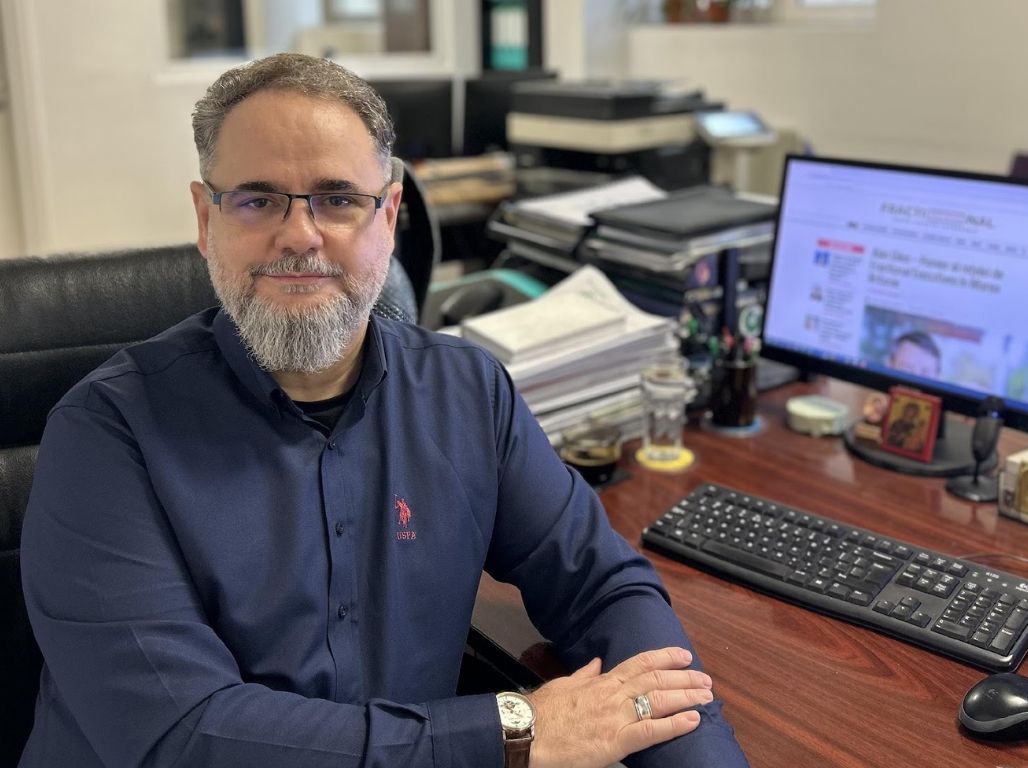
Antuanel Zamfir, a human resources management professional, with extensive experience in hiring, personnel administration, and mass recruitment for the Romanian market and abroad – the United Kingdom, the USA, France, Canada, Central Europe, and the United Arab Emirates; training, career coaching, assessment, and temporary workforce management. Likewise, he is involved in Executive Search and Head-Hunting activities for multinational companies operating in various fields.
Fractional Insider: How was your transition from a traditional career to fractional leadership?
Antuanel Zamfir: In my case, there is no full “translation” toward fractional leadership, since the share of traditional activity is still dominant. However, I can speak about a “complementarity” of the professional area through those specific, fractional projects focused on identifying and optimizing internal procedures that bring added value to client organizations willing to embrace new trends and strategies.
Fractional Insider: What attracted you most to this model, and what challenges did it bring?
Antuanel Zamfir: The paradigm shift of leadership, which you not only adopt but must also convey to the client as the optimal solution from a cost-efficiency perspective, represents a strategic challenge. Demonstrating the beneficial role of implementing a fractional professional’s expertise in the proper functioning of organizational activity and, subsequently, achieving the desired results through a deeply hands-on involvement is the recipe for success, but also the ultimate challenge.
Fractional Insider: How do you choose the projects and clients you work with?
Antuanel Zamfir: After two decades in human resources, I have learned to also say NO. Choosing the projects and clients I work with should not be merely opportunistic, but based on the compatibility between the organization’s values and my professional principles, because an efficient collaboration is built on solid ground where ethics, transparency, and mutual respect are shared concepts.
Not least, I choose projects for which there are real premises for implementation and results. After all, these collaborations must bring measurable value, since people are placed at the center of the process.
Fractional Insider: Tell us about a moment when you had a major impact as a fractional leader.
Antuanel Zamfir: After several meetings with the founders of a company operating at a European level in more than 15 CEE countries, we agreed that the only growth option for the Romanian branch was recruiting a new CEO and a competitive sales team across six completely different areas (for example, construction materials, food and pharma, or plastics and rubber), within a time frame of 12 to 18 months. Also, the implementation of adequate, targeted training programs for the newly created team, aimed at maximizing both professional abilities and projected results. It was a large-scale project in which I had to use all the professional know-how I had accumulated, and the satisfaction of a job well done was directly proportional.
Fractional Insider: What are the main differences between being a full-time executive and being fractional?
Antuanel Zamfir: A fractional leader is essentially an informal business associate who, although not present daily, plays a decisive role that impacts short-term company decisions and strategy. Therefore, time becomes compressed and execution speed is much higher, as you must deliver results that meet the expectations of the assigned project.
As a fractional leader, you have the advantage of applying the part of your professional background that best fits the specific business need, but at the same time, your attention to detail is heightened compared to the familiar environment of being a full-time executive.
Fractional Insider: How do you explain the value of a fractional leader to a skeptical CEO?
Antuanel Zamfir: The argument is simple and convincing: a transfer of senior executive caliber with real leadership abilities, combined with optimized costs, a fast mise en place, objectivity, and strategic flexibility. All these elements are vital for a CEO facing critical situations.
Fractional Insider: What are the most common mistakes companies make when working with fractional leaders?
Antuanel Zamfir: The main wrong approach is the high level of expectations: rapid, excellent results in the shortest possible time, as if a fractional leader had a magic wand and could scale, transform, restructure, or stabilize procedures, departments, or human resources with a long history behind them, in an instant. Moreover, attempting to “polish” the internal situation by limiting access to sensitive aspects of the work environment complicates both the accurate scanning of the de facto situation and the efficiency of a fractional leader’s intervention.
Fractional Insider: How do you see the evolution of this career model in the coming years?
Antuanel Zamfir: Considering the dynamics of new business models and the repositioning of traditional ones on modern and innovative concepts, fractional leaders will be essential and almost omnipresent, as companies will seek experts precisely in the business segment where a pressing need exists. This fractional model is a next-level version of freelancing, but with a much broader reach due to remote work and the multiple projects that can be taken on simultaneously, both locally and even globally.
Fractional Insider: What advice would you give a senior professional considering becoming fractional?
Antuanel Zamfir: If you have gained solid know-how, built a reputation, and have an entrepreneurial spirit, then do not hesitate to explore the opportunity of becoming fractional.
Professional satisfaction is not only about numbers (budgets, KPIs, EBITDA, salaries, bonuses, etc.) but also about the freedom to do what you enjoy with compatible business partners, within parameters of flexibility, responsibility, and time limits defined by you.
A valuable perspective on the future of work, intended both for organizations seeking strategic partners and for specialists looking to advance toward fractional leadership.