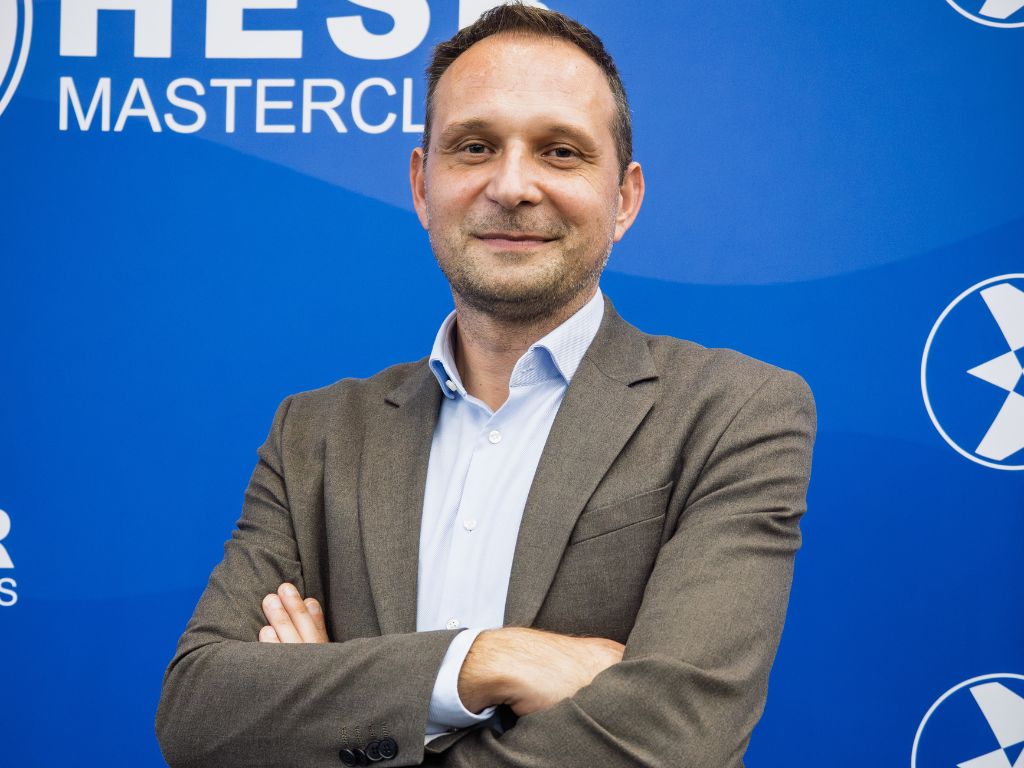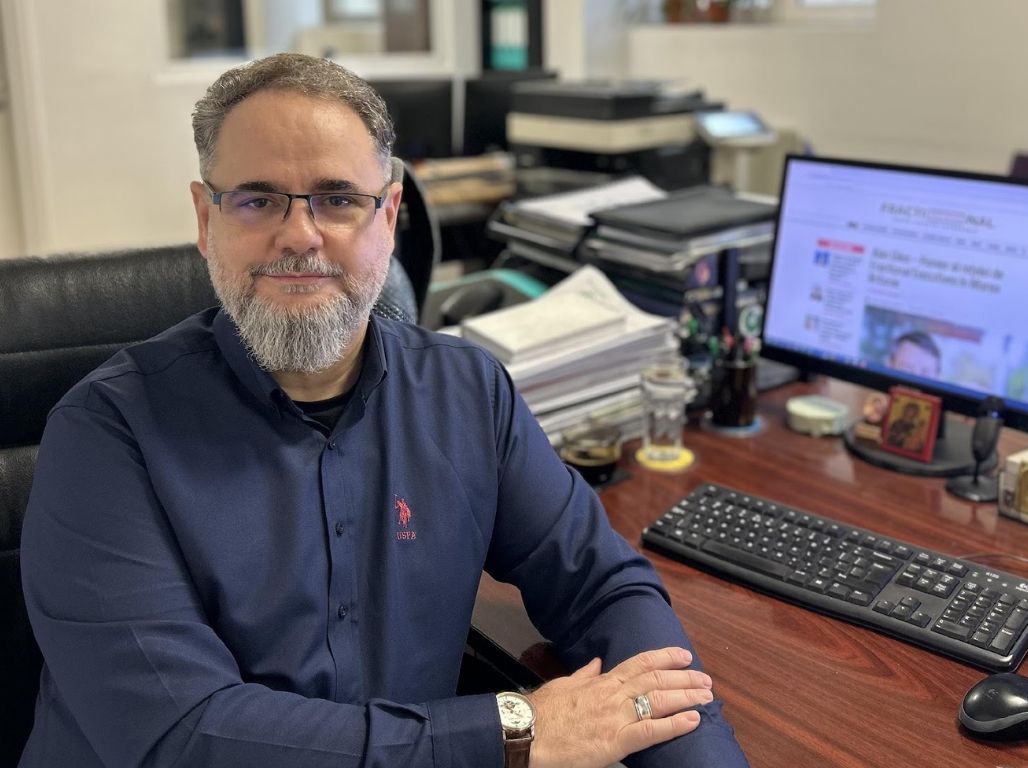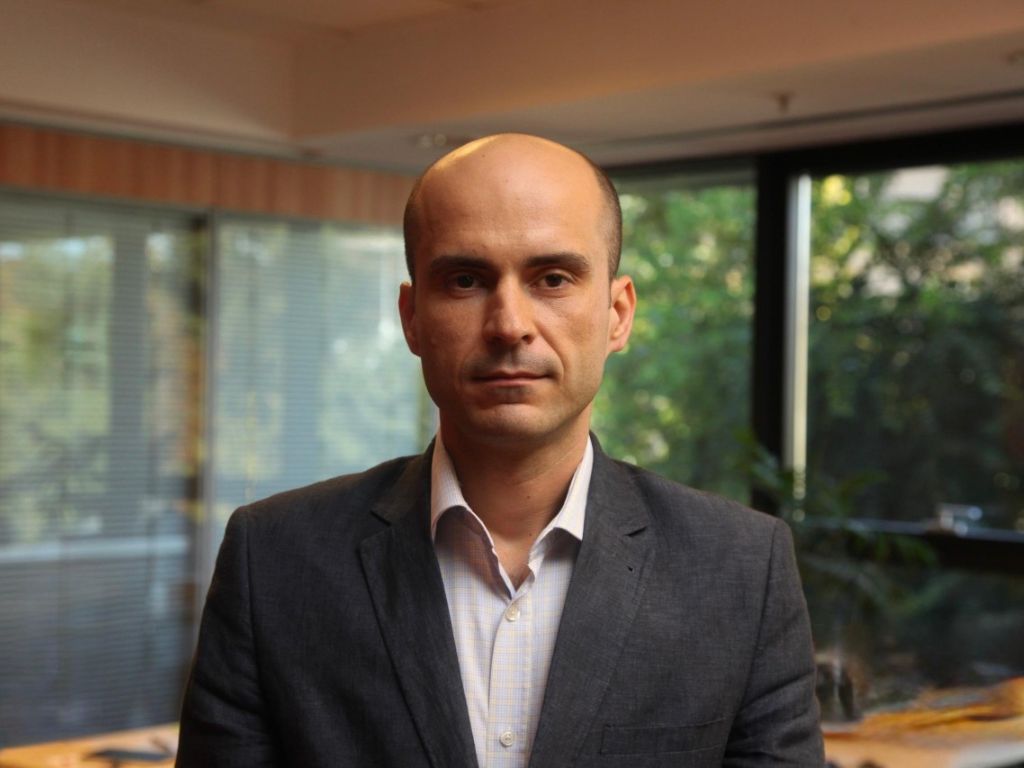
An in-depth interview with George Cocu, financial expert and fractional leader, exploring his transition, real organizational impact, and the future of fractional leadership.
George Cocu is a finance professional (ACCA Fellow, Certified Fraud Examiner, Certified Internal Auditor) with 20+ years of experience in optimizing company performance and building agile financial structures for organizations undergoing growth or transformation. Complementing a solid career with multiple executive roles, he chose the fractional management model, providing strategic expertise without the costs and rigidity of a full-time position. Today, he collaborates with entrepreneurs and executives who want to clarify their financial direction, control profitability, and accelerate data-driven decision-making in companies with annual revenues between 5 and 150 million euros. He does not promise reports—he promises results: numbers that support strategy and decisions that increase the real value of the business.
Fractional Insider: What was your transition like from a traditional career to fractional leadership/consulting?
George Cocu: The transition was more of a process than a sudden leap. I started from a classic full-time role, in which I had extensive responsibilities, but also a high degree of rigidity. I realized that the impact of my role was partially limited by the organizational structure and that I could bring more value when intervening punctually, with clarity in objectives and without bureaucratic ballast. I began taking on short-term projects alongside my main activity to test demand and validate the collaboration model. It was a period of adjustment: I learned to define my offers, structure the deliverables, and communicate value in terms of measurable results rather than “hours worked.” The full transition happened when I had a more stable client portfolio. Today, a simple principle guides me: a fractional manager does not sell time, but transformation.
Fractional Insider: What attracted you most to this model and what challenges did it bring?
George Cocu: The main advantage is the freedom to deliver real, tangible effects in multiple contexts without being captive to a single system. The fractional model provides simultaneous access to different industries, diverse challenges, and a high level of autonomy. It’s an ideal work style for professionals who are oriented toward results, not process. However, it also brings serious challenges. The biggest one is the speed at which you must adapt to each client’s internal dynamics. You don’t have time for long learning periods—you must “step into the role” quickly and deliver value from the first weeks. You must also manage authority: you don’t have a permanent title, yet you need to lead people and processes—often by inspiring or influencing through experience. The solution was to create a standardized collaboration framework: a clear onboarding process, a defined plan structured in a specific number of days (30, 90, etc.), and a reporting system based on KPIs that quickly demonstrates impact.
Fractional Insider: How do you choose the projects and clients you work with?
George Cocu: I select projects based on three criteria: clarity of the mandate, availability of resources, and level of cultural alignment. I look for organizations that have a clear problem they can articulate in concrete terms—for example, “we want to implement an internal or SaaS financial reporting system within a budget of X €” or “we need to structure the finance function within Y months.” I also check whether the leadership team is ready to implement the recommendations. Without this readiness, the impact is limited regardless of the strategy’s quality. I refuse projects with vague objectives or lack of internal support. Essentially, I take fractional projects where I can deliver measurable results within a timeframe expressed in months—not weeks or years.
Fractional Insider: Tell us about a moment when you had a major impact as a fractional leader.
George Cocu: A relevant example was my collaboration with a real estate company that lacked control over its finance and accounting operations. I was brought in for four months with a clear objective: resetting priorities and creating a decision-making structure based on data. Together with the project team, I introduced a monthly budgeting and reporting discipline and established the parameters for collaboration with an external accounting firm to process past data and submit corrective statements. During the project, the company clarified its issues, missing data was reported and filed, and the procedure for handling similar problems in real time began to function. When such a project ends and you see that the processes continue without you, you know you’ve delivered real value.
Fractional Insider: What are the main differences between being a full-time executive and a fractional one?
George Cocu: The main difference is in focus and time allocation. As a full-time executive, you are responsible for everything—from strategy to daily execution. As a fractional, you step in to solve a precise problem and leave behind a functional system. A full-time executive also manages internal politics, culture, and recruitment. A fractional must skip all that and focus on concrete deliverables. This is why communication must be extremely clear and results-oriented. Compensation is typically based on retainer or project, not salary. The advantage for the client is access to high-level expertise without fixed costs. The advantage for the consultant is diversity and full control over their portfolio.
Fractional Insider: How do you explain the value of a fractional to a skeptical CEO?
George Cocu: I start by shifting the discussion from cost to outcome. I tell them clearly: “You’re not paying for my presence; you’re paying for concrete solutions that solve a problem within a fixed timeframe.” I propose a pilot project with precise objectives and measurable success indicators. For example, if the goal is improving sales conversion, we define the thresholds and set a 60–90 day testing period. If we deliver the promised results, the collaboration expands. The model reduces risk for the company and increases efficiency because each stage has a clear outcome. The CEO becomes convinced once they see that the model generates value without adding fixed costs or locking the organization into a permanent structure.
Fractional Insider: What are the most common mistakes companies make when working with fractionals?
George Cocu: The first mistake is the lack of a clear mandate. Many assume a fractional will “fill in the gaps” without defining the exact problem. The second is the confusion between “fractional” and “freelancer”—a fractional has a strategic role, not an operational one. Another mistake is the lack of decision-making authority: if you bring in a fractional but don’t allow them to implement solutions, the process is blocked. In addition, many companies don’t properly evaluate impact and focus on cost instead of outcome. The most effective collaboration is based on three things: a clear mandate, measurable KPIs, and constant communication with all stakeholders involved.
Fractional Insider: How do you see this career model evolving in the coming years?
George Cocu: The fractional model is only at the beginning of its maturation in Central and Eastern Europe, but the direction is clear: in the coming years, companies will start integrating fractionals not only as temporary solutions but as part of their organizational architecture. Specialized platforms and standardized collaboration models will emerge. Executives will be contracted for specific areas of expertise—for example, Fractional CFOs for tech startups, Fractional CMOs for expanding B2B companies, Fractional COOs for rapid scaling. I also believe we’ll see hybrid models in which fractionals work in teams, offering complete leadership packages for a defined period.
Fractional Insider: What advice would you give a senior professional considering becoming a fractional?
George Cocu: The first step is to define a clear offer—not in terms of “role” (e.g., CFO), but in terms of outcome (“20% financial optimization in 3 months”). They must know exactly what problem they solve and for whom. Next, they should build their reputation: case studies, references, and examples of impact. In the fractional services market, trust is the main currency. Finally, they need to understand that this model requires discipline: a constant flow of projects, short contracts, and rigorous time management. But the reward is significant—autonomy, diversity, and the satisfaction that each month brings concrete impact.
This interview with George Cocu clearly shows how fractional leadership is becoming a modern, flexible, and highly effective solution for companies undergoing transformation.