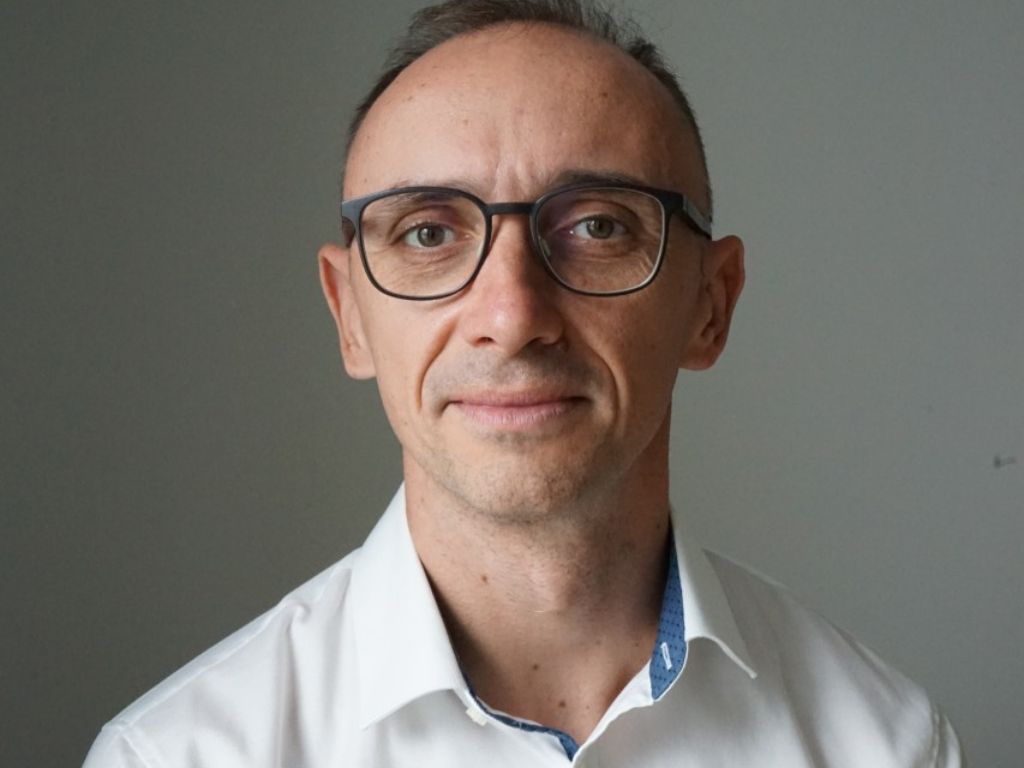
Andrei Glangher, a transformational leader with over 20 years of experience, explains how fractional leadership helps companies grow through strategy, systems, and efficient execution.
Andrei Glangher is a transformational leader with over 20 years of experience in program management and operational excellence. With a solid professional background in multinational corporations across energy, technology, and manufacturing sectors, Andrei has orchestrated complex projects worth tens of millions of euros. Today, he uses his expertise to help companies build scalable systems and navigate growth challenges, acting as a strategic partner at the intersection of business, technology, and operations. His own methodology, based on the Quality of Ideas, Quality of Relationships, and Excellence in Execution, is the foundation through which he transforms strategy into measurable results.
Fractional Insider: How was your transition from a traditional corporate career to fractional leadership/consulting?
Andrei Glangher: My transition wasn’t a sudden decision but rather a natural evolution. After 20 years in corporate environments, from FMCG to automotive and energy, I realized that my true passion wasn’t just managing projects but building the engines that make them possible: systems, processes, and teams. In my roles, I inevitably acted as an internal change agent, a kind of “fractional leader” before the term became popular. I began to notice that the fundamental challenges — stakeholder alignment, resource optimization, visibility creation — are universal across industries. The transition was essentially about taking that ability out of one employer’s context and offering it as a focused service where the impact is greatest.
Fractional Insider: What attracted you most to this model, and what challenges came with it?
Andrei Glangher: What attracted me most was the direct impact and speed. In a corporation, you might wait months for approvals. As a fractional leader, you get straight to the heart of the issue, work side by side with the CEO, and see the results of your work in weeks, not quarters. You’re judged strictly by the value you bring, which is incredibly motivating.
The main challenge was the mindset shift: moving from having a corporation’s resources at your disposal to being a “one-man army” that must be extremely efficient and selective. Another challenge is educating the market. Many leaders still think in terms of full-time hires and don’t immediately understand how a part-time expert can bring more value than a permanent employee, especially during phases of growth or transformation.
Fractional Insider: How do you choose the projects and clients you work with?
Andrei Glangher: I have a simple but essential criterion: I look for leaders who don’t just want a “project manager” but a thought partner. I seek companies at an inflection point — whether they’re launching a new product, expanding into a new market, or struggling with the chaos of rapid growth. For me, chemistry with the founder or CEO is crucial. There has to be a shared vision and genuine openness to change. I decline projects where I’m asked just to “manage” an existing process; I want to build, optimize, and leave behind a system that runs on its own.
Fractional Insider: Tell us about a moment when you had a major impact as a fractional leader.
Andrei Glangher: A relevant example is my collaboration with a technology company struggling to align its sales, marketing, and development teams. The CEO was constantly trapped in operational “fires.” My impact came on three levels, following my methodology:
Quality of Ideas: I organized a workshop to map the entire customer journey and identify bottlenecks. Instead of listening only to management, I brought in people from every department. That’s how we discovered that the real issue wasn’t in sales but in the onboarding process.
Quality of Relationships: I created a “common language” — a simple dashboard with 3–4 KPIs that everyone understood and tracked. I set up a weekly 30-minute meeting where we didn’t discuss statuses but only blockers and solutions.
Excellence in Execution: I implemented an agile but simplified project management system that provided visibility for everyone. Within three months, the time to launch new features dropped by 40%, and the CEO was finally able to focus on strategy instead of operations. That’s the kind of impact I aim for — freeing up the leader to focus on growth.
Fractional Insider: What are the main differences between being a full-time executive and a fractional one?
Andrei Glangher: A full-time executive is often absorbed by internal politics, endless meetings, and team administration. Their success depends on long-term stability within that organization.
A fractional executive is a catalyst. They are 100% focused on results, not process. They don’t have time for internal politics and aren’t interested in it. Their value lies in objectivity, the ability to speak uncomfortable truths, and the power to implement change quickly without the emotional baggage of an employee. You’re like a surgeon — you step in, fix the problem, and ensure the patient can function independently.
Fractional Insider: How do you explain the value of a fractional leader to a skeptical CEO?
Andrei Glangher: I ask a simple question: “How much does it cost you — in time and money — to be constantly distracted by operational problems instead of focusing on growth, partnerships, or product development?” Then I explain that a fractional leader isn’t a cost but an investment with a very fast ROI (Return on Investment).
Instead of hiring a full-time COO for €150,000 a year — plus taxes, bonuses, and months of onboarding — you can bring in a fractional expert for a fraction of that cost. They’ll solve the specific problem in 3–6 months and build the system that can later be managed by a junior manager. You pay for top-tier expertise only when you need it and only for the specific issue you need solved. It’s the most efficient way to access executive-level talent.
Fractional Insider: What are the most common mistakes companies make when working with fractional leaders?
Andrei Glangher: The biggest mistake is treating a fractional leader like a freelancer or a regular consultant. A freelancer executes tasks. A consultant gives advice. A fractional leader takes ownership of a domain and delivers results.
Another mistake is lack of integration. If you don’t give them access to information, the team, and decision-making, you tie their hands. They must be treated as part of the leadership team, even if they’re there only 10–15 hours a week. And finally, another mistake is not having a clear plan for what happens after their mandate ends. A good fractional leader ensures that they leave behind a system and a person prepared to take over.
Fractional Insider: How do you see this career model evolving in the coming years?
Andrei Glangher: I believe we’re only at the beginning. The post-pandemic world accelerated the acceptance of remote work and flexible models. Companies — especially in tech and e-commerce — are realizing that agility matters more than rigid structure. The fractional model will become standard for growing companies (scale-ups), allowing them to access world-class talent without the cost of permanent hires. We’ll see even greater specialization: fractional CMOs, CFOs, Heads of Operations. It will become a legitimate and highly respected career path for senior executives.
Fractional Insider: What advice would you give a senior professional considering becoming a fractional leader?
Andrei Glangher: First, clarify your “superpower.” What specific problem do you solve better than anyone else? You can’t be great at everything — be known for one thing.
Second, build your personal brand. Write articles, stay active on LinkedIn, speak at events. People need to see you as an expert before they hire you. You no longer have a company brand behind you; you are the brand.
And most importantly, be ready to sell. As a fractional, you’re not just an executor — you’re also an entrepreneur. You need to learn how to communicate your value, negotiate contracts, and build relationships. It’s hard work, but the reward of being in control of your own career and having a real impact is priceless.
Through his extensive experience and strategic framework built on the Quality of Ideas, Quality of Relationships, and Excellence in Execution, Andrei Glangher redefines how companies can access top-tier leadership without rigid structures.