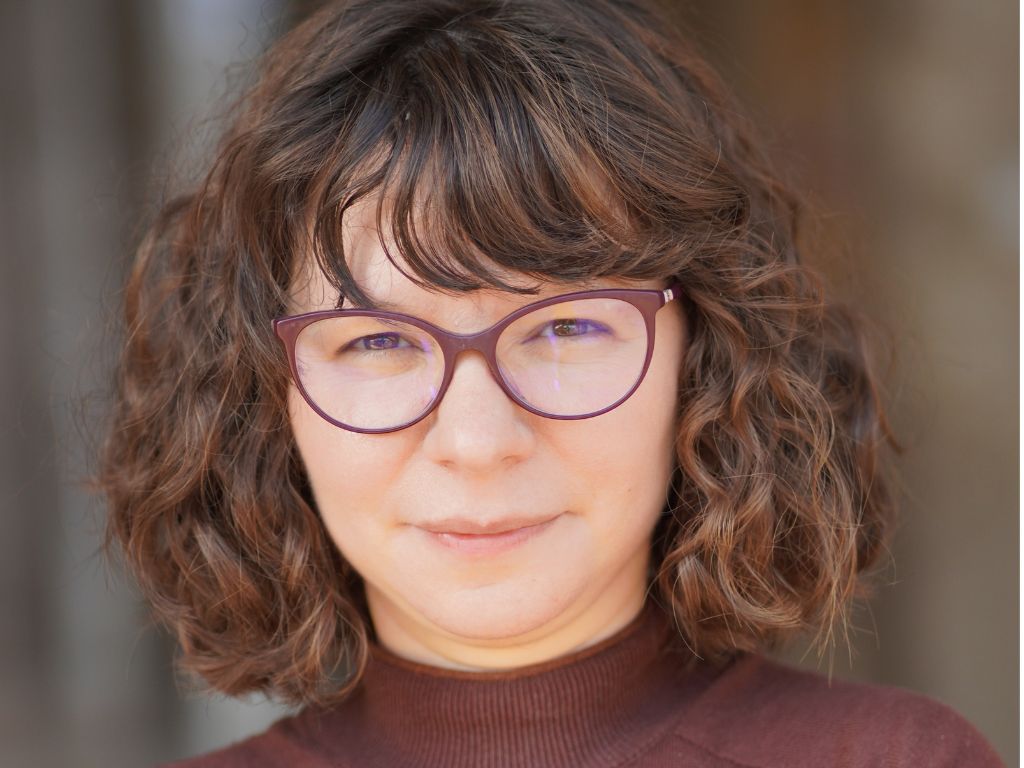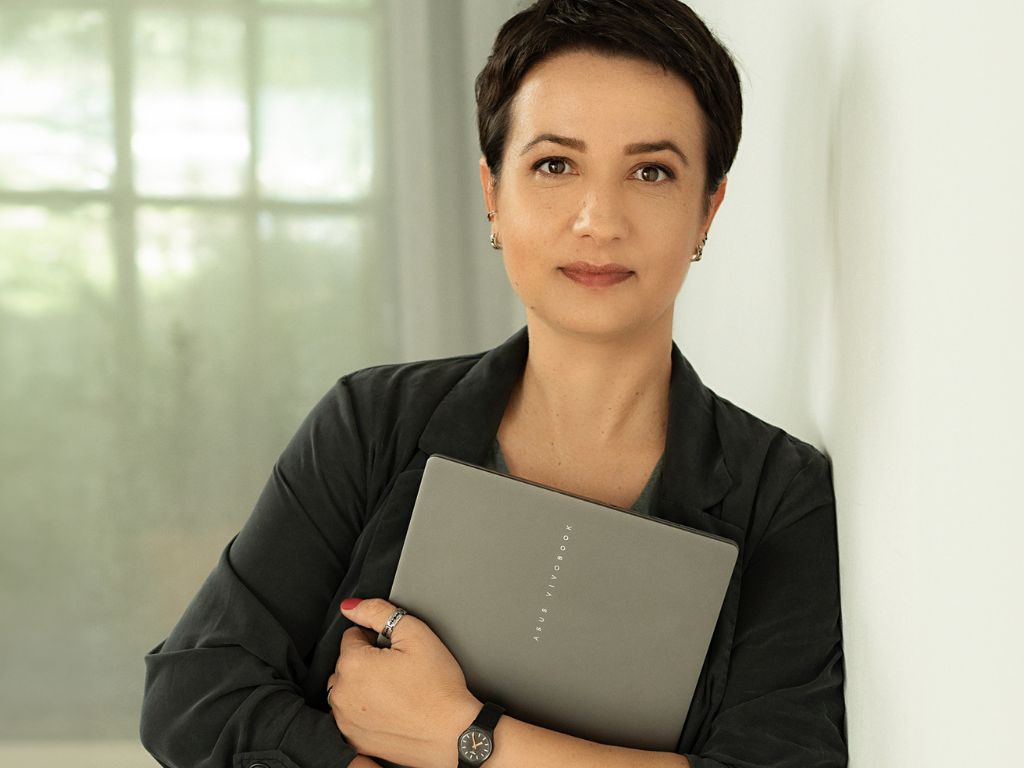
Alina Luncan, founder of Analitix.ro, talks about the fractional model in risk management — an innovative concept that brings clarity, efficiency, and tailored solutions for companies.
Alina Luncan has over 17 years of experience in credit risk, collections, and financial analysis. She has worked with both SMEs and large companies, developing prevention and commercial risk management solutions tailored to different business models.
Driven by a desire to bring clarity and structure to business decisions, she founded Analitix.ro – the first fractional model in risk management in Romania. Through this concept, companies benefit from expertise exactly when they need it, without the costs of a full-time employee.
Her motto, which she often uses to stay associated with Analitix, is “Doing prevention doesn’t mean not doing business—it means knowing who you’re doing business with.”
Fractional Insider: How was your transition from a traditional career to fractional leadership/consulting?
Alina Luncan: The transition was a natural one, because throughout my years of experience, I developed my own approach and way of identifying solutions in the area of commercial risk. My interaction with various industries and different business perspectives mattered a lot. Every economic sector has its own particularities—types of clients and suppliers, payment terms, and risk dynamics. Prevention in risk management applies differently depending on the industry.
With this varied experience, moving toward the fractional model came naturally. I already knew how to adapt prevention strategies to different business models. The only real change was shifting to an entrepreneurial mindset, as up to that point I had only worked in employee roles.
Fractional Insider: What attracted you most to this model and what challenges did it bring?
Alina Luncan: From my perspective, the fractional model is the simplest and most efficient solution when you need a specialist. In an unstable economic context, where investment budgets are shrinking and expansion plans are slowing down, companies look for flexible solutions. However, to remain competitive, you need financial clarity, risk management, and sales strategy — exactly those areas that make the difference between stagnation and growth.
What attracted me to this model is the diversity: I can collaborate with various industries and fields, which diversifies my experience and gives me the chance to see different approaches.
The main challenge is client recurrence. Often, a fractional project is one-time. Unlike traditional consulting, where the client only receives recommendations, a fractional professional stays with the company through implementation, to make sure the solutions work.
However, there are also long-term collaborations based on a monthly fee structure.
Fractional Insider: How do you choose the projects and clients you work with?
Alina Luncan: In most cases, they come through recommendations.
Of course, there’s always a preliminary discussion with the potential client to identify the pain points and create a shared plan of actions and objectives.
Fractional Insider: Tell us about a moment when you had a major impact as a fractional leader.
Alina Luncan: A relevant project was my collaboration with a client who had built a portfolio of customers he knew only through their ongoing business relationships. The need for commercial risk expertise appeared when invoice collection issues started arising. He was surprised to find that approximately 30% of his portfolio was unprofitable and that many of those clients were debtors in numerous court cases listed on the justice portal. That was a wake-up call, and from there we built an entire process together, starting from onboarding all the way to debt collection.
Throughout this process, monitoring the client portfolio played a key role.
Fractional Insider: What are the main differences between being a full-time executive and a fractional one?
Alina Luncan: The main difference lies in the diversity of situations and businesses that a fractional can work with simultaneously or in consecutive partnerships. It’s an exposure that a full-time executive doesn’t benefit from.
Fractional Insider: How do you explain the value of a fractional to a skeptical CEO?
Alina Luncan: I believe it’s all about mindset. The fractional model is relatively new, and skepticism is natural. A CEO sees their business as their own creation, and traditionally, people don’t step directly into top management positions — they grow within the company. A fractional, on the other hand, comes from outside, with mature expertise, and doesn’t hold employee status. That may raise questions, but in reality, that’s where the model’s value lies.
In an uncertain economic environment, the companies that survive and grow are those that make smart decisions and don’t sacrifice essential expertise — they reimagine it.
A CEO may object to the immediate applicability of a fractional’s expertise. A fractional, especially in Commercial Risk, doesn’t need an induction period within the company. Personally, I conduct an analysis — a customer portfolio study correlated with payment terms and actual collection periods — and from there, I already have most of the information about the commercial process. This becomes the basis for the recommended actions, and I stay alongside the CEO through implementation and results measurement.
For me, every project is a challenge. My goal is to achieve measurable results, which translate into solvent clients, invoices paid on time, portfolio monitoring, and, why not, the creation of a new sales pipeline.
I believe that if we have learned to work remotely, we are also ready to work fractionally.
Fractional Insider: How do you see this career model evolving in the coming years?
Alina Luncan: I believe the fractional model will continue to gain ground because it offers real advantages for both sides — for experts and for companies.
For fractionals, the benefits are clear: exposure to diverse industries and the freedom to organize their work time with entrepreneurial flexibility.
For companies, I would mention several benefits, such as:
Optimized costs — they pay only for the time and expertise they need, without the hidden costs of a full-time employee.
Flexibility — they can collaborate on projects, for limited or recurring periods, depending on the season and objectives.
Speed — fractional experts apply their know-how directly and immediately.
Zero bureaucracy — they don’t need to handle hiring, onboarding, benefits, or payroll taxes.
Fractional Insider: What advice would you give to a senior professional considering becoming fractional?
Alina Luncan: It’s quite a subjective decision. I had a latent desire to become an entrepreneur, and now I believe the timing is right for such an approach.
Fractional Insider: How can a fractional scale their business?
Alina Luncan: Simply put, a fractional can’t scale through the classic growth model based on more billable hours — time is limited. Scaling can, however, be achieved through several paths: building a team to attract more clients, developing scalable products (while making sure not to lose the essence of the model), or through partnerships and joint promotion.
I believe one of the most promising solutions is creating a fractional hub, where diverse expertise comes together and becomes accessible to companies in an organized way. At this stage, the segment primarily needs visibility and market recognition.
Through Analitix.ro, she proves that the fractional model is not only a flexible solution but also a strategic step toward clarity, efficiency, and maturity in business decisions.