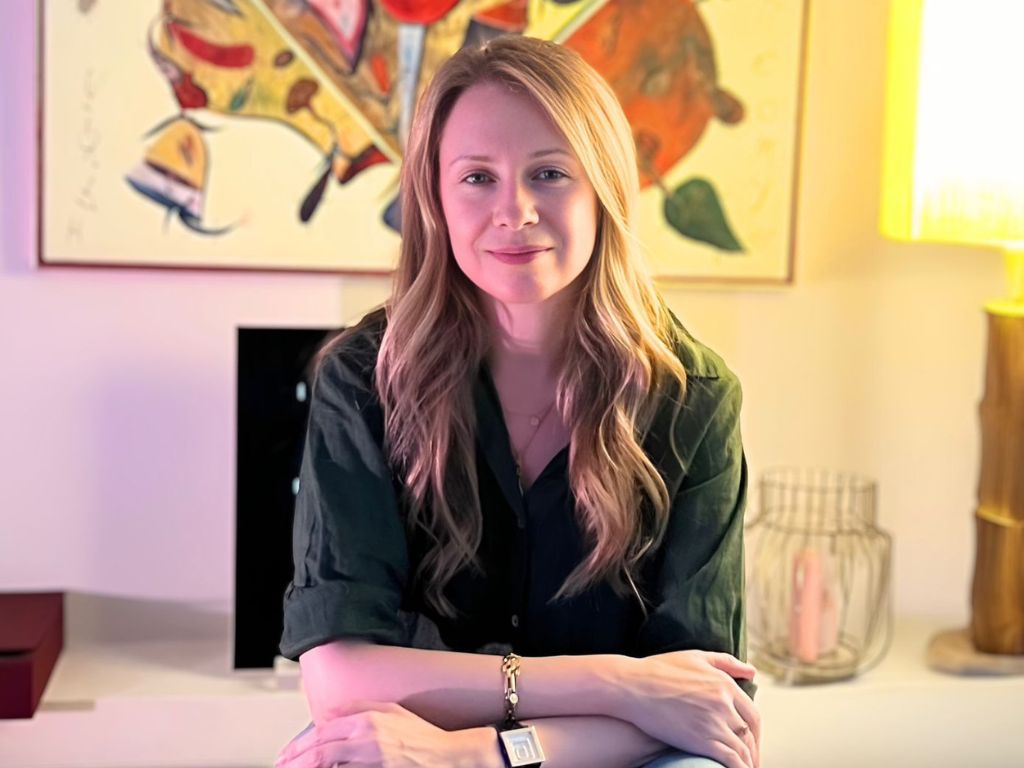
Discover Alina Luchian’s experience in fractional marketing leadership, how she transforms teams and SaaS products, and how she delivers strategic value quickly and efficiently.
Alina Catalina Luchian is a fractional marketing leader with 10+ years of experience scaling SaaS products. She operates at the intersection of marketing, product, and brand, combining data-driven decisions with hands-on execution. Passionate about ethical and sustainable marketing, she focuses on creating long-term value and strengthening marketing teams.
Fractional Insider: How was your transition from a traditional career to fractional leadership?
Alina Luchian: It was more of a natural evolution than a sudden leap. Marketing, and later choosing the fractional model, came as a natural extension of my curiosity to understand how everything around us works: people, products, services, technologies, etc. I explored different contexts, from NGOs and public institutions to corporations and micro-agencies. All of them helped me understand the nuances of marketing, what truly fits me, and where I can make an impact. After years in marketing roles for tech products and brand strategy projects, I realized that I deliver the most value when I join a company at key moments: clarifying the story, structuring go-to-market, or building scalable systems anchored in real needs.
For me, it works because I stay close to products and teams, get the chance to explore new industries, and bring creative solutions. At the same time, it provides the balance between deep involvement and the objectivity needed to see what’s missing or what needs adjustment.
Fractional Insider: What attracted you most to this model, and what challenges has it brought?
Alina Luchian: I was drawn to the pace, the energy of startups, and the possibility of generating impact even with small budgets or out-of-the-box ideas. The fractional model allows me to combine vision with execution within a short timeframe. The main challenge is setting boundaries: there’s a temptation to do everything that’s needed, like a full-time employee. I’ve learned to prioritize and clearly define what I deliver in 30/60/90 days to stay effective and healthy.
Fractional Insider: How do you choose the projects and clients you work with?
Alina Luchian: I look at two essential criteria:
- Product/industry – I need to believe in the value it brings; I want to participate in something meaningful, especially projects where I can add real value.
- Founding team – I look for open partners capable of making decisions. Without a real partnership, I cannot fully engage in strategy, execution, and change.
Fractional Insider: Tell us about a time when you had a major impact as a fractional leader.
Alina Luchian: While I normally focus on numbers, I’d say the most impactful moment was taking over a team stuck in outdated processes and contradictory messaging. In just a few months, I rebuilt the strategy aligned with the company’s needs, set clear priorities, and delegated ownership within the team. The team gained trust and autonomy, and fairly quickly, results appeared in the pipeline, repositioning the marketing department as a strategic growth engine. For me, the biggest win was transforming people, not just the numbers.
Fractional Insider: What are the main differences between being a full-time executive and a fractional leader?
Alina Luchian: I don’t see them as opposites, but rather complementary. As a full-time executive, you dive deep into operations and become part of the daily rhythm. You can influence processes gradually and in the long term. As a fractional leader, you need to bring clarity and value quickly, with a focus on priorities. Practically, you act as a change catalyst.
Both are important: one maintains the pace, the other accelerates progress at critical moments. The choice depends on the company’s needs and the goals you want to achieve.
Fractional Insider: How do you explain the value of a fractional leader to a skeptical CEO?
Alina Luchian: Many CEOs are skeptical because they fear that a fractional won’t be “dedicated” to their startup. And on one hand, their argument makes sense: if you have unlimited budget and time to grow gradually, a full-time employee may be the safest option.
But the real value of a fractional comes from other sources:
- Experience and rapid solutions: A fractional brings proven know-how and can implement changes and strategies that work immediately, without long onboarding periods or trial and error.
- Objective perspective: Being external, they can spot problematic patterns or opportunities that the internal team, caught up in operations, might miss.
- Network and additional resources: Fractionals often bring access to consultants, vendors, or specialized services, allowing the startup to “hit the ground running.”
Essentially, a fractional doesn’t replace the dedication of a full-time employee but provides clarity, speed, and strategic perspectives exactly when the startup needs them, without the costs and time associated with a senior full-time hire.
Fractional Insider: What are the most common mistakes companies make when working with fractionals?
Alina Luchian: From the company’s side:
- Thinking the fractional comes to “do everything” instead of setting direction and creating leverage for the team.
- Lack of clarity in objectives. Without precise goals, even the best fractional cannot deliver real impact.
From the fractional’s side (guilty as charged):
- Not setting healthy boundaries – getting involved in too many processes and losing the balance between efficiency and working hours.
- Yielding to leadership pressure to “personalize” strategy without data or critical thinking. Fractionals often need to be the “bad cop” to correct vicious patterns or unrealistic beliefs.
Fractional Insider: How do you see this career model evolving in the coming years?
Alina Luchian: It will become a common practice, especially in tech companies and startups. As AI and automation eliminate repetitive tasks, senior leaders will primarily provide strategic clarity, system design, and decision-making. We will see more “hybrid teams,” full-time employees plus fractional leaders for key challenges, and standardized fractional service packages (e.g., fractional CMO + operations). The model is more agile and better suited to the pace of the market.
Fractional Insider: What advice would you give to a senior professional considering becoming fractional?
Alina Luchian: Use data and analysis to guide your decisions, not just others’ experience.
Not all problems are truly urgent, and not all ideas need to be implemented.
Identify your strengths and build a community of talented people to complement and support you. Together you can do more.
Alina Luchian demonstrates that fractional leadership is not just a trend, but an agile strategy for companies aiming to grow quickly and sustainably.