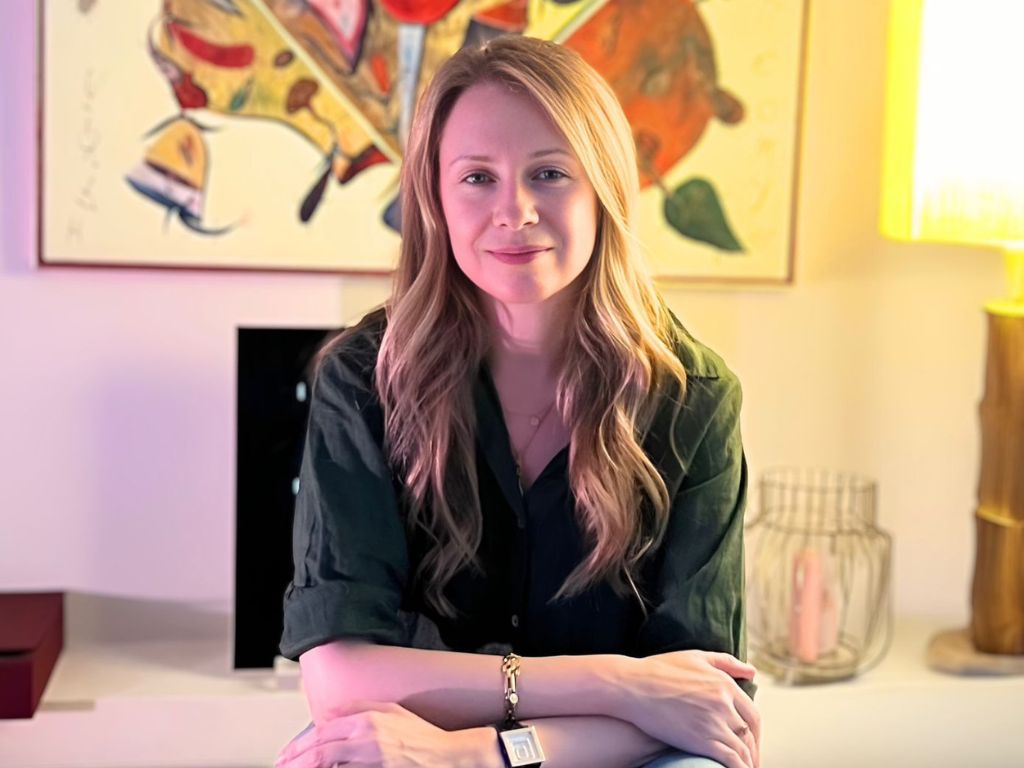
Daiana Altinay, founder of LeadNBFI, discusses fractional leadership, niche marketing for financial institutions, and the future of flexible work in the digital era.
Daiana Altinay is the founder of LeadNBFI, a full-service marketing agency exclusively dedicated to non-banking financial institutions (NBFIs), with a client base primarily in North America. With a solid foundation in marketing, master’s studies, and international certifications, plus over 20 years of practical experience, Daiana created LeadNBFI to deliver niche marketing tailored specifically for the financial sector.
In addition to leading her agency, Daiana also provides fractional Chief Marketing Officer (CMO) services to companies across various industries, contributing her strategic expertise to the development of holistic marketing plans and coordinating their execution in collaboration with internal teams.
Fractional Insider: How was your transition from a traditional career to fractional leadership/consulting?
Daiana Altinay: The transition was surprisingly natural and organic. After deciding to leave my full-time job, I started working as a freelancer for several years. That period was incredibly valuable. I gained diverse experience across all branches of marketing—from SEO, SEM, email marketing, and copywriting to complex strategies and integrated campaigns. Each project helped me understand not only what works but also why it works and how it can be implemented.
Already used to juggling multiple clients and managing various projects simultaneously, the move to a fractional marketing director role felt like a logical evolution. Freelancing gave me the perfect foundation to understand the dynamics of working with different teams and the need to adapt quickly to diverse organizational cultures. When I started working fractionally, I already had the mental discipline and organizational skills required to successfully navigate this complexity.
Fractional Insider: What attracted you most to this model, and what challenges did it bring?
Daiana Altinay: What fascinates me the most is the extraordinary diversity and constant dynamism. I never get bored. Each day brings new challenges, different industries, and teams with unique personalities. It feels like living several professional lives at once. I have the freedom to choose projects that inspire me, yet maintain enough contact with clients and internal teams to create authentic relationships and meaningful collaborations.
The challenges are significant as well. Mental discipline is crucial. You must be extremely organized and able to switch rapidly between different contexts—sometimes within the same day. Not everyone can make this transition; it requires a certain cognitive and emotional flexibility. The financial aspect can be unpredictable at times, and the constant search for new projects can be tiring. You need to be very grounded and have a clear understanding of your own limits and capabilities.
Fractional Insider: How do you choose the projects and clients you work with?
Daiana Altinay: Human chemistry is my main filter. Over the years, I’ve learned that 70% of a collaboration’s success depends on people compatibility, and only 30% on the project itself. There have been many times when I refused projects simply because I didn’t resonate with the team or the client’s values.
In business, just like in personal life, there must be that natural connection. When the client trusts me and my ideas align with their vision, the collaboration becomes smooth and productive. If that chemistry is missing, tensions inevitably arise—especially during critical moments or financial challenges. I prefer to work with people who understand the value of long-term strategy and are open to innovation, even if the budget isn’t the most generous.
Fractional Insider: Tell us about a moment when you made a major impact as a fractional leader.
Daiana Altinay: Oh, there are many! The most memorable moments come from collaborations with startups. For them, the impact of strategies is almost immediate and fully measurable.
In many of these young companies, the line between survival and failure is incredibly thin. I’ve worked with founders who only had resources for two or three more months of operations. In such cases, every marketing decision counts enormously. There’s no luxury of experimenting for months with campaigns that don’t deliver results.
I always say that a marketer with a big budget can’t really fail—you can keep testing until something works. The true art emerges when the budget is small, the team is limited, and time is short. That’s where strategic expertise and creativity truly shine.
Fractional Insider: What are the main differences between being a full-time executive and a fractional one?
Daiana Altinay: As a full-time executive, you have the luxury of total focus. Your entire attention is directed toward one organization, one culture, one vision. This level of immersion allows you to understand all the nuances of the business deeply and build strong relationships with the team. Financial stability and predictability are also clear advantages.
The major downside is the risk of stagnation. Without exposure to other projects and diverse challenges, you can become complacent and lose perspective. Innovation comes from the intersection of ideas, and when you’re limited to one context, creativity may suffer.
As a fractional, you live in a world of constant diversity. Each client brings new perspectives, different industries, and unique challenges. This variety keeps you sharp, forces continuous growth, and expands your skill set. The trade-off, however, is the lack of security and the need for iron mental discipline.
Not everyone can make this transition successfully. You must be comfortable with uncertainty, highly organized, and capable of managing multiple professional relationships simultaneously. It’s a lifestyle choice that demands sacrifices but offers, in return, freedom and an unparalleled diversity of experiences.
Fractional Insider: How do you explain the value of a fractional to a skeptical CEO?
Daiana Altinay: So far, all my clients were already aware of the value a fractional marketing director brings. They knew from the start that they needed someone with deep experience but didn’t have the budget—or the desire—to hire full-time. Therefore, the challenge wasn’t convincing them of the model’s utility, but rather defining a clear and efficient collaboration framework: goals, performance indicators, allocated resources, and shared responsibilities.
The main issue is that many CEOs are not used to working with fractionals and end up treating them like full-time employees. They try to overload them with responsibilities beyond the agreed scope or expect 24/7 availability. This leads to frustration on both sides and subpar results.
The success of this collaboration depends on transparency and clear boundaries. I always explain that a fractional brings the experience of a C-level executive but within a defined time and financial framework. It’s like renting a Ferrari for the weekend—you get top performance, but only for the agreed period and under set conditions.
Fractional Insider: What are the most common mistakes companies make when working with fractionals?
Daiana Altinay: The first and most common mistake is expecting the fractional to operate exactly like a full-time employee. Companies often try to involve them in every meeting, give them access to all information, and ask them to make decisions outside their area of expertise.
The second major mistake is a lack of clarity when defining objectives. Many clients hire a fractional with the vague idea that they “need help with marketing” but don’t clearly define what they want to achieve and within what timeframe. Without this clarity, the collaboration becomes chaotic and ineffective.
The third issue is underestimating the time required for integration. Even though fractionals are experts, they still need an onboarding period to understand the organizational culture, internal processes, and team dynamics. Companies that understand and support this adjustment period achieve significantly better results.
The fourth mistake is hiring a professional without relevant industry experience. An expert may have many years of general experience, but if they haven’t worked in that particular sector, it will take extra time and effort to understand the market specifics, regulations, and target audience.
Fractional Insider: How do you see this career model evolving in the coming years?
Daiana Altinay: I believe the fractional model will explode in the next three to five years—not just out of necessity, but out of preference. We now have an entire generation of professionals who value freedom and flexibility more than traditional job security. The “9-to-5 office” concept scares many, and remote work has proven that productivity is not tied to physical presence.
For employers, the advantages are financially irresistible. You can access senior-level expertise at a fraction of the cost—without traditional benefits, vacation days, or administrative expenses. A fractional CMO can bring the same strategic value as a full-time one, but at 40–50% of the cost.
Digitalization and online collaboration tools make this model extremely viable. I can work with clients in New York as efficiently as with those in Bucharest. Geographic barriers have disappeared, which means talent can be accessed globally, and specialists can collaborate with the most exciting companies worldwide, regardless of physical location.
I predict that by 2030, at least 35% of executive positions in startups and scale-ups will be fractional.
Fractional Insider: What advice would you give to a senior professional considering becoming fractional?
Daiana Altinay: The first and most important advice—have the courage to try. The worst that can happen is realizing it’s not for you, in which case you can always return to a full-time role.
I also recommend clearly defining your niche of expertise. A “generalist marketer” will struggle to stand out, but a “growth marketing specialist for B2B SaaS” will be in high demand and able to charge premium rates. Specialization, in my view, is the key to success.
Finally, be prepared for a steep learning curve that includes defining a credible personal brand, clarifying your offer and positioning, building a repeatable sales funnel, and creating a consistent opportunity-generation system. This requires discipline, rapid testing, message refinement, and a steady prospecting and follow-up routine.
But for those who make this transition successfully, the rewards are extraordinary: freedom, diversity, major impact, and often, significantly higher income compared to traditional roles.
The fractional model she champions proves that top performance can be achieved not through constant presence, but through strategic intelligence, adaptability, and genuine collaboration.